Easy, fast-growing plants that get kids excited about growing food
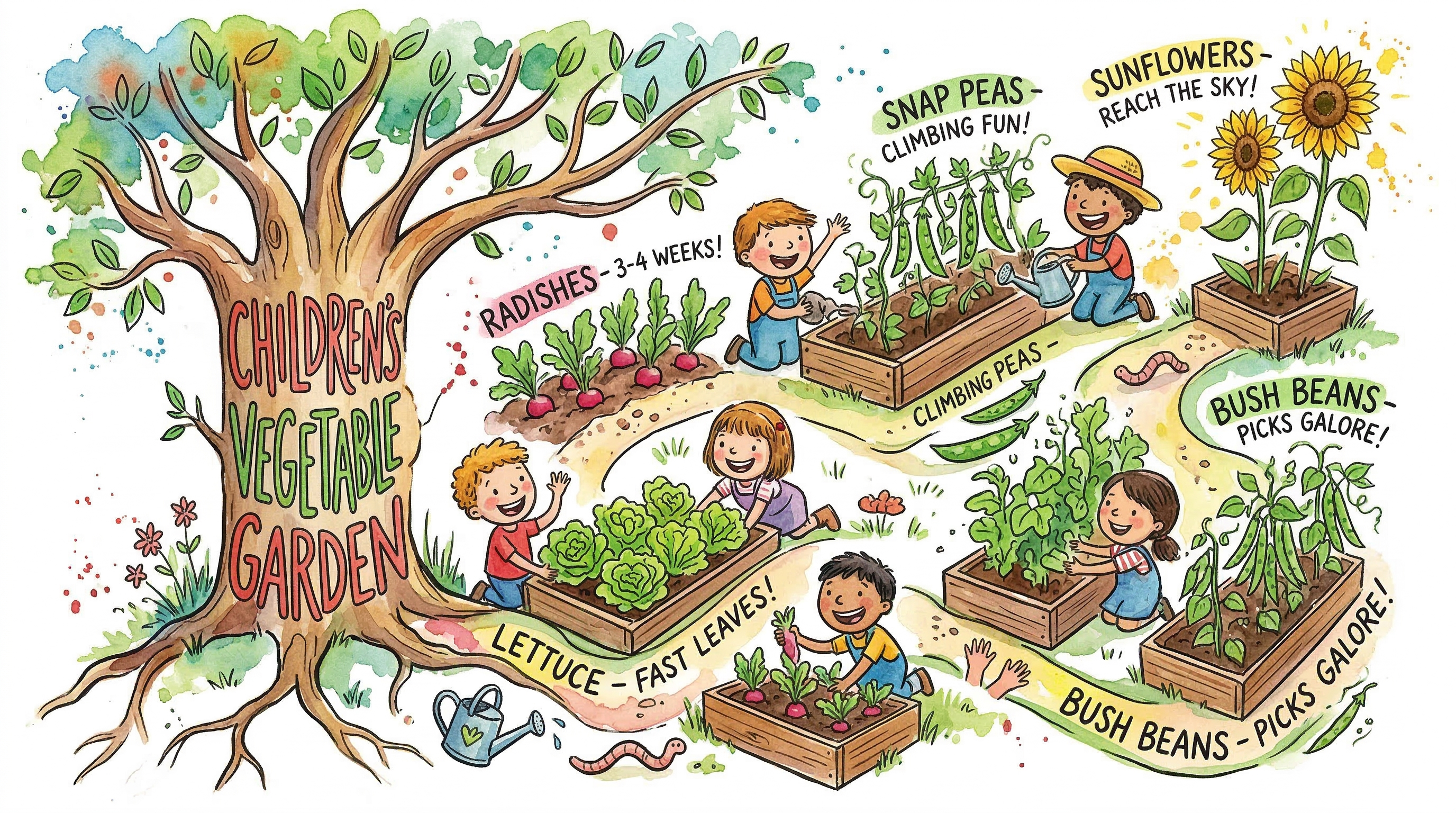
A children's vegetable garden is different from an adult kitchen garden in one crucial way: the experience of growing matters as much as the harvest. The best plants for a children's garden are not necessarily the most productive or the most culinarily versatile — they are the plants that grow fast enough to hold a child's attention, look interesting enough to spark curiosity, and taste good enough to eat right off the vine. A seven-year-old who eats a still-warm cherry tomato straight from the plant she watered every morning is having a formative experience that will shape her relationship to food for life.
This guide walks you through every stage of creating a children's vegetable garden that actually works: choosing plants that match different ages and attention spans, designing a space that children feel ownership of, growing through the season with age-appropriate tasks at every stage, making harvest into a celebration, and turning garden produce into simple recipes children can make themselves. Whether you have a backyard, a raised bed, a collection of containers on a patio, or a single sunny window, everything here applies.
🌱
Children who grow their own food eat more vegetables. That is not a theory — it is one of the most consistently replicated findings in childhood nutrition research. A child who plants a seed, waters it, watches it grow, and picks it herself is far more likely to eat what it produces. The garden also gives children patience, scientific thinking, ownership and responsibility, and the profound satisfaction of making something living grow.
Garden Type
Space Needed
Best Ages
Time Commitment
Best For
Dedicated Kid's Bed
25–100 sq ft
4–14
15–20 min/day
Families with outdoor space who want a full garden experience with room to experiment.
Raised Bed Garden
4×4 ft to 4×8 ft
5–14
10–15 min/day
Ideal starter — defined borders, great drainage, weed suppression, easy for small hands.
Container Garden
Patio or porch
3–12
Daily watering required
Apartments, small yards, or families who want to start small and grow with confidence.
Square Foot Garden
4×4 ft minimum
6–14
10–15 min/day
Structured, visual, and easy to manage — perfect for organized kids who like grids and plans.
Windowsill / Indoor Garden
Sunny window or grow light
3–8
5–10 min/day
Very young children; winter growing; apartments. Radishes, microgreens, and herbs thrive indoors.
School / Community Bed
Shared space
All ages
Varies
Group projects, classrooms, or neighborhood gardens where multiple children participate.
🥕
The single most important rule: let the child make decisions. The moment a child is told where every plant goes, when to water, and what to do, the garden stops being theirs and becomes another adult-directed activity. Offer choices. Ownership drives engagement. A child who chose the seeds, placed the plant, and named the garden plot will come back to water it without being reminded — because it is genuinely hers.
The Best Plants for Children's Gardens
The plants below are selected on four criteria that matter specifically for children's gardens: speed (fast enough to maintain a child's interest), wow factor (something interesting or unusual happens as they grow), ease (forgiving of imperfect watering and beginner mistakes), and taste (good enough to eat enthusiastically off the vine).
🍅 Cherry Tomatoes — The Champion
No plant wins children over more reliably than cherry tomatoes. They produce so abundantly that there is always something to pick, they ripen fast enough to maintain excitement, and the flavor of a sun-warmed cherry tomato eaten directly from the plant is unlike anything from a supermarket.
Variety
Color / Form
Why Kids Love It
Days to Harvest
Best For
Sun Gold
Deep orange, round
Exceptionally sweet — like tomato candy. Prolific producer.
55–65 days
All ages. The most reliably beloved variety in children's gardens.
Juliet
Red, plum-shaped
Crack-resistant, very prolific, excellent flavor. Almost indestructible.
60 days
Beginners and younger children — very forgiving of irregular watering.
Ages 4–10. The 'interesting' tomato — kids show it to friends.
Black Cherry
Dark red-purple, round
The mysterious, 'fancy' tomato. Rich, complex flavor unlike anything else.
65 days
Older children (8+) who appreciate novelty and more complex flavors.
Sweet Million
Red, very small clusters
Produces in enormous clusters — a visual spectacle when ripe. Very high yield means there is always something to pick.
65 days
All ages. Excellent for the harvest-jar challenge — clusters fill a jar fast.
Tumbling Tom
Red or yellow, compact trailing
Grows in hanging baskets — magical for children. No staking needed.
70 days
Container gardens, small spaces, apartment balconies.
•Excitement rating: ⭐⭐⭐⭐⭐ — The highest of any vegetable. Daily visits once fruiting begins.
•Sun: Absolute minimum 6 hours, 8 is better. Tomatoes in insufficient sun produce fewer fruits and bland flavor.
•Support: Use a sturdy cage or stake early — before children think it's needed.
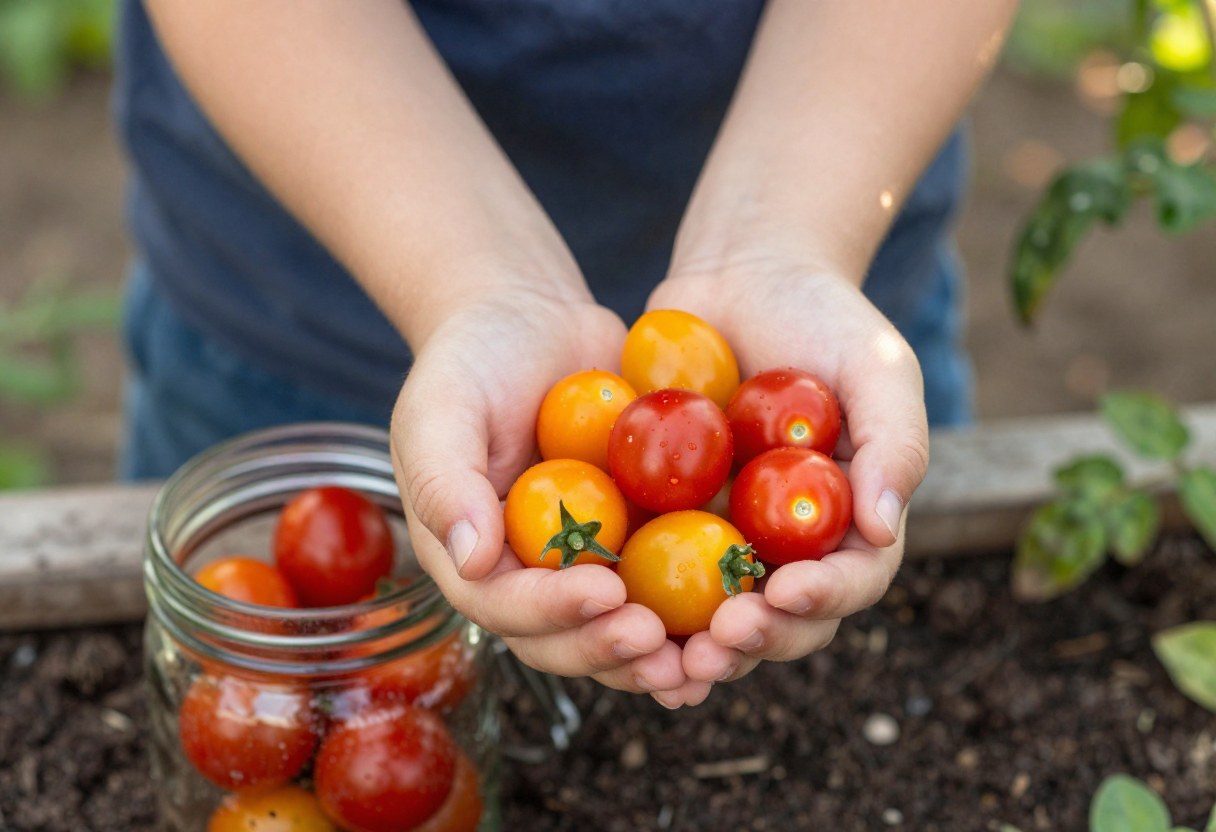
•Kid activity — harvest jar: Give each child a mason jar and challenge them to fill it with cherry tomatoes in one picking.
•Kid activity — color sorting: At harvest, sort by color into groups. Count which color produced the most.
•Best starting point: Buy transplants for the first year. Starting from seed is rewarding but adds 6–8 weeks of indoor growing time — transplants let children experience the full outdoor growing season without the complexity of seed starting.
•Common mistake: Planting too close together. Children's gardens often try to fit in too many plants — a single well-grown cherry tomato plant in a 5-gallon container or a 2×2 ft raised bed space will outproduce three crowded plants every time.
The harvest-jar challenge in action — the moment cherry tomatoes go from "plant" to "snack" is where most kids fall in love with gardening.
🔴 Radishes — The Gateway Vegetable
Radishes are the most important plant in a children's garden for one reason: they grow fast enough that children can see results within a week of planting. In 22–30 days, a seed becomes a harvestable vegetable — a timeframe that matches a child's attention span.
Variety
Color / Form
Days to Harvest
Flavor
Best For
Cherry Belle
Round, bright red, white inside
22–25 days
Mild, crisp, slightly peppery
Absolute beginners, young children (4+). The classic radish.
Easter Egg Mix
Mixed — red, purple, pink, white, lavender
25–30 days
Mild to slightly peppery
All ages. The variety mix produces a harvest surprise — every radish is a different color.
French Breakfast
Elongated, red with white tip
25–30 days
Mild, sweet for a radish
Children who want something 'different' from round radishes. Elegant elongated shape.
Watermelon Radish
White outside, vivid pink-red inside
50–60 days
Mild, sweet, almost fruity
Ages 7+. Slower but the reveal when cutting it open is a genuine wow moment. Worth the wait.
White Icicle
Long, white, icicle-shaped
25–30 days
Mild, crisp
Great for 'guess what this is?' games. Looks nothing like a typical radish.
•Excitement rating: ⭐⭐⭐⭐⭐ for young children (speed is everything); ⭐⭐⭐ for older children (flavor isn't bold enough to impress sophisticated palates).
•Succession sow: Plant a short row every 2 weeks for continuous harvest. Radishes bolt in summer heat — spring and fall are the prime radish seasons in most zones.
•Kid activity — the speed challenge: Plant a row of radishes and a row of beans on the same day. Track growth weekly on a chart. The radishes win decisively — and then the beans catch up. A lesson in plant rhythms.
•Kid activity — the hidden-color watermelon radish: Plant a few watermelon radishes without telling the child what the inside looks like. Cut one open at harvest together. The vivid pink-red interior against white skin is a genuine reveal moment.
•Troubleshooting: Radishes that grow all tops and no root are too crowded — thin to 2 inches apart early. Don't skip thinning; it's the single most important step for a good radish harvest.
🫘 Beans — Plant a Seed, Watch a Giant
Green beans and pole beans offer children something no other vegetable does quite as dramatically: the direct experience of planting a large seed with their own hands and watching it push through the soil within days. The bean teepee — six tall poles tied at the top, planted with pole beans — is one of the most magical structures a garden can offer a child.
Type / Variety
Growth Habit
Days to Harvest
Kid Appeal
Best For
Bush Bean 'Provider'
Compact bush, 18–24" tall
50–55 days
Fast, easy, abundant harvest, no staking
First gardens, young children.
Bush Bean 'Dragon Tongue'
Compact, yellow with purple streaks
55–60 days
Yellow-and-purple coloring that turns green when cooked — a magic trick!
Ages 5+.
Purple Pod Bush Bean
Compact, vivid purple pods
55–60 days
Electric purple color makes them easy to spot at harvest
All ages. Finding all the purple beans is a game.
Pole Bean 'Kentucky Wonder'
Climbing vine, 6–8 ft
65 days
Dramatic height, very prolific, perfect for teepees
Ages 6+.
Scarlet Runner Bean
Climbing vine, 10–15 ft
60–70 days
Vivid red flowers attract hummingbirds. Giant seeds children plant themselves.
Ages 5+. The 'magic beanstalk' bean.
Purple Hyacinth Bean
Climbing vine, to 15 ft
Ornamental/late season pods
Deep purple everything — stems, leaves, pods. One of the most visually spectacular plants in the garden.
Ages 6+. Primarily ornamental but edible when young. Stunning throughout the season.
•Excitement rating: ⭐⭐⭐⭐⭐ for the teepee structure — ⭐⭐⭐⭐ for standard bean growing.
•Direct sow: Beans must be directly sown — they do not transplant well. Let children plant each seed 1 inch deep and 4–6 inches apart. The large seed is easy for small hands to manage.
•Kid activity — bean seed art: Before planting, let children examine and draw the seeds. Scarlet runner beans are large and beautifully patterned — worth observing closely. Compare the seed to the seedling that emerges.
•Kid activity — harvest race: Purple pod beans are the easiest variety for a competitive harvest game: who can pick the most purple beans in 5 minutes? Purple pods are easy to spot and harvesting them keeps the plant producing.
🏡
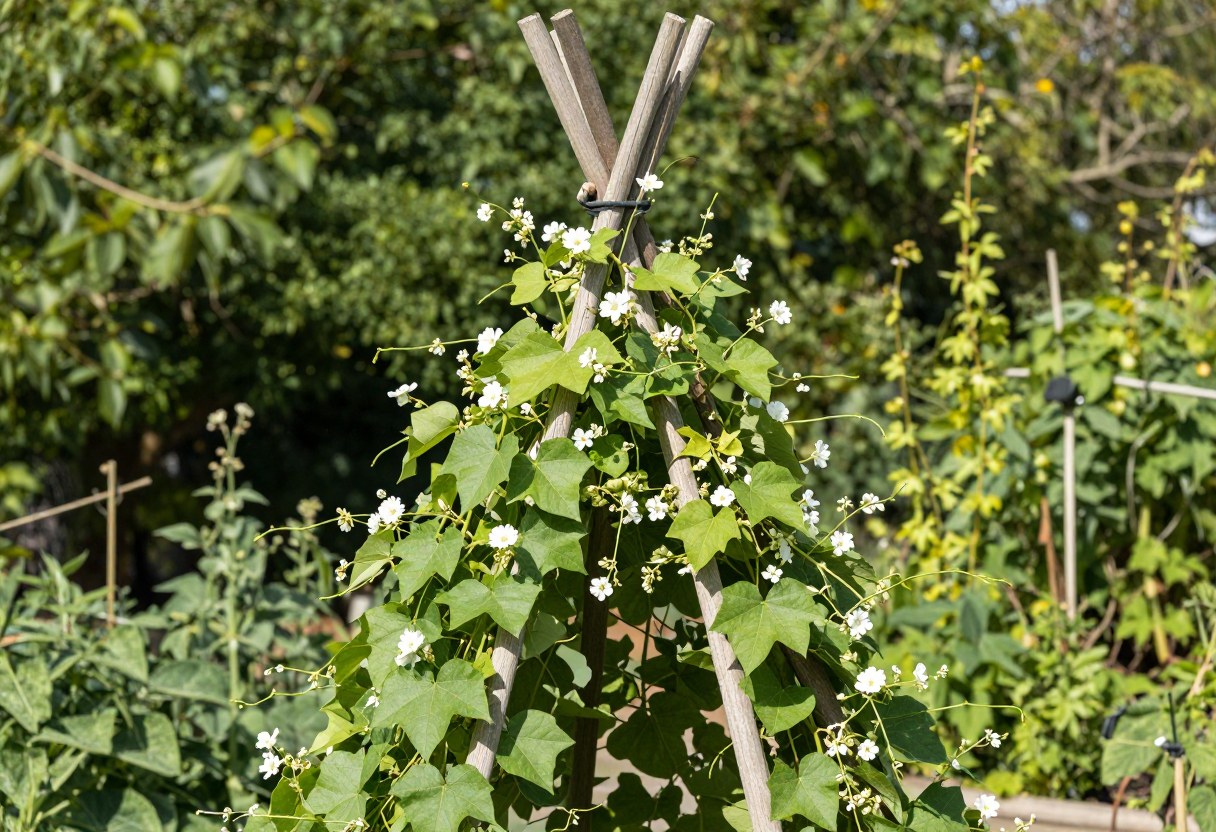
The Bean Teepee: Push 6–8 bamboo poles (6–8 feet long) into the ground in a circle 4–5 feet in diameter, tilting them inward and tying them at the top. Plant 3–4 Scarlet Runner beans or pole beans at the base of each pole. Within 8 weeks, the structure is covered in leaves and flowers with a shaded interior — a secret garden room. Leave one side open as a door. The teepee is one of the most magical structures a children's garden can offer: a living playhouse they grew themselves.
By midsummer this becomes a shaded hideout with a door — plant the poles a few weeks before the birthday party and time it right.
🥒 Cucumbers — The Munching Machine
Cucumbers are one of the most satisfying vegetables for children to grow: fast, prolific, and delivering a crisp, mild harvest that most children eat enthusiastically. At peak production, a cucumber vine produces faster than a family can eat — an abundance that teaches something important about garden generosity.
Variety
Form
Days to Harvest
Kid Appeal
Best For
'Straight Eight'
Classic green, straight, 8 inches
55–65 days
Reliable, easy, the textbook cucumber — exactly what children expect a cucumber to look like.
All beginners.
'Marketmore 76'
Dark green, disease-resistant
70 days
Very dependable in hot summers; will not fail on a beginner.
Humid regions and first-time growers.
'Lemon Cucumber'
Round, yellow, golf-ball to baseball size
60 days
Looks nothing like a cucumber — children are fascinated by it. Milder flavor, almost never bitter.
All ages. The most surprising cucumber in the garden.
'Spacemaster'
Compact bush habit, shorter vines
60 days
Bush form works in small beds and large containers.
Small gardens and raised beds.
•The Lemon Cucumber advantage: Round, yellow, and small — it looks nothing like a cucumber. Children are fascinated by it. Milder than standard cucumbers and almost never bitter. Let it turn fully yellow for maximum sweetness.
•Kid activity — pickle project: Make simple refrigerator pickles together on harvest day. Slice cucumbers with a child-safe crinkle cutter, add vinegar, salt, dill, and garlic, and refrigerate for 48 hours. Children are remarkably proud of food they preserved themselves.
•Critical harvest tip: Teach children to harvest before cucumbers get too large — overripe cucumbers signal the plant to stop producing. Check every other day at peak season. When in doubt, pick it.
•Support: Train cucumbers up a trellis or cage to save ground space and make the harvest easy to find.
🌻 Sunflowers — The Trophy Plant
Sunflowers are not a vegetable, but they belong in every children's garden. They grow fast, reach heights that astonish children, and produce seed heads that can be roasted, fed to birds, or saved for next year. The weekly height measurement against a pole is one of the classic children's garden rituals.
Variety
Height
Head Size
Kid Appeal
Best For
Mammoth Russian
8–12 ft
12–18" across
The classic giant. Children measure themselves against it.
All ages. The definitive 'how tall will it get?' sunflower.
Sunflower 'Teddy Bear'
2–3 ft
6" fluffy double
Compact, fluffy, stuffed-animal-like flowers.
Young children (3–7) and containers.
Sunflower 'Velvet Queen'
5–6 ft
6–8", deep burgundy-red
Dark, dramatic coloring unlike typical yellow — unexpected and beautiful.
Ages 6+. For children who want something 'different.' Great for bouquets.
Sunflower 'Strawberry Blonde'
4–5 ft
5–6", pink-peach tones
Unusual pastel colors surprise children expecting yellow. Elegant multi-headed bloomer.
Ages 5+. Great for cutting and giving. Long flowering season.
Sunflower 'Lemon Queen'
4–6 ft
4–6", pale yellow
Multi-stemmed with dozens of blooms — looks like a bouquet on one plant.
All ages. Excellent for cutting and giving. Very long flowering season.
•Excitement rating: ⭐⭐⭐⭐⭐ — Possibly the highest single-plant excitement of any garden plant for children.
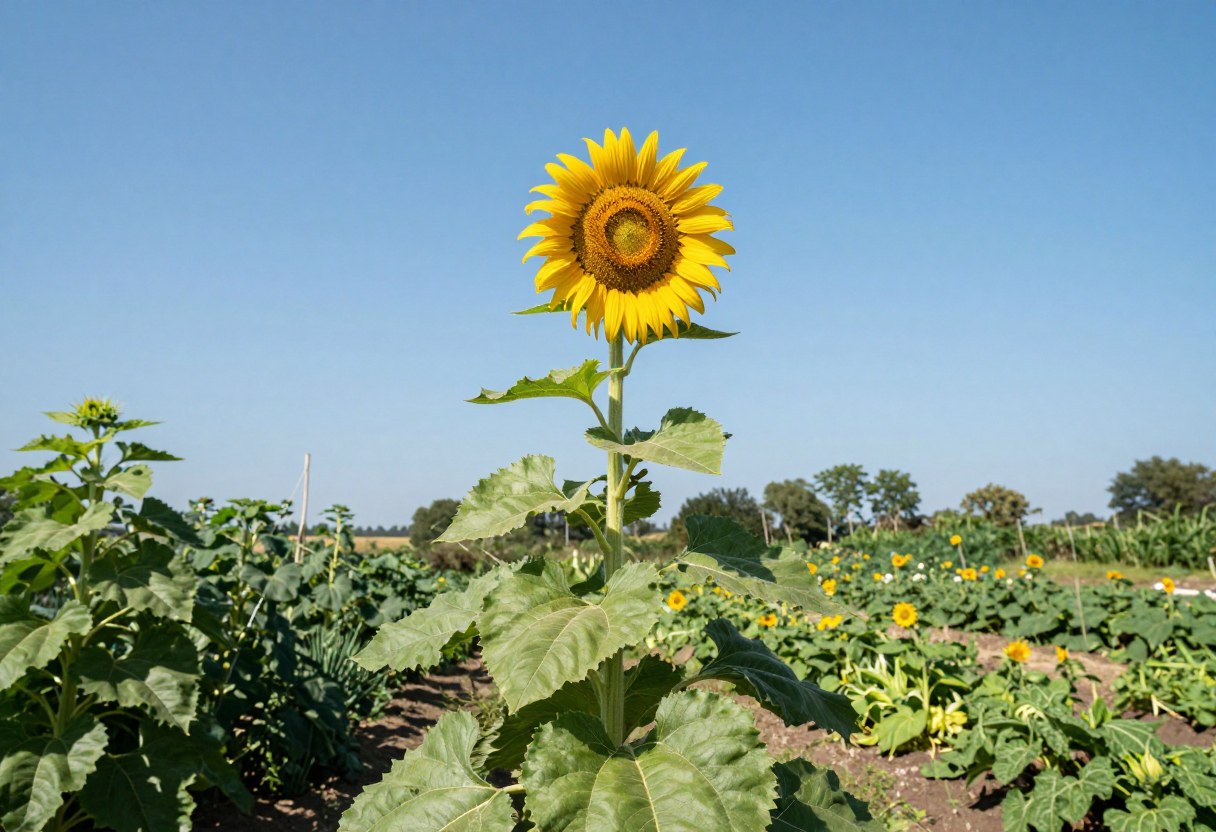
•Kid activity — the height chart: Mark weekly sunflower height on a stake next to the plant. Keep a parallel chart of the child's own height. Children find the moment the sunflower surpasses them in height deeply satisfying.
•Kid activity — seed roasting: When seed heads dry, let children rub out the seeds, rinse, toss with olive oil and salt, and roast at 300°F for 30–40 minutes. Seeds they grew and roasted themselves are a remarkable experience.
•Kid activity — bird feeder: Leave one dried seed head whole and hang it from a branch as a winter bird feeder. A connection between their summer garden and winter wildlife.
The moment a sunflower surpasses a child's own height on the tracking chart is one of the most satisfying in the whole growing season.
🟢 Peas — The Garden Snack
•Sugar snap peas are the perfect children's garden plant because the harvest is the snack — no preparation needed, no waiting, no cooking.
•Best varieties: 'Sugar Snap' (the original, very sweet, 70 days), 'Super Sugar Snap' (disease resistant, very productive, 65–70 days).
•Season: Peas are a cool-season crop — plant in early spring (6–8 weeks before last frost) or in fall. They struggle and stop producing in summer heat.
•Support: Even bush pea varieties benefit from a low trellis or pea sticks (small twiggy branches pushed into the ground). Pole varieties need 4–6 feet of trellis. Children enjoy weaving the growing vines through the support.
•Excitement rating: ⭐⭐⭐⭐ — Lower than tomatoes only because peas are more season-sensitive. When they're producing, the eating-right-off-the-vine experience rivals anything in the garden.
•Kid activity — the pod pop: Teach children to open a shelling pea pod using a thumbnail on the seam. The pop is satisfying.
•Kid activity — tendril observation: Pea tendrils actively curl around anything they touch within hours of contact — a visible, fast plant movement children can watch in real time.
🥬 Lettuce & Salad Greens — The Cut-and-Come-Again Garden
Loose-leaf lettuce varieties offer children something that excites them more than it perhaps should: the ability to harvest their own salad and eat it immediately. Cut-and-come-again varieties regrow after harvesting, giving children a continuous, renewable harvest from the same plants for weeks.
•Best varieties for children: 'Black Seeded Simpson' (fast, reliable, mild — germinates in days), 'Oakleaf' (interesting lobed shape, heat-tolerant), mesclun mix (varied textures and colors — sow thickly and scissors-harvest), spinach 'Tyee' (smooth leaves, excellent flavor, bolt-resistant).
•Growing: Direct sow in early spring or fall. Scatter seeds and barely cover with soil — no precision needed. Thin to 6 inches for full heads or leave dense for cut-and-come-again harvest. Keep consistently moist.
•Excitement rating: ⭐⭐⭐ — Less dramatic than tomatoes or sunflowers, but the cut-and-come-again concept is genuinely exciting: children see the garden regenerate after every harvest.
•Season: Lettuce is a cool-season crop. Plant 4–6 weeks before last frost in spring; replant in early fall for a second harvest. Lettuce bolts (turns bitter and goes to seed) in summer heat — let children observe a bolting plant as a teachable moment about plant reproduction.
•How to harvest: Teach children to use scissors to cut outer leaves, leaving the center to regrow. A single pot of lettuce can produce three or four successive harvests over several weeks.
•Kid activity — the salad bowl project: Let each child grow a 12-inch container planted with a mesclun mix. They are responsible for all watering. When ready, let them harvest, wash, spin dry, and dress their own personal salad. The salad spinner is enormously satisfying to operate.
•Kid activity — leaf rubbings: Press interesting lettuce and herb leaves between paper and rub a crayon or pencil over them to capture the texture and shape. A simple botanical art project that connects observation with art.
🎃 Pumpkins — The Long Game
•Best varieties for children: 'Jack-Be-Little' (miniature, 3–4 inches — every child gets their own pumpkin), 'Cinderella' (large, flat, beautiful), 'Atlantic Giant' for the dedicated child who wants to grow a record-breaking pumpkin.
•Space: Standard pumpkins need 50–100 sq ft per plant as vines spread widely. 'Jack-Be-Little' and compact bush varieties fit in smaller spaces. A single 'Atlantic Giant' plant can take over an entire raised bed and still send vines beyond it.
•Excitement rating: ⭐⭐⭐⭐ for the harvest moment — ⭐⭐ during midsummer when there is not much visible action. The pumpkin garden requires patience and faith.
•Kid activity — name carving: When pumpkins are small (baseball size), let children carve their initials or a simple design into the skin. The name grows with the pumpkin and is fully visible at harvest.
•Kid activity — pumpkin measurement: Measure the circumference of a growing pumpkin weekly. Track and graph the growth. Project the harvest date based on growth rate — a math and gardening crossover.
•The long game teaches patience — 90–120 days from seed to harvest. The wait is part of the lesson.
More Great Plants for the Children's Garden
Plant
Excitement Rating
Days to Harvest
Why Kids Love It
Key Notes
Zucchini / Summer Squash
⭐⭐⭐⭐
50–60 days
Produces so prolifically it seems to double overnight. Kids are amazed by the rate of growth.
Harvest small (6–8 inches) for best flavor. One plant is often enough — two is too many.
Strawberries
⭐⭐⭐⭐⭐
Year 2 for full harvest
Eating a warm strawberry from the garden is a quintessential childhood experience.
Plant in fall for best results. Everbearing varieties produce in first year.
Mini Bell Peppers
⭐⭐⭐⭐
70–80 days
Small, sweet, multi-colored. Children eat them like fruit. Much sweeter than adult peppers.
Need heat. Start indoors early. 'Sweet Snacking' or 'Yum Yum' varieties are excellent.
Kale / Rainbow Chard
⭐⭐⭐
50–60 days (baby leaves)
Rainbow chard's vivid stems in red, yellow, and orange delight younger children visually.
More of a 'look-at-it' plant for young children; older children appreciate the cooking projects.
Carrots
⭐⭐⭐⭐
70–80 days
The harvest itself — pulling a carrot from the ground — is magical. The underground surprise.
Needs loose, deep, rock-free soil. 'Scarlet Nantes' or 'Rainbow Mix' for visual variety.
Popcorn / Sweet Corn
⭐⭐⭐⭐⭐
70–90 days
Popcorn you grew and popped yourself is an extraordinary experience for children of any age.
Needs a block of at least 16 plants for pollination. Sweet corn: 'Honey Select' or 'Bodacious.'
Potatoes
⭐⭐⭐⭐⭐
70–120 days
The 'treasure hunt' harvest — digging potatoes from the ground is pure gold for children.
Grow in grow bags for easy, no-dig harvesting. Fingerling varieties are especially interesting.
Gourds (Ornamental)
⭐⭐⭐⭐
90–110 days
Bizarre shapes — bottle gourds, birdhouse gourds, speckled gourds. Unlike anything in a store.
Dry and paint in fall. A gourd craft project can follow the growing project through winter.
Designing a Children's Garden That Gets Used
A garden that children feel ownership of is a garden they will tend. A garden that feels like an adult's project they are allowed to help with is a garden they will drift away from. Design with the child's perspective as the primary consideration.
The Golden Principles
•Make it theirs, not yours: A small bed that belongs entirely to a child is more valuable than a large shared space.
•Design for access: Beds no wider than 4 feet so children can reach the center from either side. Paths wide enough for small feet and a watering can.
•Make the invisible visible: Window-box gardens where children can see roots through clear sides, plants in glass jars.
•Plan for the 'wow' moment: Every children's garden should have at least one wow plant — something that grows to an astonishing height, produces an unexpected color, or reveals a surprise at harvest.
•Provide real tools scaled to the child's size — not toy tools. A child given a proper trowel that actually works will use it.
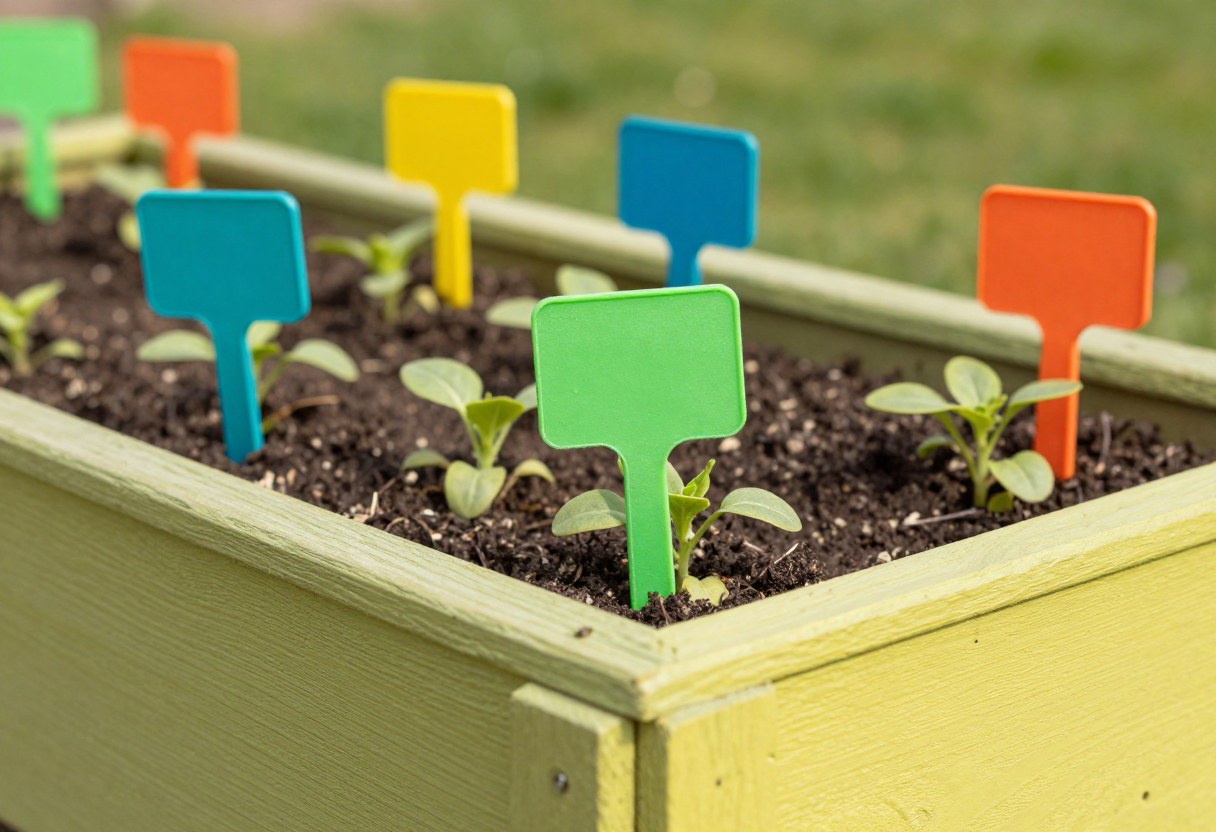
A raised bed painted in colors the child chose does more for ownership than any lecture about responsibility ever could.
The Personalization Principle
🌻
Children engage more deeply with a garden that has personal markers: a painted rock with their name at the entrance, a handmade stake label for each plant, a garden journal with their own drawings on the cover. Consider letting children paint their raised bed, choose the color of their containers, or plant a single flower variety of their choosing purely for beauty — with no justification required beyond 'I like it.'
Garden Layouts by Age
The right garden structure depends entirely on the age of the child. Very young children need a sensory experience, not a production garden. Elementary-age children can handle real ownership. Tweens can manage full project-scale gardens with a budget. Each stage has its own design principles, best plants, and adult role.
🌱 The Toddler & Preschool Garden (Ages 2–5): The Sensory Bed
Very young children cannot manage a full vegetable garden — and they do not need to. What they need is a garden that engages every sense: the smell of basil, the texture of soil between their fingers, the color of a sunflower, the taste of a warm cherry tomato. Success at this stage is not measured in harvests — it is measured in curiosity, delight, and a growing sense that the garden is a safe, interesting place to spend time.
•Scale: A single 4×4 raised bed or two to three large containers placed at a height the child can reach while standing — no bending required.
•Best plants: Cherry tomatoes (Sun Gold or Juliet), sunflowers (Mammoth or Teddy Bear), radishes (Cherry Belle), nasturtiums (edible flowers children can eat right off the plant), and strawberries.
•Adult role: High supervision. The adult does most of the actual gardening while narrating every action — "I am pushing the seed into the soil, about this deep." The child participates in specific moments: watering with a small can, poking seeds into prepared holes, picking ripe fruit.
•Activities: Watering with a small, light watering can they can manage when full. Poking large seeds (beans, sunflowers) into pre-prepared holes. Picking ripe tomatoes by color. Smelling basil and mint leaves.
•What to avoid: Beds wider than 3 feet (cannot reach center). Tools too heavy to use effectively. Gardens that require patience for more than two weeks without visible change — radishes and nasturtiums solve this.
🌻
At this age the garden is not about the harvest — it is about the experience of being in a growing space. A 3-year-old who smells basil every time she passes the bed, who pokes beans into the soil each spring, and who eats a cherry tomato warm from the vine is building a relationship with growing things that will inform the rest of her life.
🥕 The Elementary Garden (Ages 6–10): The Learning Garden
Children in this age range can take real ownership of a garden. They can read seed packets, follow planting instructions, keep a journal, and make meaningful decisions about what to grow and where. The elementary garden should feel genuinely theirs — a space they planned, planted, and manage — not an adult project they help with.
•Scale: A 4×8 raised bed is ideal. Alternatively, a dedicated 4×4 section within a larger family garden with clear borders that define ownership.
•Best plants: Cherry tomatoes, cucumbers, bush beans, radishes, lettuce, pumpkins (Jack-Be-Little for their own mini pumpkin), sunflowers, and one herb (basil or mint) they choose.
•Planning: Let children draw the garden layout on graph paper to scale before planting. They choose which plants go where, subject to sun and spacing requirements. This is their design decision.
•Activities: Reading seed packets and following planting depth instructions. Building the bean teepee structure. Keeping a garden journal with weekly entries and drawings. Harvesting and cooking what they grew — the full farm-to-table cycle.
•Adult role: Guide and resource, not director. Answer questions. Point out problems before they become crises. Let the child make the decisions about harvest timing, plant placement, and what to cook. Step in for safety and technique, not preference.
🫘
The bean teepee is the signature structure of the elementary garden. Six bamboo poles or tall stakes (8 feet) tied at the top, planted with Scarlet Runner beans at the base of each pole. By midsummer, it becomes a leafy, flower-covered hideout children can sit inside. It teaches structure, vining plant behavior, and — most importantly — it is a magical place that is entirely theirs.
🌿 The Tween Garden (Ages 11–14): The Project Garden
Older children can manage a full garden project with planning, budgeting, and long-term management. At this stage, the garden becomes an opportunity for genuine entrepreneurship, culinary exploration, or scientific challenge. The adult becomes a consultant and co-investor, not a supervisor — stepping back on decisions while remaining available as a resource.
•Scale: A full raised bed system, an in-ground garden, or a container garden large enough to grow meaningful quantities for a chosen project.
•Project-based approaches: Grow-for-a-market-stall (plan what sells, price it, tend the business); grow-for-a-cuisine (Italian garden with tomatoes, basil, peppers; Mexican garden with peppers, tomatillos, cilantro); record-breaking vegetables (Mammoth sunflower height, Atlantic Giant pumpkin weight); grow-and-sell seedlings (start extras indoors, sell at spring plant sales).
•Planning: A tween can manage a full season plan — what to start indoors and when, succession sowing schedules, budget for seeds and supplies, harvest projections.
•Adult role: Consultant and co-investor. Provide the budget and the space. Review the plan and offer feedback if asked. Let the outcomes — including failures — be real. A tween whose pumpkin gets powdery mildew and fails to produce a giant pumpkin has learned more than one whose adult intervened to prevent every problem.
🏷️
For a tween with a market-stall project: cherry tomatoes, herbs (basil, cilantro, dill), edible flowers (nasturtiums, borage), and specialty radishes sell reliably at farmers markets and neighborhood stands. A hand-lettered sign that says 'Grown by [name], age 13' is more compelling than any marketing copy.
Initial cost and build time. Must be filled with quality soil mix.
The gold standard for most children's gardens.
In-Ground Bed
Larger scale possible. Less initial cost. Connects children to actual earth.
More weeding. Harder to define 'my garden' boundaries.
Good for children who want more space with clearly defined borders.
Container Garden
Portable. Each child manages individual pots. Apartment-friendly.
Dries out quickly. Limits root depth for large plants.
Best for apartments, balconies, or starting small.
Square Foot Garden
Visual grid makes spacing intuitive. Very organized.
Less flexible. Not ideal for pumpkins, corn.
Excellent for organized children who like systems and checklists.
Growing Through the Season
The most valuable part of a children's garden is not the harvest — it is the daily and weekly tasks that build the relationship between the child and the living system she is tending.
Soil & Planting
Soil quality is the single most important factor in a children's garden — and it is the one factor most beginner gardeners underestimate. Native garden soil almost always performs poorly in raised beds and containers: it compacts under watering, drains slowly, and becomes hard enough that small hands cannot work it easily. Starting with the right mix makes every other part of the garden easier.
•Best soil mix for raised beds and containers: 1/3 quality topsoil, 1/3 compost (well-aged), 1/3 coarse perlite or coarse horticultural vermiculite. This blend drains freely, stays loose enough for children to dig with their hands, and holds moisture without waterlogging roots.
•Why compost matters: Compost feeds the soil biology that makes nutrients available to plants. A bed filled with quality compost is forgiving of beginner mistakes — including overwatering and irregular fertilizing.
•Why perlite matters: Coarse perlite keeps the mix light and aerated as it settles over the season. It prevents the compaction that makes digging frustrating for small hands.
•What to avoid: Do not use pure native garden soil in raised beds or containers — it compacts into a near-brick consistency under repeated watering. Do not use fine sand (it makes compaction worse, not better). Avoid potting mixes that are primarily peat: they repel water when dry and are difficult to re-wet.
•Planting activity: Let children help fill the raised bed by scooping and dumping each ingredient. Mixing the three components together by hand — or with child-sized trowels — is a satisfying, sensory-rich activity that builds ownership of the growing space before a single seed goes in.
🪱
When filling or refreshing a raised bed, earthworms are a sign of healthy, biologically active soil. If children find earthworms while digging, teach them to move them to a shaded area rather than leaving them on hot soil. Worms process organic matter and create pathways for air and water — a children's garden is a natural entry point into soil science and the living ecosystem beneath the surface.
Age-Appropriate Garden Tasks
Task
Ages 3–5
Ages 6–9
Ages 10–14
Learning Outcome
Seed planting
Poke holes with finger; drop large seeds in
Follow seed packet depth and spacing
Start seeds indoors; maintain germination log
Cause and effect; following instructions
Watering
Water with small can (with help)
Water independently; check soil moisture
Install drip irrigation or set up schedule
Responsibility; plant physiology
Weeding
Pull obvious large weeds with guidance
Identify weeds vs. seedlings; weed weekly
Manage full bed; understand weed competition
Observation; persistence
Thinning
Watch adult thin; help identify crowded plants
Thin seedlings to correct spacing
Thin and transplant thinned seedlings
Plant spacing science
Pest scouting
Look for bugs; report findings
Identify common pests; hand-pick caterpillars
Monitor, identify, and manage pests; keep records
Entomology; integrated pest management
Harvesting
Pick ripe tomatoes and snap peas by color
Assess ripeness; harvest regularly
Time harvests optimally; manage post-harvest storage
Sensory skills; plant biology
Record keeping
Draw the garden; name the plants
Keep a garden journal with weekly entries
Maintain full growing records; compare seasons
Scientific method; documentation
The Garden Journal
A dedicated garden journal transforms a growing season from a collection of activities into a coherent story. It builds observation skills, creates a record of growth that can be compared year to year, and gives the child a concrete artifact of what she accomplished.
•Cover page: Child's name, garden name (encourage naming the garden), year, and a drawing or photo of the first planting.
•Planting records: What was planted, when, and where. Include a hand-drawn garden map.
•Weekly entries: Date, weather, what was observed, what was done, and one drawing or pressed leaf.
•Harvest log: Date, what was harvested, quantity. Graph harvest over the season.
•End-of-season review: What worked? What would you plant again? What was your favorite moment?
Watering — The Daily Ritual
•The finger test: Teach children to push a finger 2 inches into the soil. If it's dry at that depth, water. If moist, wait.
•Container gardens: Containers dry out much faster than raised beds. In summer heat, daily watering is often necessary.
•Match the watering can to the child. A 2-liter can a 5-year-old can carry when full is more valuable than a large can that is too heavy.
•Vacation planning: Before any absence, work with the child to make a watering plan — a neighbor, a drip timer, or mulching heavily before leaving.
Pests & Problems as Learning Opportunities
Problem
What Causes It
Child-Manageable Response
Learning Opportunity
Tomato hornworm
Large green caterpillar
Hand-pick (they're harmless). Look for white egg clusters on leaves.
Entomology; metamorphosis — they become hummingbird moths.
Aphids
Small soft-bodied insects on new growth
Strong stream of water from hose; introduce ladybugs.
Pest identification; biological control.
Slugs / Snails
Moisture-loving mollusks; active at night
Trap with shallow dish of beer; hand-pick at night with flashlight.
Nocturnal behavior; the nighttime garden observation is memorable.
Wilting in heat
Temporary drought stress or afternoon heat
Water in morning; check soil moisture; mulch around plants.
Plant physiology; stomata and transpiration.
Blossom drop
Heat stress; pollination failure
Shake plants gently to aid pollination; plant in morning sun.
Pollination biology; the connection between flowers and food.
Yellowing leaves (lower)
Often normal leaf senescence as the plant matures; can also indicate nitrogen deficiency or overwatering
Remove yellow leaves cleanly at the stem. Apply a balanced liquid fertilizer if widespread. Check that the bed drains freely after watering.
Plant nutrition and the nitrogen cycle. Observation and diagnosis — not every yellow leaf is a crisis; learning to assess overall plant health is a foundational gardening skill.
Harvest — Making It a Celebration
Harvest is the payoff — and it deserves to be treated as a genuine celebration, not just a chore. The rituals around harvest are as important as the harvest itself.
Harvest Readiness Guide
Vegetable
How to Know It's Ready
Kid-Friendly Check
What Happens If You Wait Too Long
Cherry Tomatoes
Full color, slight give when squeezed, comes off stem easily
Color match to packet photo; gentle twist — if it resists, wait another day
Splits, attracts birds and insects, falls from plant.
Radishes
Round shape visible at soil surface; shoulder poking up
Reach in and feel the shoulder — if marble-sized or bigger, pull it
Becomes pithy, woody, extremely spicy, and cracks.
Beans
Pods plump but before seeds bulge the pod; snaps cleanly
Snap test — a ripe bean snaps crisply rather than bending
Seeds inside swell, pod becomes tough and stringy. Plant stops producing.
Cucumbers
8–12 inches, firm, dark green
Pick before yellowing begins at blossom end. When in doubt, pick it.
Turns yellow, seeds harden, flesh becomes bitter.
Zucchini
6–8 inches, firm, glossy skin
Check daily — measure against a hand; 6–8 inches is perfect
Becomes enormous, seedy, tough overnight.
Pumpkins
Skin hardened, stem corky and dried, full color
Knock test — a ripe pumpkin sounds hollow. Stem dried and tan.
Falls from vine; skin may crack in rain.
Snap Peas
Pod plump and round, bright green, seeds visible through the pod wall
Taste test — a ripe snap pea is sweet and crisp. If it tastes starchy, it has gone too far.
Seeds swell and harden inside the pod; pod becomes tough and stringy; plant slows flower production.
Sunflower Seeds
Back of seed head turns from green to yellow-brown; seeds feel firm and loosely seated in the head
Rub a few seeds with your thumb — ripe seeds release easily. The petals have dropped and the face is fully brown.
Birds will harvest them first. Cut the head with 12 inches of stem and hang upside down indoors to finish drying if needed.
Making Harvest Special
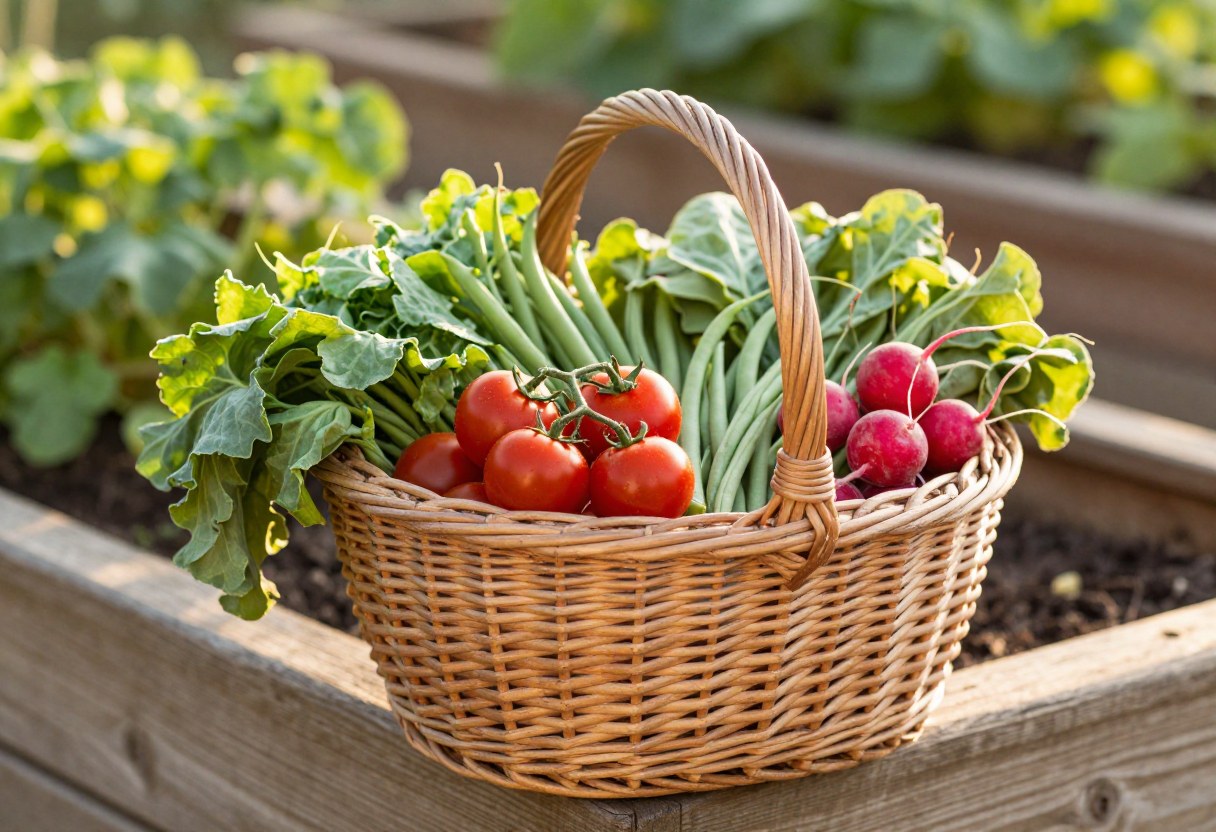
•The harvest basket: Give each child their own harvest basket — a real basket, not a plastic bag. The basket itself becomes part of the ritual.
•Weigh and count: A small kitchen scale in the garden makes harvest tangible. "We harvested 2.4 pounds of tomatoes today."
•The first fruit ceremony: The very first ripe cherry tomato, the first bean — treat it as an occasion. Photograph it. Taste it together.
•The harvest meal: Plan a simple meal built around whatever the garden produced.
•Preserving the excess: When production peaks, make simple preserves together: refrigerator pickles, pesto, tomato sauce.
A real basket — not a plastic bag — makes the harvest feel like the occasion it is.
🍅
The most powerful moment in a children's garden happens reliably every season: the moment a child eats a vegetable she claimed to hate — a tomato, a cucumber, a bean — because she grew it herself. It is not the taste that changed. It is the relationship to the food. Do not make a large fuss of this moment. Let the experience speak for itself.
Simple Garden-to-Table Recipes Children Can Make
The recipes below are designed for children to make themselves, with age-appropriate adult supervision. The goal is not culinary sophistication — it is the experience of cooking with food they grew.
🍅 Smashed Cherry Tomatoes on Toast
•Collect a large handful of ripe cherry tomatoes (at least 10–15 per person).
•Toast 1–2 slices of bread per person.
•Place tomatoes on the toast and press with the back of a fork until they burst and spread.
•Drizzle with olive oil, add a pinch of salt, and tear fresh basil leaves on top if available.
•Eat immediately. Variation: rub the toast with a cut garlic clove before smashing for a simple bruschetta.
🥗 The Child's Own Salad
•Harvest loose-leaf lettuce leaves, any small tomatoes, cucumber slices, snap peas, herbs.
•Wash and spin leaves in a salad spinner (the spinner itself is enormously satisfying).
•The simple dressing: In a jar with a lid — 3 tablespoons olive oil, 1 tablespoon white wine vinegar, a pinch of salt and sugar. Shake vigorously.
•Toss and eat immediately. The garden flavor needs no improvement.
🥒 Refrigerator Pickles (No Canning Required)
•Slice 4–5 cucumbers into rounds (a crinkle cutter makes this more fun).
•Make the brine: 1 cup white vinegar, 1 cup water, 1 tablespoon salt, 1 tablespoon sugar — stir until dissolved.
•Pack jar: Place cucumber slices in a clean quart mason jar with 2 smashed garlic cloves, a few sprigs of dill.
•Pour brine over cucumbers. Refrigerate 48 hours. Better after 72 hours. Keeps for 3 weeks.
•Let children label the jar with their name and the date — the label matters.
🎃 Roasted Pumpkin Seeds
•Scoop seeds with hands — a satisfying, tactile activity. Pull seeds from stringy fibers and rinse.
•Pat seeds dry and spread on a baking sheet. Let sit for 1 hour to dry completely.
•Toss with 1 tablespoon olive oil and your choice of seasoning: salt and garlic powder, or cinnamon and brown sugar.
•Roast at 325°F for 25–30 minutes, stirring once halfway. Cool completely before eating — they crisp as they cool.
🍿 Stovetop Popcorn from Garden-Grown Corn
Popcorn you grew, dried, shelled, and popped yourself is one of the most extraordinary experiences a children's garden can deliver. The full process — from harvest to the moment the lid starts rattling on the pot — takes weeks and requires patience, which makes the final result genuinely earned.
•Grow popcorn varieties only — standard sweet corn will not pop. Best varieties for children: 'Strawberry' popcorn (small burgundy-red ears, fits in a child's hand), 'Baby Blue Jade' (compact plants, blue kernels), 'Japanese Hulless' (tender hull, easier for children to eat).
•Drying: Leave ears on the stalk until the husks are fully dry and papery — usually 4–6 weeks after the silks brown. Bring inside and hang in a warm, dry location for another 2–4 weeks until the kernels feel completely hard.
•Shelling: Hold the ear over a bowl and rub the kernels off with both thumbs in a twisting motion. The first few kernels take effort; once started, the rest slide off easily. Let children shell their own ear — it is deeply satisfying work.
•Stovetop popping: Add 2 tablespoons of vegetable oil or coconut oil to a heavy-bottomed pot with a lid. Add 3–4 test kernels and heat over medium-high. When the test kernels pop, add a single layer of popcorn kernels (about 1/3 cup). Cover, reduce heat slightly, and shake the pot gently every 30 seconds. Remove from heat when popping slows to one pop every 2–3 seconds.
•Microwave method: Place 1/4 cup shelled kernels in a brown paper lunch bag. Fold the top over twice. Microwave on high 2–3 minutes, stopping when popping slows. Every microwave differs — watch carefully the first time.
•Seasoning options: Classic butter and salt; nutritional yeast (savory, cheesy flavor); cinnamon sugar; garlic powder and parmesan. Let children choose and add their own seasoning — a small bowl of options they can mix themselves makes it feel like a science experiment.
🌽
The moment the lid starts lifting and kernels begin flying is one of the most joyful moments in a children's kitchen. Grow at least 16 plants in a block for good pollination — a 4×4 planting is the minimum. Harvest in fall, dry through winter, and pop in January: the garden that ended months ago is suddenly producing again. That continuity is the lesson.
Seasonal Calendar for Children's Gardens
The calendar below uses Zone 7 as a reference (last frost mid-April, first fall frost mid-October). Adjust timing by 2–4 weeks per zone — later for colder zones (5–6), earlier for warmer zones (8–9). Check your local extension service or The Old Farmer's Almanac for frost dates specific to your ZIP code.
Season / Month
Garden Tasks
Best Plants to Start
Child Activities & Learning
Late Winter (Feb–Mar)
Plan the garden on graph paper. Order seeds. Build or prepare beds. Set up seed-starting station indoors.
Start indoors: tomatoes, peppers (8–10 weeks before last frost)
Design the garden layout; research plants; decorate seed-starting area; make plant labels.
Early Spring (Mar–Apr)
Prepare beds with compost. Direct sow cool-season crops. Harden off indoor seedlings.
Direct sow: radishes, peas, lettuce, spinach. Transplant early lettuce.
Plant radish seeds and track germination daily. Measure first sprouts.
Spring (Apr–May)
After last frost: transplant tomatoes, peppers. Direct sow beans, cucumbers, squash, sunflowers, pumpkins.
All warm-season crops go in. Succession sow radishes and lettuce every 2 weeks.
Plant the bean teepee poles. Carve names into small pumpkins. Begin garden journal.
Early Summer (May–Jun)
Mulch beds. Build trellises. Begin regular watering routine. Harvest cool-season crops before heat.
Succession sow beans and cucumbers. Plant basil after tomatoes.
First cherry tomato harvest! Make smashed tomato toast. Measure sunflower height weekly.
Midsummer (Jul–Aug)
Water daily. Harvest every 2–3 days. Feed with liquid fertilizer monthly. Watch for pests.
Nothing new — focus on harvesting and maintaining current crops.
Refrigerator pickle project. Harvest salad. Keep harvest log and weight records.
Late Summer / Fall (Sep–Oct)
Harvest pumpkins before frost. Plant fall crops. Allow some plants to set seed for collection.
Direct sow fall radishes, lettuce, spinach, kale (6–8 weeks before first frost).
Pumpkin harvest celebration. Roast pumpkin seeds. Collect seeds for next year.
Late Fall / Winter (Nov–Jan)
Clean up beds. Add compost. Cover with straw mulch. Plant garlic (November).
Plant garlic cloves for next summer harvest.
Write end-of-season garden journal review. Plan next year's garden.
🌱
The children's garden loses its power if it is a single-season activity. The full value of garden experience accumulates over years. Save seeds each fall. Keep the garden journal from year to year. Return to the same beds, the same tools, the same rituals. The repetition is the teaching.
Special Garden Projects That Build Wonder
Beyond the core growing season, a children's garden can host projects that deepen engagement, connect science to experience, and produce results children are proud to share.
🔬 The Germination Lab
•Grow seeds in zip-lock bags or glass jars with damp paper towels pressed against the glass so children can watch germination.
•Best seeds for germination labs: beans (fastest, most dramatic), sunflowers (large seed with obvious parts), radishes.
•Extension: Germinate seeds in different conditions — light vs. dark, warm vs. cool — and compare results.
🦋 The Pollinator Connection
•Borage: Grows quickly, produces edible blue star flowers, and attracts bees so reliably that children can observe active pollination within days.
•Nasturtiums: Edible flowers (peppery flavor) and edible leaves. Easy, fast-growing, and brilliant in salads.
•Activity: Keep a pollinator count — 5 minutes of observation, counting every bee and butterfly visitor.
🎨 Garden Art Projects
•Pressed flower journals: Press flowers and leaves between wax paper. After 2 weeks, glue onto journal pages with a written description.
•Vegetable stamp printing: Cut okra, celery, bell peppers crosswise. Dip in tempera paint and stamp onto paper.
•Scarecrow building: A full creative project — stuffing old clothes, constructing a frame, positioning it in the garden.
•Gourd crafts: Grow and dry ornamental gourds in fall. Paint, decorate, or carve them.
📚 The Seed Saving Project
•Choose open-pollinated or heirloom varieties only — hybrid seeds don't breed true to type.
•Allow to ripen fully: For beans and peas, leave some pods until dry and papery.
•Extract and dry: Spread seeds on a plate and allow to dry completely (1–2 weeks).
•Store in labeled paper envelopes children can decorate: plant name, variety, year harvested.
•Plant next spring: The continuity of planting seeds you saved from last year's garden is one of the most profound experiences a garden can provide.
Troubleshooting the Children's Garden
Problem
Likely Cause
Solution
How to Turn It into a Learning Moment
Child loses interest by midsummer
No visible action; plants plateau; schedule disruptions
Ensure at least one fast-changing plant. Lower expectations — even once-weekly visits maintain connection.
Discuss the 'middle of the story' in books — the interesting part comes at the end.
Plants died while family was on vacation
No watering; heat stress; containers drying out
Plan ahead: install a drip timer, ask a neighbor, or mulch heavily before leaving.
'Plants need water every day — that is what we learned.' What could we do differently next time?
Nothing sprouted from seeds
Seeds planted too deep, too cold, too wet, or too old
Check remaining seeds with a germination test (damp paper towel). Replant at correct depth.
Investigate why. Test germination rate. Read the seed packet again together.
Tomatoes cracking and splitting
Irregular watering — drought followed by heavy rain
Mulch heavily. Water consistently. Choose crack-resistant varieties (Juliet) next season.
Water science — what happens when plants get too much water too fast.
Child wants to pick everything before it's ripe
Excitement; impatience; confusion about ripeness
Make a 'ripeness chart' with color swatches from the seed packet. Practice the squeeze test together.
'What happens if we wait two more days?' Let them test the hypothesis.
Animal damage (rabbits, deer, squirrels)
Attractive food source without protection
Install physical barriers. Involve children in designing the protection system.
Food web and ecology. 'Why do animals want to eat what we grew?' What do these animals eat in the wild?
Weeds taking over the garden
Infrequent weeding; bare soil between plants; seeds blown in from surrounding areas
Mulch bare soil with 2–3 inches of straw or wood chips immediately after planting. Weed together in short sessions (10–15 minutes) before weeds set seed — teach children the 'pull before they flower' rule.
What is a weed? (A plant growing where we didn't put it.) Are all weeds bad? Some weeds are edible — identify common ones like lamb's quarters and dandelion. Discuss how plants compete for light, water, and nutrients — the same resources we give our vegetables.
🌱
At its heart, a children's garden is not about vegetables. It is about teaching children that they are capable of making living things grow — that with attention, patience, and care, they can transform a seed smaller than their fingernail into a plant that feeds their family. Plant the garden. Tend it together. Eat what it produces. Return next spring.
🌿 Get Seasonal Gardening Tips
New guides, planting reminders, and growing tips — straight to your inbox.
No spam. Unsubscribe anytime.
About the Author
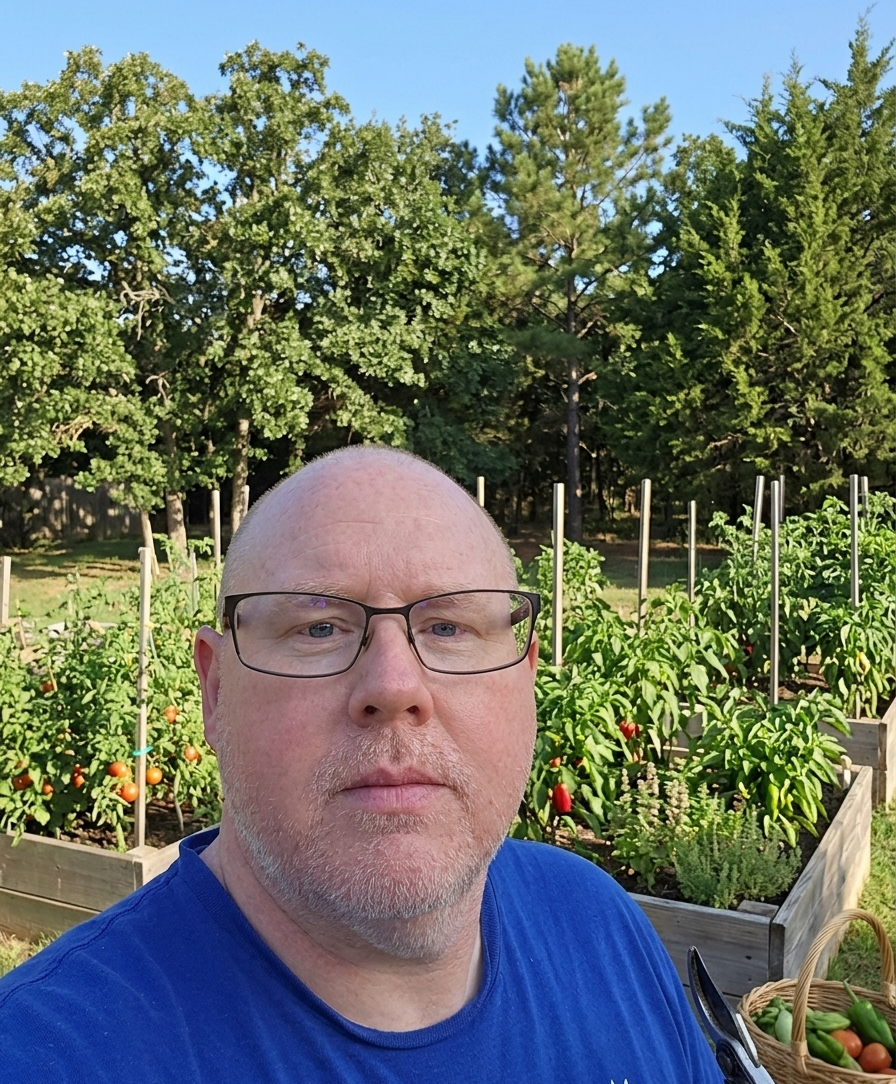
David Rodgers is the Founder & Head Gardener of Planting Atlas. With over 40 years of hands-on gardening experience in Oklahoma's Zone 7 climate, he researches, writes, and personally tests every guide on the site.
David draws from real backyard trials, soil testing, and trusted sources like Oklahoma State University Extension and USDA data to deliver practical, zone-specific advice that actually works.