Design with Color — Bold, Pastel, Monochromatic & Rainbow Gardens
Walk into any garden and your brain processes color before it processes anything else — before form, texture, scale, or structure. Color triggers emotion faster than any other design element. A hot-colored border of reds and oranges makes your pulse quicken. A pastel cottage garden of blush roses and powder-blue delphiniums slows your breathing down. A monochromatic white garden at dusk creates an almost otherworldly stillness.
Color Is the First Thing Your Eyes See — And the Last Thing They Remember
Walk into any garden and your brain processes color before it processes anything else — before form, texture, scale, or structure. Color triggers emotion faster than any other design element. A hot-colored border of reds and oranges makes your pulse quicken. A pastel cottage garden of blush roses and powder-blue delphiniums slows your breathing down. A monochromatic white garden at dusk creates an almost otherworldly stillness.
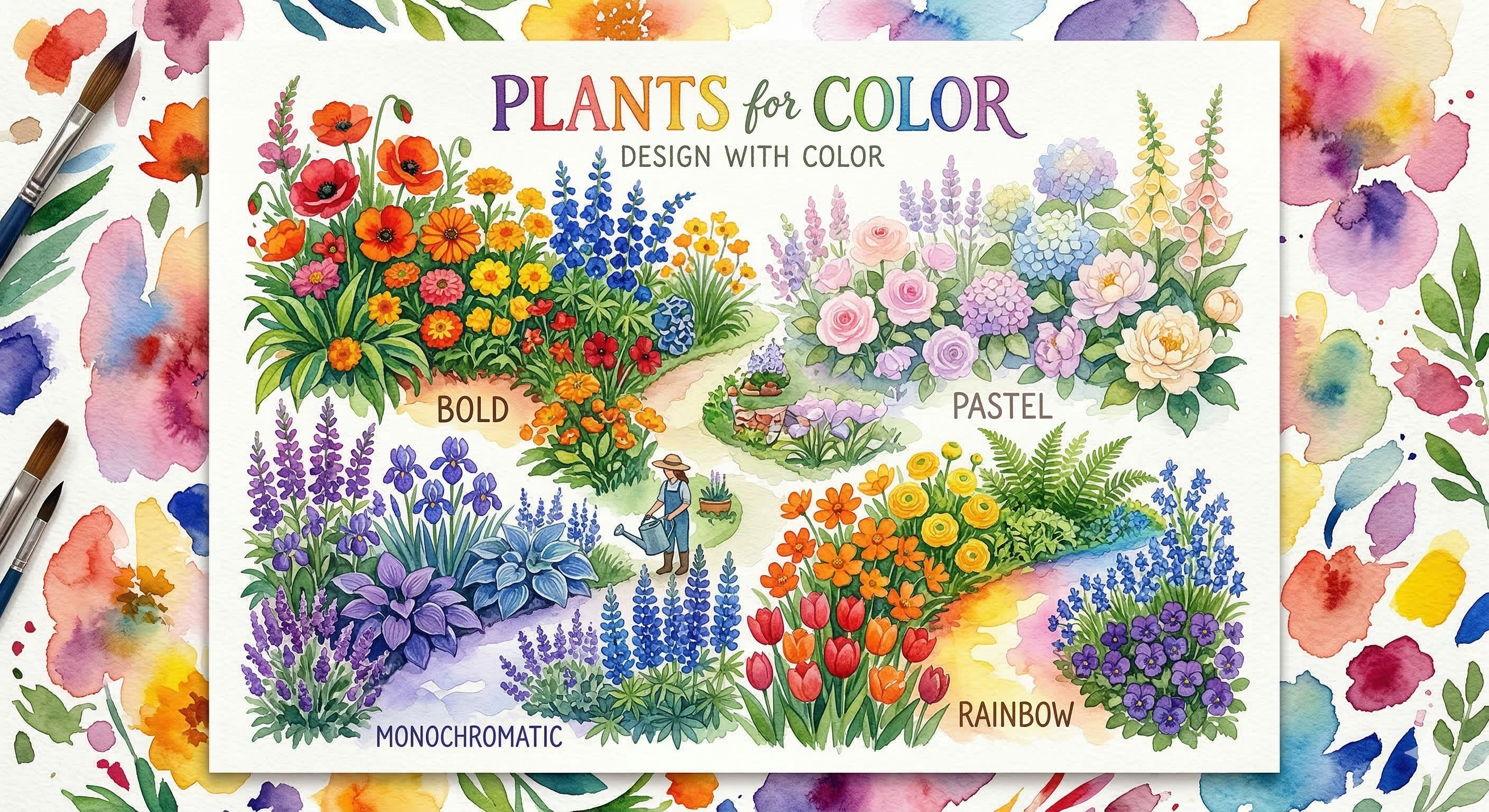
This guide will give you the design language and the plant knowledge to harness color intentionally — to build a garden that makes people feel exactly what you want them to feel, whether that's excitement, serenity, wonder, or joy. We'll start with color theory (the same principles artists and designers use), then move through the four great garden color strategies — Bold, Pastel, Monochromatic, and Rainbow — with specific plant recommendations for each, followed by design principles that work regardless of which palette you choose.
One important truth upfront: in garden design, green is not a color. It's a neutral. The thousands of green leaves surrounding your flowers create the background, the canvas, and the constant — they don't compete for attention. When we talk about garden color design, we're designing with the accent colors: the flowers, colored foliage, and colored stems that punctuate the green.
🎨
Design Tip: Before choosing plants, choose a feeling. Do you want your garden to energize and excite? Choose warm, saturated colors (red, orange, gold). Do you want to calm and restore? Choose cool, soft colors (lavender, powder blue, white). The feeling should drive the palette, not the other way around.
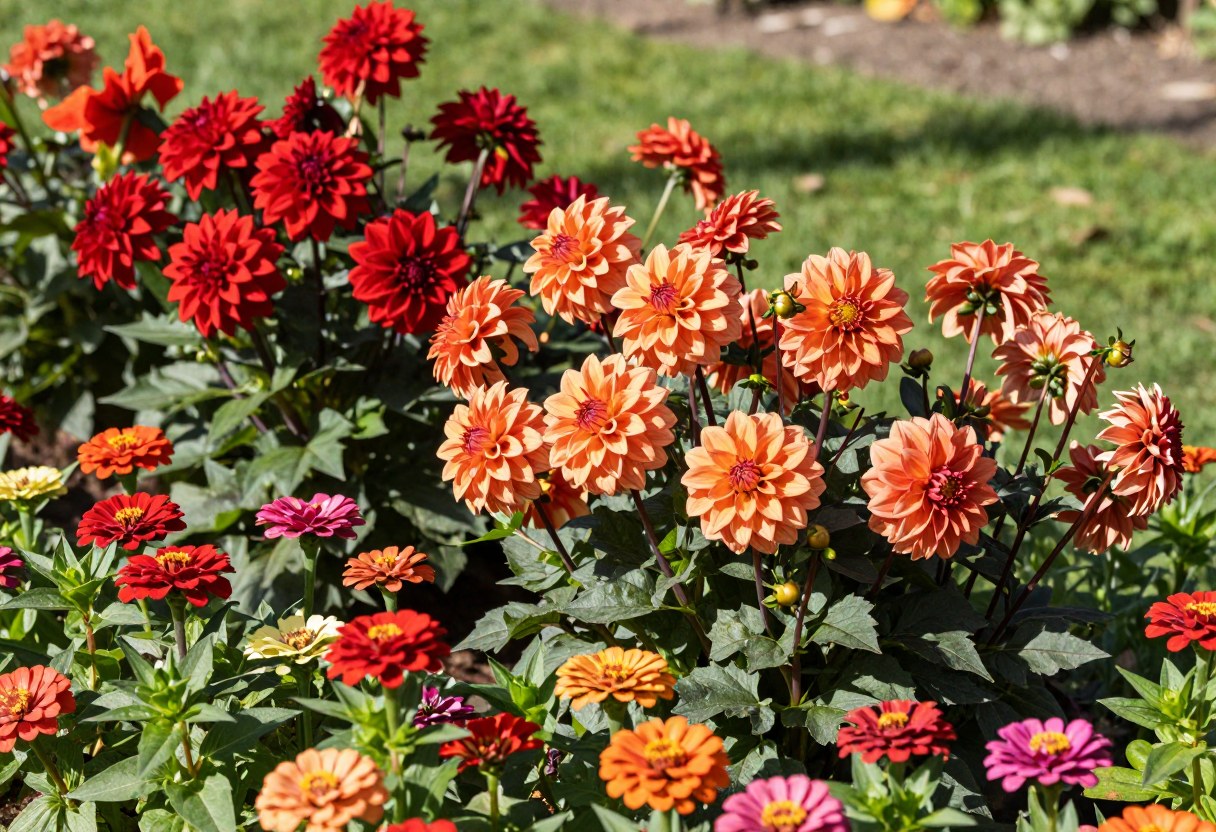
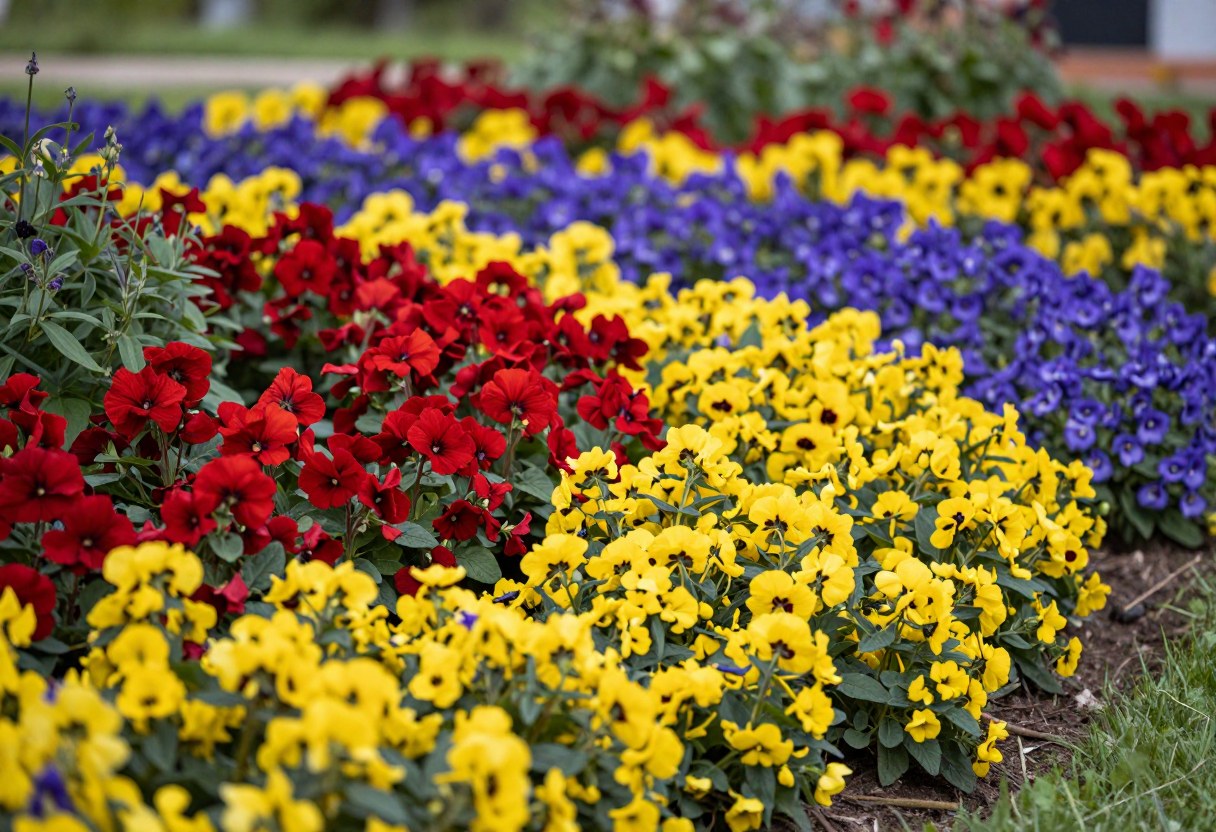
Saturated warm colors like these advance visually and read as energy and excitement from across a yard.
Color Theory for Gardeners: The Only Rules You Need
Color theory was formalized by Sir Isaac Newton's color wheel and developed by artists and designers for centuries. For gardeners, you only need the key principles — enough to make intentional decisions, not enough to turn gardening into homework.
The Color Wheel Basics
The color wheel organizes colors by their relationships to each other. Understanding a few key relationships is all you need:
•Primary colors: Red, yellow, blue — the three colors from which all others are mixed
•Tertiary colors: The colors between primary and secondary — red-orange, yellow-green, blue-violet, etc.
•Warm colors: Reds, oranges, yellows — they advance visually, energize, and feel active
•Cool colors: Blues, purples, greens — they recede visually, calm, and feel restful
•Tints: A color mixed with white (pastel pink = red + white)
•Shades: A color mixed with black (burgundy = red + black)
•Saturation: How pure/vivid a color is — fully saturated = maximum boldness; desaturated = muted/grayish
The Major Color Schemes: Quick Reference
Scheme
Definition
Garden Mood
Garden Example
🔵 Monochromatic
One hue, multiple tints and shades
Elegant, sophisticated, restful
All purples: pale lilac → deep violet → near-black plum
🌅 Analogous
2–4 colors sitting adjacent on the wheel
Harmonious, flowing, cohesive
Blue → blue-violet → violet → purple
⚡ Complementary
Two colors directly opposite on the wheel
Bold, energetic, high contrast
Purple + yellow; blue + orange; red + green
🔱 Split-Complementary
One color + two colors flanking its complement
Dynamic yet balanced
Purple + yellow-green + yellow-orange
🔺 Triadic
Three evenly spaced colors around the wheel
Vibrant, playful, visually rich
Red + yellow + blue; purple + orange + green
☀️ Warm Palette
Reds, oranges, yellows, hot pinks
Energizing, exciting, advances visually
Sunflower + canna + salvia + zinnia
🌊 Cool Palette
Blues, purples, greens, blue-grays
Calming, receding, expansive feeling
Delphinium + agapanthus + Russian sage + catmint
🌸 Pastel
Tints of any hue (color + white)
Soft, romantic, cottage garden feel
Baby pink + powder blue + buttery yellow + lavender
🔥 Bold/Saturated
Pure, fully saturated hues at maximum intensity
Dramatic, tropical, show-stopping
Cannas + dahlias + zinnias at full saturation
Two Essential Color Rules That Change Everything
1. Color Temperature Affects Spatial Perception
Warm colors (red, orange, yellow) advance visually — they appear closer than they are. Cool colors (blue, violet, purple) recede — they appear further away. This means you can manipulate the perceived size and depth of your garden with color choices alone.
•Want a small garden to feel larger? Plant cool colors (blue, lavender, purple) in the foreground and background. Avoid warm colors which pull the walls in.
•Want a long narrow garden to feel wider? Plant warm colors on the far end — they pull the view toward them, shortening perceived length.
•Want a flat garden to feel deeper? Plant bright warm colors in the foreground and fade to cool colors in the background. The eye reads this as distance.
2. Light Changes Your Colors
Garden colors don't behave the same in all light conditions — a bold orange that blazes in full midday sun becomes a dull brick-red in deep shade. Knowing how light affects color is the difference between a color combination that works on paper and one that works in reality.
•Bright full sun: Bold, saturated colors sparkle and pop. Pastels can look washed out or bleached.
•Dappled/part shade: Pastels truly shine here — they appear to glow softly. Bright colors can look muddy.
•Deep shade: White and silver/pale colors are essential — they reflect light and illuminate dark corners. Deep saturated colors disappear.
•Morning/evening light (golden hour): Every color looks more beautiful in low-angle golden light. Reds and oranges become incandescent. Whites glow amber.
•Rainy/overcast days: Pastels and cool tones appear more vivid when the sky is flat gray. Bold warm colors lose impact.
🎨
Design Tip: Before planting, visit your proposed bed at different times of day — morning, midday, evening. Observe what quality of light falls on that space. Then choose colors appropriate to that light: bold for blazing noon sun, pastel for filtered morning light, white for evening viewing.
Foliage: The 70% Rule
This is the principle most beginning gardeners miss completely. Flowers are temporary — most garden plants bloom for 2 to 6 weeks. For the other 46–50 weeks of the year, what you're looking at is foliage. This means that foliage color, texture, and form are far more important to the long-term success of your color scheme than flower color.
A garden designed around foliage — with colored leaves providing the sustained palette and flowers serving as seasonal accents — will look intentional and designed all season long. A garden designed only around flowers will look great for a few weeks per plant and then revert to a jumble of green for the rest of the year.
📐
The Rule: Design foliage first, flowers second. Choose leaves that sustain your color palette across the seasons. Let flowers be the bonuses that punctuate an already-beautiful foliage composition.
🔥
BOLD GARDENS Maximum saturation, tropical impact, full-sun drama — the garden that stops traffic
What Makes a Garden Bold?
A bold garden is not simply 'colorful.' It's deliberate in its use of fully saturated, high-intensity colors at maximum vibrancy. Think of it as painting with the pure squeezed-from-the-tube colors, not the palette-mixed versions. The bold garden creates immediate visual impact, reads powerfully from a distance, and communicates energy and confidence.
Bold gardens succeed through three principles: saturation (pure, vivid hues not diluted toward pastel), contrast (pairing colors that fight each other in productive tension — complementary colors, or warm against cool), and mass (planting enough of each color for it to register as a deliberate statement rather than a spot of color lost in the green).
Best Schemes for Bold Gardens
•Hot (Warm) Bold: Red + orange + gold + yellow — tropical, full-sun intensity (think Rio, not England)
•Complementary Shock: Purple + yellow; blue + orange; red + green — maximum contrast, maximum visual tension
•Analogous Fire: Orange + red-orange + yellow-orange — like a flame, flowing but intense
•Jewel Tones: Deep sapphire + ruby + emerald — richly saturated but not necessarily hot-toned; the 'medieval stained glass' effect
Bold gardens fail when they become visual noise — too many competing colors with no hierarchy and no respite. Here's how to keep a bold garden exciting rather than chaotic:
•Choose a dominant hue and commit to it. In a bold hot garden, orange might be your dominant — then red and yellow support it. Without a dominant, the eye has nowhere to rest.
•Use the 60-30-10 rule: 60% dominant color, 30% secondary color, 10% accent. This ratio prevents visual competition.
•Provide neutral breathing room. Even the boldest garden needs relief — a mass of dark green foliage, black-leafed plants, or a stretch of textured grass creates the 'pause' that makes the bold colors hit harder when they return.
•Plant in masses. A single red salvia is a dot. Fifteen red salvias create an impact zone. Bold gardens require bold masses.
•Use structural evergreens as the bones. Plant boxwood hedges, yew columns, or ornamental grasses as permanent structure — the bold flowering plants weave through and around them.
⚠️
Watch Out: The biggest mistake in bold gardens: mixing too many bold colors at equal intensity with no neutral breaks. Red next to purple next to orange next to yellow, all at full saturation, creates a visual cacophony. Even the most flamboyant tropical garden has masses of green leaf as counterbalance.
🌸
PASTEL GARDENS Soft tints, romantic mood, English cottage elegance — the garden that soothes the soul
What Makes a Garden Pastel?
Pastel colors are tints — any hue mixed with white to reduce its intensity. Baby pink is desaturated red. Powder blue is desaturated blue. Buttery yellow is desaturated yellow. The essential quality of all pastels is that they have been 'quieted down' — they don't shout, they whisper. This quality creates the serene, romantic, cottage-garden atmosphere that pastels are famous for.
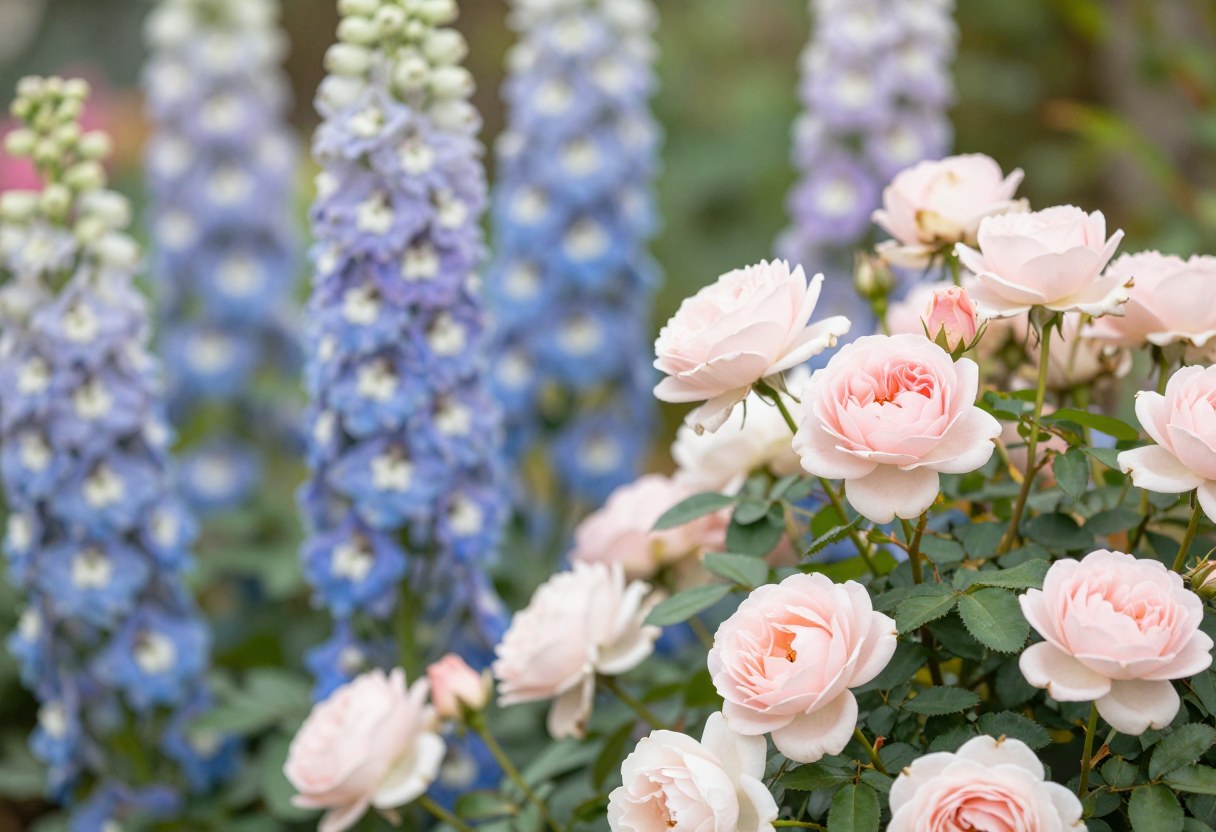
Pastel gardens are most strongly associated with the English cottage garden tradition — foxgloves, roses, delphiniums, sweet peas, and lavender in harmonious clouds of soft pink, lilac, blush, and powder blue. They also tend to perform best in the lower-light conditions of overcast days and part shade, where their soft tones glow rather than washing out.
🎨
Design Tip: Pastels are 'safe' in the sense that they rarely clash — because all pastels have white in them, they share a common lightness that creates harmony. But 'safe' doesn't mean boring. The best pastel gardens create extraordinary depth through texture variation, form contrast, and subtle color sequencing from light to darker tints.
Best Schemes for Pastel Gardens
•Romantic Cool: Powder blue + pale lavender + soft lilac + white — the quintessential English border
•Warm Blush: Blush pink + peach + pale apricot + cream — warm-toned pastels for a romantic, sunset feel
•Rainbow Soft: All colors at pastel intensity — baby pink, powder blue, soft yellow, lilac, pale peach in flowing drifts
•Monochromatic Pastel: All pinks from palest blush to deeper rose — full range of tints of one hue
Essential Pastel Perennials & Annuals
Plant
Type
Pastel Color(s)
Height
Zones
Bloom Season
Lavender (Lavandula)
Perennial shrub
Soft purple-blue, lilac, pale pink, white
12–36 in
5–8
Early summer
Cosmos (Cosmos bipinnatus)
Annual
Baby pink, white, pale lavender, blush
24–48 in
Annual
Summer–fall
Foxglove (Digitalis purpurea)
Biennial/short perennial
Pale pink, blush, white, soft lavender
24–72 in
4–8
Late spring–early summer
Sweet Peas (Lathyrus odoratus)
Annual vine
Blush, soft pink, pale lavender, white
3–8 ft
Annual (cool season)
Spring–early summer
Astilbe
Perennial
Pale pink, lilac, white, light mauve
12–48 in
3–8
Early summer
Delphinium (tall)
Perennial
Powder blue, pale pink, soft white, lavender
24–84 in
3–7
Early summer
Garden Phlox (Phlox paniculata)
Perennial
Pale pink, soft white, light lavender, blush
18–48 in
4–8
Midsummer–early fall
Echinacea 'Magnus' / 'Magnus Superior'
Perennial
Soft rose-pink (mellower than hot colors)
24–36 in
3–8
Midsummer–fall
Scabiosa (Pincushion Flower)
Annual/perennial
Pale lavender, soft pink, white
12–24 in
3–9
Summer–fall
Nigella (Love-in-a-Mist)
Annual
Powder blue, pale pink, white, soft violet
12–18 in
Annual
Late spring–summer
Japanese Anemone
Perennial
Pale pink, blush, soft white
24–60 in
4–8
Late summer–fall
Bleeding Heart (Lamprocapnos)
Perennial
Blush pink, white
18–36 in
3–9
Spring
Catmint (Nepeta)
Perennial
Soft lavender-blue
18–36 in
3–8
Late spring–fall
Salvia 'Blue Hill' or 'May Night'
Perennial
Pale violet-blue
18–24 in
4–9
Late spring–summer
Gypsophila (Baby's Breath)
Annual/perennial
Tiny white blooms, softening filler
12–36 in
3–9
Summer
Essential Pastel Shrubs
Shrub
Type
Pastel Color(s)
Height
Zones
Bloom Season
Hydrangea 'Incrediball' / 'Annabelle'
Shrub
Soft white mopheads aging to green
3–5 ft
3–9
Midsummer–fall
Hydrangea 'Endless Summer'
Shrub
Powder blue (acidic soil) or soft pink (alkaline)
3–4 ft
4–9
Midsummer–fall
Roses (shrub roses)
Shrub
Blush, pale pink, soft lavender, white
3–6 ft
4–9
Spring–fall
Weigela 'Fairy Purity'
Shrub
Pale pink fading to white
3–4 ft
4–8
Late spring
Spirea (Spiraea)
Shrub
Soft pink, white clusters
2–5 ft
3–9
Spring–early summer
Pastel Garden Design: Keys to Success
•Layer from tall to short: Tall foxgloves and delphiniums at the back, medium cosmos and phlox in the middle, low catmint and alyssum at the front. Layered height creates the lush, abundant cottage-garden look.
•Add silver and gray: Lamb's ear, dusty miller, and artemisia are the perfect companions for any pastel palette. They don't compete — they amplify all pastels around them by reflecting light.
•Include white as the 'cleaner': White flowers inserted throughout a pastel scheme prevent colors from blending muddily together. White is the spacer that keeps soft pinks from reading as soft oranges.
•Use structure for year-round beauty: Old English roses, standard hydrangeas, and clipped evergreen hedges give the pastel garden form even when nothing is blooming. Without structure, a pastel garden looks floppy.
•Embrace fragrance: The best pastel plants are also the most fragrant — lavender, roses, sweet peas, phlox, and peonies. A pastel garden that also smells extraordinary elevates the experience from visual to fully sensory.
🌱
Pro Tip: If your pastel garden is in full sun, choose deeper tints (dusty rose, medium lavender) rather than the palest shades, which bleach out. Save the palest blush and powder blue for morning light or part-shade situations where they will glow rather than disappear.
Because every pastel shares white as a base, these tints harmonize almost automatically — the discipline is in the texture and form, not the color matching.
🔵
MONOCHROMATIC GARDENS The power of one color done perfectly — the most sophisticated garden strategy
Why One Color Is the Most Powerful Choice
Counterintuitively, limiting your palette to a single color produces the most sophisticated, intentional-looking garden you can make. A monochromatic garden tells everyone who sees it that a thoughtful designer made deliberate choices — that this is art, not an accident. Vita Sackville-West's White Garden at Sissinghurst, widely considered the most influential garden of the 20th century, is a monochromatic design.
The key misunderstanding about monochromatic gardens is that they're boring. The opposite is true — when color is removed as the primary variable, everything else becomes the star: texture, form, leaf shape, bloom shape, height, and seasonal timing become the elements the eye explores. A monochromatic garden rewards close, sustained attention in a way that a riot of competing colors never can.
📐
The Rule: A successful monochromatic garden must include the full range of tints and shades of its chosen hue — from the palest tint (near-white) through mid-tones to the deepest shade (near-black). Without this range, the design will look flat.
Five Essential Monochromatic Gardens
Here are the five most successful and popular monochromatic garden palettes, each with a complete planting calendar and key design notes:
🟣
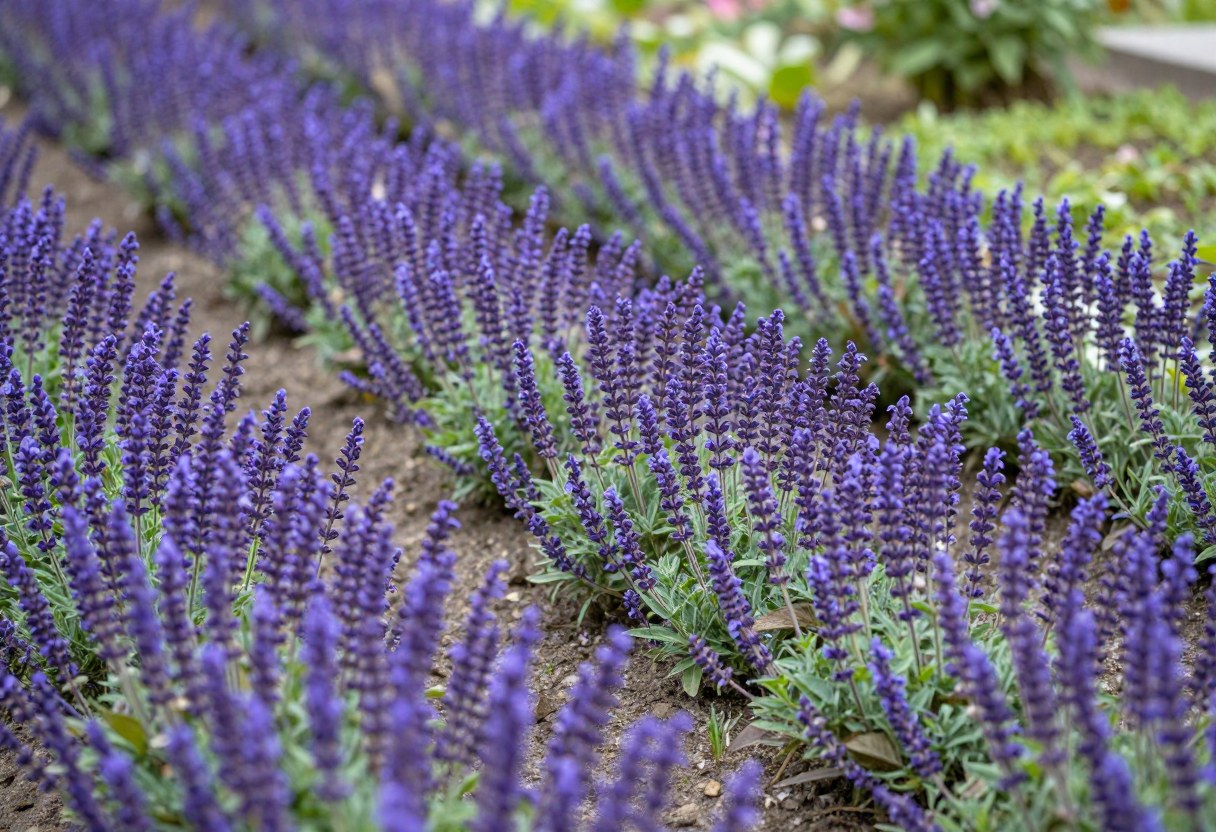
The Purple Garden From pale lilac to near-black plum — the most popular monochromatic palette
Silver/gray foliage (lamb's ear, artemisia, salvia officinalis) as neutral separator; white flowers to 'reset' the eye; dark backgrounds (fence, hedge) make purple pop
💡
Designer's Insight: Blue-purples recede visually — plant them at the far end of a border to make the space look longer. Red-purples advance — use them at the front for intimacy.
🟡
The Yellow & Gold Garden Sunshine and warmth — from pale lemon to deep amber
Yellow can feel harsh at midday sun — pair with warm white, cream, and chartreuse-green to soften. Use yellow at garden edges where it will glow in morning/evening light.
💡
Designer's Insight: Yellow gardens look spectacular in part shade — where the pale golden tones appear to glow against darker foliage. The lighter the yellow, the better it reads in low light.
⚪
The White & Silver Garden The 'Moon Garden' — glows at dusk, radiates calm, works in any light
Season
Plants for This Color
Early Spring
White tulips, white narcissus, white hyacinths, white hellebore (March–April)
Late Spring–Summer
White peonies, white roses, white foxglove, white iris, white allium (May–June)
Late Summer–Fall
White phlox, white echinacea, 'Annabelle' hydrangea, white coneflower, white aster (July–Oct)
White flowers truly glow after sunset and under moonlight — this is the original 'moon garden' concept. White also works as a powerful neutral to separate competing colors in any other scheme.
💡
Designer's Insight: The distinction between warm whites (cream, ivory) and cool whites (pure white, blue-white) matters. Pair warm whites with pastels and yellows; cool whites with blues, purples, and silvers.
🔴
The Red Garden Passionate and dramatic — from soft rose to true blood-red
Season
Plants for This Color
Early Spring
Red tulips, red ranunculus, red hellebore, red quince (March–April)
Late Spring–Summer
Red peonies, red roses, red oriental poppies, red dianthus, red geranium (May–July)
Late Summer–Fall
Red dahlias, crocosmia 'Lucifer', red canna, red cardinal flower, red salvia, red zinnias (July–Oct)
Foliage (Year-Round)
Dark red-leafed coral bells (heuchera), 'Diabolo' physocarpus, red-leafed Japanese maple, burgundy coleus, purple barberry
Design Structure
Red advances visually — it makes spaces feel smaller and more intimate. Use in enclosed spaces or as an accent wall. Burgundy-leaved plants extend the color when flowers are between bloom cycles.
💡
Designer's Insight: Red in full midday sun can feel harsh. Red flowers glow most beautifully in the golden-hour light of morning and evening. If possible, site your red garden on the east or west side of your property.
🔵
The Blue Garden True blue is rare and precious — worth the hunt, spectacular when achieved
Season
Plants for This Color
Early Spring
Muscari (grape hyacinth), forget-me-nots, Scilla siberica, blue phlox (March–May)
Late Spring–Summer
Delphinium, baptisia, blue iris, Siberian iris, borage, Salvia 'Blue Hill' (May–July)
Late Summer–Fall
Agastache, Russian sage, veronicastrum, ageratum, gentian, Salvia guaranitica (Aug–Oct)
Foliage (Year-Round)
Blue fescue grass, blue oat grass, blue hosta 'Halcyon', blue Agapanthus foliage, blue Atlas cedar (evergreen backdrop)
Design Structure
Frustrating truth: there are very few TRUE blue flowers — most 'blue' plants are actually violet or lavender. Lithodora, true delphiniums, borage, and Scilla get closest. Pairing blue with complementary orange makes it pop intensely.
💡
Designer's Insight: Blue recedes visually and makes spaces feel larger. Plant blue at the far end of a long border to create an illusion of greater depth. Blue is also spectacular in shady areas where it glows rather than fades.
🌈
RAINBOW GARDENS All the colors, all the joy — the most inclusive, celebratory garden design
What Is a Rainbow Garden — and How Do You Make One Work?
A rainbow garden uses all the colors of the spectrum — red, orange, yellow, green, blue, indigo, and violet (ROY G BIV) — in a deliberate arrangement that creates a flowing spectrum effect. Done well, it's joyful, celebratory, and visually spectacular. Done without structure, it becomes a chaotic jumble of every color competing with every other.
The key to a successful rainbow garden is structure — specifically, the principle that each color occupies a defined zone, and adjacent zones use colors that are next to each other on the spectrum. Red doesn't appear next to blue (they clash violently when adjacent); red appears next to orange, which flows into yellow. The spectrum order IS the design logic.
🎨
Design Tip: Remember that 'blue' is genuinely rare in the plant world. Most 'blue' plants are actually violet or lavender. For the truest blue effect, lean into Lithodora, borage, Siberian squill (Scilla), and Salvia guaranitica 'Black and Blue.' Accept that your 'blue band' will be blue-violet, which still works beautifully in the spectrum sequence.
Arrange a curved or semicircular bed following red → orange → yellow → green → blue → violet left to right. Each color band should be 18–24 inches wide. Tallest plants at the center back, shortest at the edges. This is the most literal 'rainbow' effect and works especially well in large beds or as a statement border.
🔀 Diagonal Color Waves
Run each color in a diagonal band across a rectangular border. Creates movement and a more dynamic, contemporary feel than the classic arc. Works well in long straight borders along a fence or wall.
🫧 Color Cluster Drifts
Group each color in naturalistic drifts (larger masses of 3–9 plants of each color) scattered through the border. Less formal than a structured arc. This is how Piet Oudolf-style designers use color — in flowing sweeps rather than geometric bands.
🪴 Container Rainbow
The easiest entry point — plant one color per container, arrange containers in rainbow order on a deck, patio, or front steps. Extremely flexible; can rearrange seasonally. Works even in a studio apartment with a balcony or fire escape.
🌻 Rainbow Vegetable Garden
Use edibles for every color band: red tomatoes/peppers, orange marigolds/carrots, yellow summer squash, green herbs, blue borage/purple basil, purple eggplant/lavender. Beautiful, functional, and teaches children about the rainbow.
Keeping the Rainbow Readable: Critical Design Rules
•Follow spectrum order: Adjacent colors must be neighbors on the spectrum (red → orange → yellow, NOT red → yellow skipping orange). Skipping spectrum steps creates clashes, not rainbows.
•Each color needs a critical mass: At minimum 3–5 plants per color band, or the band disappears. Containers help here — a single large pot of each color works better than scattered single plants.
•Match plant sizes across color bands: If your red zone is 3 feet tall and your yellow zone is 10 inches tall, the rainbow reads as uneven and accidental. Keep consistent heights within each band, or use a graduated height increase toward one end.
•Transition colors bridge the gaps: Orange transitions red to yellow naturally. Blue-violet transitions blue to violet. Use transition colors to create smooth flows rather than abrupt jumps.
•Green is your breath: The green band in a rainbow garden is essential — it provides the natural breathing space between the warm (red-orange-yellow) and cool (blue-violet) sides and echoes the natural green of all surrounding foliage.
Universal Design Laws: Rules That Work With Any Palette
These principles apply whether you're designing a bold hot border, a serene white garden, a purple monochromatic bed, or a full rainbow planting. They are the structural foundations that separate a designed garden from a planted collection.
Design Law
What It Means & Why It Matters
The Rule of Repetition
Use the same plant or color at least 3 times across a planting. Repetition creates unity and pulls the eye through the composition. Without it, a garden looks like a collection of specimens, not a design.
Mass Planting Principle
3–5 of the same plant together creates visual impact; 1 or 2 looks spotty. Even a small garden benefits from groupings of the same plant rather than single specimens spread everywhere.
The 1/3 Rule of Color
Never use equal amounts of two competing colors — one should dominate (~60%), one should accent (~30%), and a third should provide small pops of contrast (~10%). This ratio creates balance without monotony.
The Viewing Distance Rule
Bright warm colors (red, orange, yellow) appear closer to the viewer. Cool colors (blue, purple) recede. Use warm colors at the far end of a long border to shorten perceived distance; cool colors at the far end to lengthen it.
Foliage is 70% of the Show
Flowers are temporary — most bloom for 2–6 weeks. Foliage is there all season. Design primarily around foliage color, texture, and form; let flowers be the seasonal bonus, not the foundation.
Light Changes Everything
Full sun bleaches pastels; full shade dulls warm colors. Bright reds and oranges sparkle on south/west faces in intense sun; pastels and cool blues look most beautiful in dappled shade or morning/evening light.
The Evergreen Anchor Rule
Every planting needs anchoring structure year-round. Use evergreen shrubs (boxwood, holly, yew, evergreen grasses) as the permanent bones of the design, then layer color around them seasonally.
The Odd Number Rule
Plant in groups of 3, 5, or 7 rather than 2 or 4. Odd numbers look more natural and relaxed; even numbers look formal and can feel static.
This is the Mass Planting Principle and the Rule of Repetition working together — a single color repeated in drifts reads as a deliberate design, not a scattered collection.
The Four Neutrals: Your Most Powerful Design Tools
Neutrals are the unsung heroes of garden color design. Used strategically, they amplify every other color around them and provide the visual rest that makes bold colors hit harder.
Neutral
What It Does in the Garden
White flowers
The universal peacemaker. Separates competing colors, stops the eye from being overwhelmed, makes neighboring colors appear richer. Use white as a 'reset button' anywhere the garden feels too busy.
Silver/gray foliage
Dusty miller, lamb's ear, artemisia 'Powis Castle', stachys — silver foliage picks up and bounces light, creating gleam and allowing vivid colors to pop more intensely against it. The perfect separator.
Green (foliage)
Green is the universal neutral in garden design — it doesn't compete and can accompany any color. Even 'all the greenery' is a color scheme — the 'green drenching' trend uses layered greens exclusively.
Black/very dark foliage
'Black Lace' elder, 'King of Hearts' dahlia, 'Black Scallop' ajuga — these near-black plants create depth and drama, making adjacent brighter colors explode with contrast.
Chartreuse/yellow-green
Creeping Jenny, sweet potato vine 'Margarita', lady's mantle — yellow-green foliage bridges warm and cool colors, connects the 'warm' and 'cool' sides of a planting, and adds freshness.
Season-Long Color: Planning for April Through November
The biggest trap in garden color design is planning only for peak summer. A truly designed garden has intentional color from spring bulbs through fall berries — a sequence of visual moments, not a single peak followed by months of green.
Season
Color Strategy
Best Plants
Early Spring
Bulbs for the first color impact of the year
Crocus, snowdrops, early daffodils, early tulips, hellebores, flowering quince
Mid-Spring
The garden's second movement — bolder color
Later tulips, alliums, iris, peonies, bleeding heart, late daffodils, redbud tree
Late Spring
Transition to summer — peak for cool-climate lovers
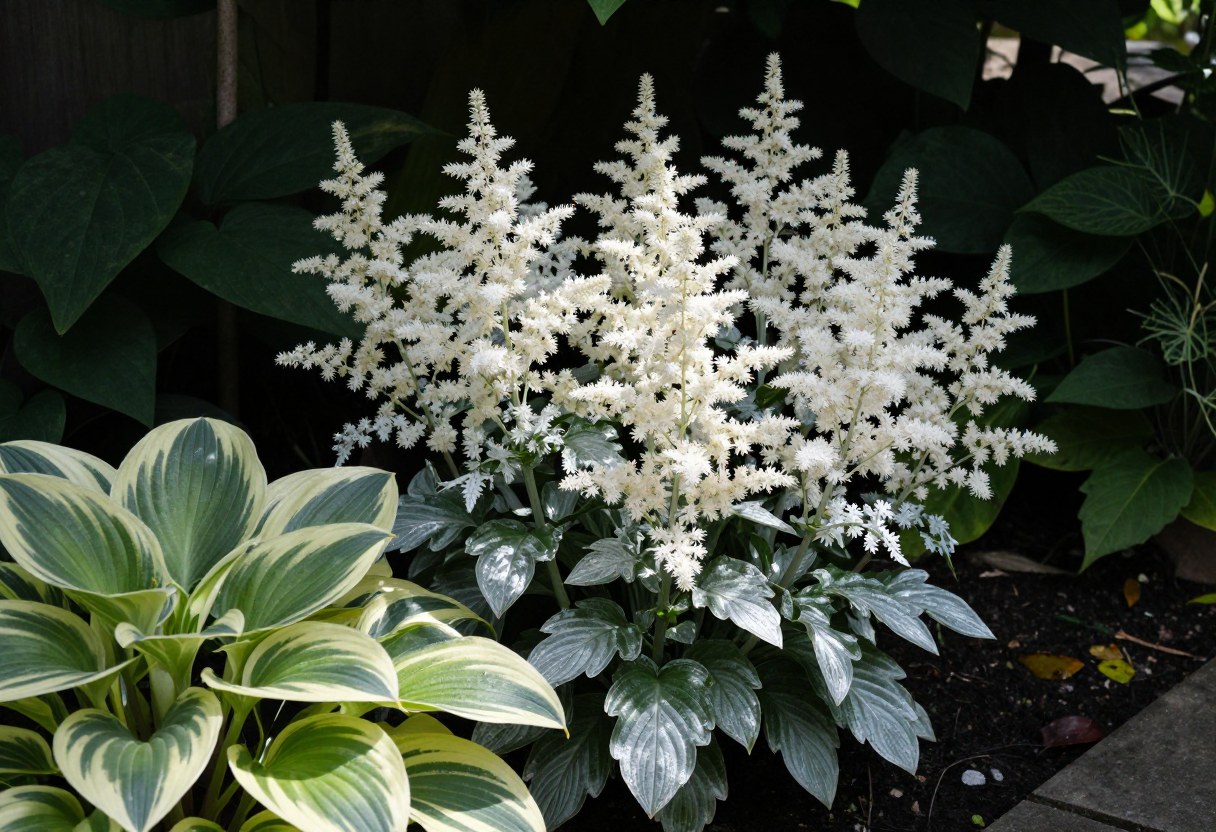
In deep shade, white and silver do the work that bold saturated color can't — they reflect the little light available instead of disappearing into it.
Your Color Garden Quick-Start Checklist
Ready to design your garden with color? Work through these decisions in sequence before buying a single plant:
☐
Design Decision
☐
Decided what FEELING I want this garden to create (energizing, calming, romantic, playful, sophisticated)
☐
Chosen my primary color strategy (Bold, Pastel, Monochromatic, Rainbow, or combination)
☐
Assessed sun exposure and matched palette to light conditions (bold for full sun, pastel for part shade, white for deep shade)
☐
Identified my primary viewing time (daytime, evening, dusk) and adjusted palette accordingly
☐
Selected a dominant color (~60%) and one or two supporting/accent colors
☐
Planned for foliage color as my primary palette carrier — chosen colored-leaf plants that sustain the scheme all season
☐
Added at least one neutral (white, silver, or chartreuse) to provide visual breathing room
☐
Planned for sequential bloom times so the palette carries from spring through fall
☐
Included structural plants (evergreen shrubs, grasses) that provide form year-round
☐
Planned to plant in masses (minimum 3 of each plant) rather than single specimens
☐
Considered the viewing distance — bold saturated colors for long-distance viewing, soft pastels for close-up enjoyment
☐
Thought about my home's exterior color — does my palette complement or create pleasing contrast with the house?
☐
Made a test planting or arranged pots together to preview combinations before committing
☐
Ready to experiment — planted, assessed, adjusted, and planted again
A finished color garden reads as one composition — dominant, secondary, and accent colors working in the roughly 60-30-10 balance covered above.
Color Is the Garden's Voice — Learn to Use It Intentionally
The difference between a garden that people remember and one they forget is almost always intentional color. It doesn't require more plants, more money, or more space. It requires clarity — a decision about mood, palette, and structure made before the first plant goes in the ground.
Start with a feeling. Choose a palette that creates it. Design around foliage first. Add flowers as seasonal punctuation. Use neutrals to give your colors room to breathe. Plant in masses rather than samples. And most importantly — don't be afraid to experiment. Gardens are the most forgiving canvas that exists. Every year is a new opportunity to refine, adjust, and push further into the vision you're building.
Whether you choose the blazing fire of a bold tropical border, the hushed elegance of a white moon garden, the sophisticated restraint of an all-purple planting, or the joyful exuberance of a full rainbow, the most important thing is that you chose it. Intentional is the difference between decoration and design.
Go paint your garden. 🎨🌿🌺
Tools We Recommend
Having the right tools makes planting and maintaining a color garden a pleasure rather than a chore. This 23-piece floral set covers everything you need for planting bulbs, deadheading, weeding between perennials, and keeping your beds tidy all season long.
Recommended Product
Heavy Duty Garden Tools 23-Piece Floral Set
A complete ergonomic gardening kit built around a beautiful floral tote bag — everything you need to plant, tend, and enjoy a colorful garden, all in one place.
✓Lightweight aluminum alloy tools — strong, rust-proof, and easy on your hands
✓Ergonomic non-slip handles reduce fatigue during long planting sessions
✓Complete 23-piece set: trowel, hand rake, weeder, crack weeder, pruner, spray bottle, claw gloves, 15 plant tags, and more
✓Floral heavy-duty tote bag with multiple pockets keeps every tool organized and portable
✓Eco-friendly, non-toxic materials — safe for edible and ornamental gardens alike
Affiliate link — we may earn a small commission at no extra cost to you.
🌿 Get Seasonal Gardening Tips
New guides, planting reminders, and growing tips — straight to your inbox.
No spam. Unsubscribe anytime.
About the Author
David Rodgers is the Founder & Head Gardener of Planting Atlas. With over 40 years of hands-on gardening experience in Oklahoma's Zone 7 climate, he researches, writes, and personally tests every guide on the site.
David draws from real backyard trials, soil testing, and trusted sources like Oklahoma State University Extension and USDA data to deliver practical, zone-specific advice that actually works.