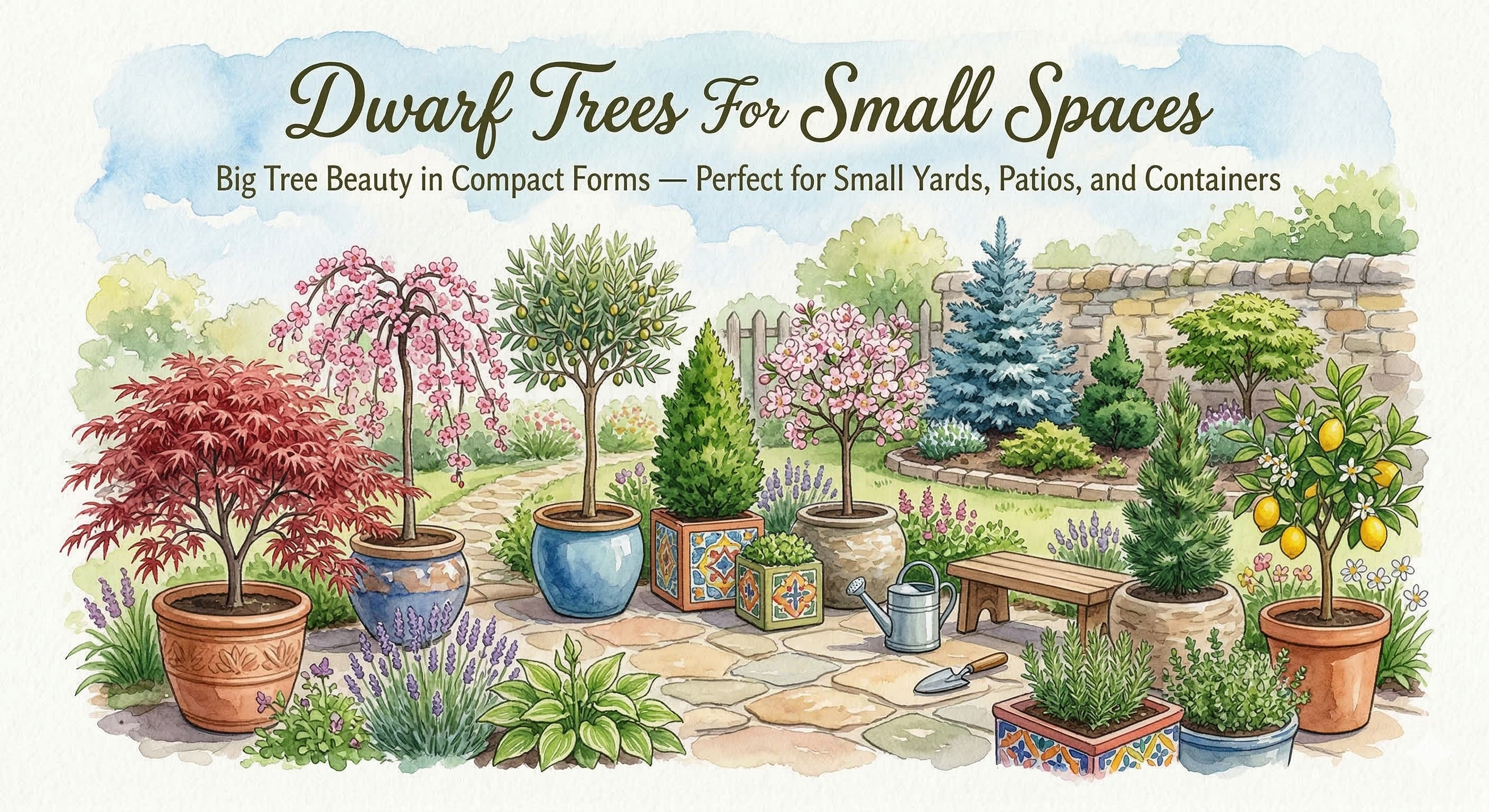
Big Tree Beauty in Compact Forms — Perfect for Small Yards, Patios, and Containers
Not everyone has a sprawling acre to work with. Most of us are gardening in suburban lots, urban row houses, townhome patios, condo balconies, or small back yards where a standard-sized tree would simply take over. The good news: the tree world has been hard at work developing compact forms of nearly everything you love — flowering cherries that top out at six feet, Japanese maples you can grow in a pot on the deck, crabapples that fit between windows, conifers that look like living sculptures without ever needing a chainsaw.
Not everyone has a sprawling acre to work with. Most of us are gardening in suburban lots, urban row houses, townhome patios, condo balconies, or small back yards where a standard-sized tree would simply take over. The good news: the tree world has been hard at work developing compact forms of nearly everything you love — flowering cherries that top out at six feet, Japanese maples you can grow in a pot on the deck, crabapples that fit between windows, conifers that look like living sculptures without ever needing a chainsaw.
Dwarf trees aren't a compromise. They're a category unto themselves — selected, bred, or grafted specifically to deliver full-scale beauty in a fraction of the space. A well-chosen dwarf tree can be the single most dramatic element in a small garden: a weeping redbud cascading over a patio, a paperbark maple in a statement container by the front door, a perfectly conical dwarf Alberta spruce flanking the steps, a compact crape myrtle absolutely covered in crimson flowers all summer. None of these require a big yard. They just require a little knowledge of what you're buying.
🌱
What 'Dwarf' Actually Means: In the tree world, 'dwarf' has no legal definition — it simply means smaller than the standard form of the same species. A dwarf tree might be 4 feet or 20 feet at maturity depending on what it's being compared to. Always read the tag for mature dimensions, not just the word 'dwarf.' A dwarf Southern magnolia might still reach 20 feet. A dwarf false cypress might top out at 3 feet. The word is context-dependent. This guide focuses on trees generally under 15 feet — the size range ideal for small yards, foundation plantings, and container gardening.
The Small-Space Gardener's Unique Advantages
•More choice, not less: Compact trees open spaces that would otherwise be treeless. A patio with three thoughtfully chosen dwarf trees in statement containers has more visual drama than a large yard with one awkwardly placed standard tree.
•Closer engagement: Smaller trees put the action at eye level. You see the flowers up close, smell the fragrance without a ladder, watch the pollinators working the blooms from your patio chair. This intimacy is genuinely wonderful.
•Container mobility: Dwarf trees in containers can be moved to follow the sun, protect tender species from cold, or rearrange the design seasonally. This flexibility is impossible with trees in the ground.
•Lower maintenance: Smaller trees need less pruning, are easier to spray if needed, produce manageable quantities of leaves and debris, and can typically be managed with hand tools rather than chainsaws and bucket trucks.
•Faster results: Dwarf trees are often grown on dwarfing rootstocks that encourage earlier fruiting and faster establishment relative to their eventual size. Many dwarf ornamentals make a visual impact within a year or two of planting.
How Dwarf Trees Are Created
Understanding why a tree stays small helps you choose and manage it better. There are three main mechanisms:
•Grafting onto dwarfing rootstock: The most common approach for fruit trees. The fruiting variety (scion) is grafted onto a rootstock selected for its growth-limiting properties. Malling 9 rootstock for apples produces trees that stay 8–10 feet; Malling 27 produces trees under 6 feet. The scion variety and its fruit are full-sized; only the tree's overall scale is reduced. Ornamental cherries and other Prunus trees are also commonly grafted, often top-grafted onto a stake at a fixed height to create the weeping umbrella form.
•Genetic mutation / bud sport: Sometimes a branch on a normal tree develops a mutation that causes unusually compact growth. Horticulturalists propagate these 'witches' broom' mutations by grafting or cuttings to create cultivars. Dwarf Alberta spruce and many dwarf conifers originated this way. These trees don't need dwarfing rootstocks — the compact habit is in their genetics.
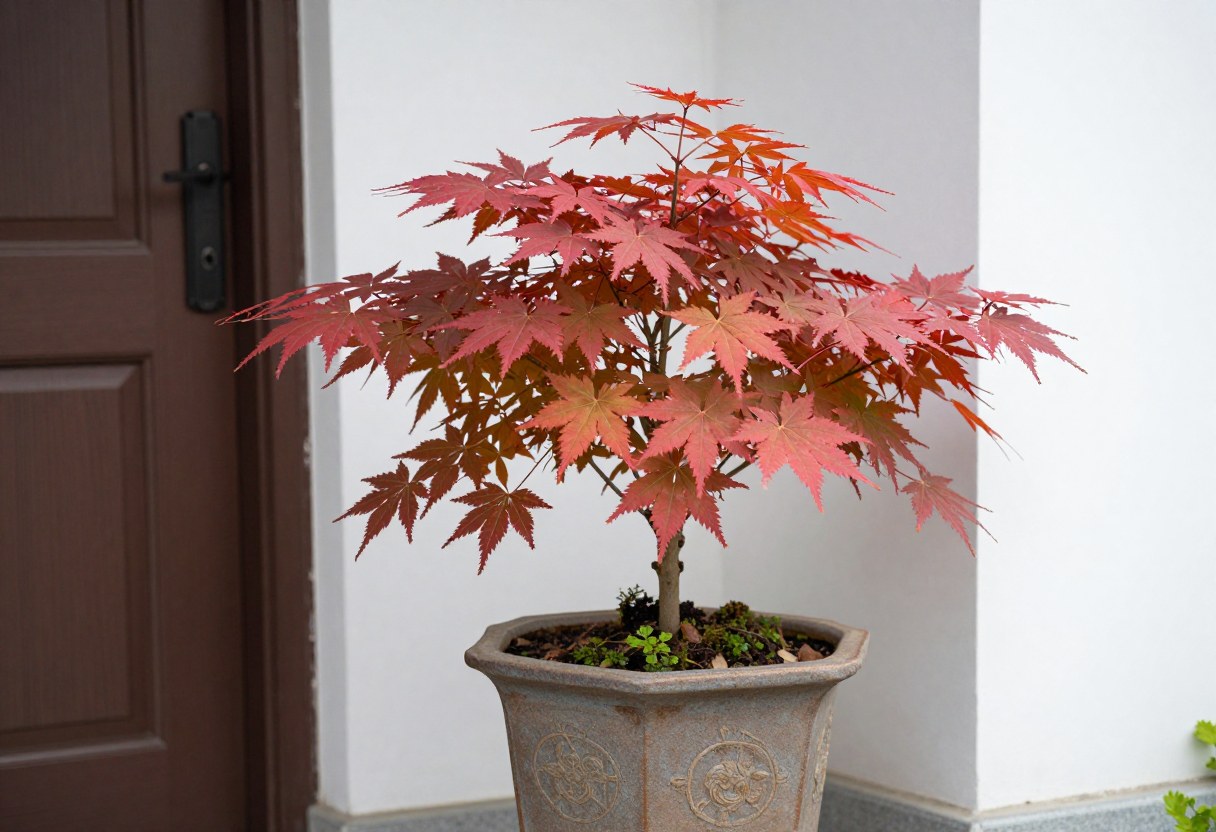
•Container restriction: Any tree grown in a container has its root system — and therefore its top growth — naturally limited by the pot size. This is why the same Japanese maple might reach 15 feet in the ground but stay 5–6 feet in a large container for a decade or more. Container growing is not really 'dwarfing' in a botanical sense, but it's a practical strategy for controlling size.
⚠️
The Graft Union Warning (Again!): Grafted dwarf trees — especially fruit trees — must maintain the graft union above soil level. If the graft union is buried, the scion variety can root itself, bypassing the dwarfing rootstock and eventually growing into a full-sized tree. On ornamental weeping trees grafted at the top of a stake, watch for suckers growing from the rootstock below the graft — they must be removed immediately or they'll outcompete and overwhelm the ornamental top.
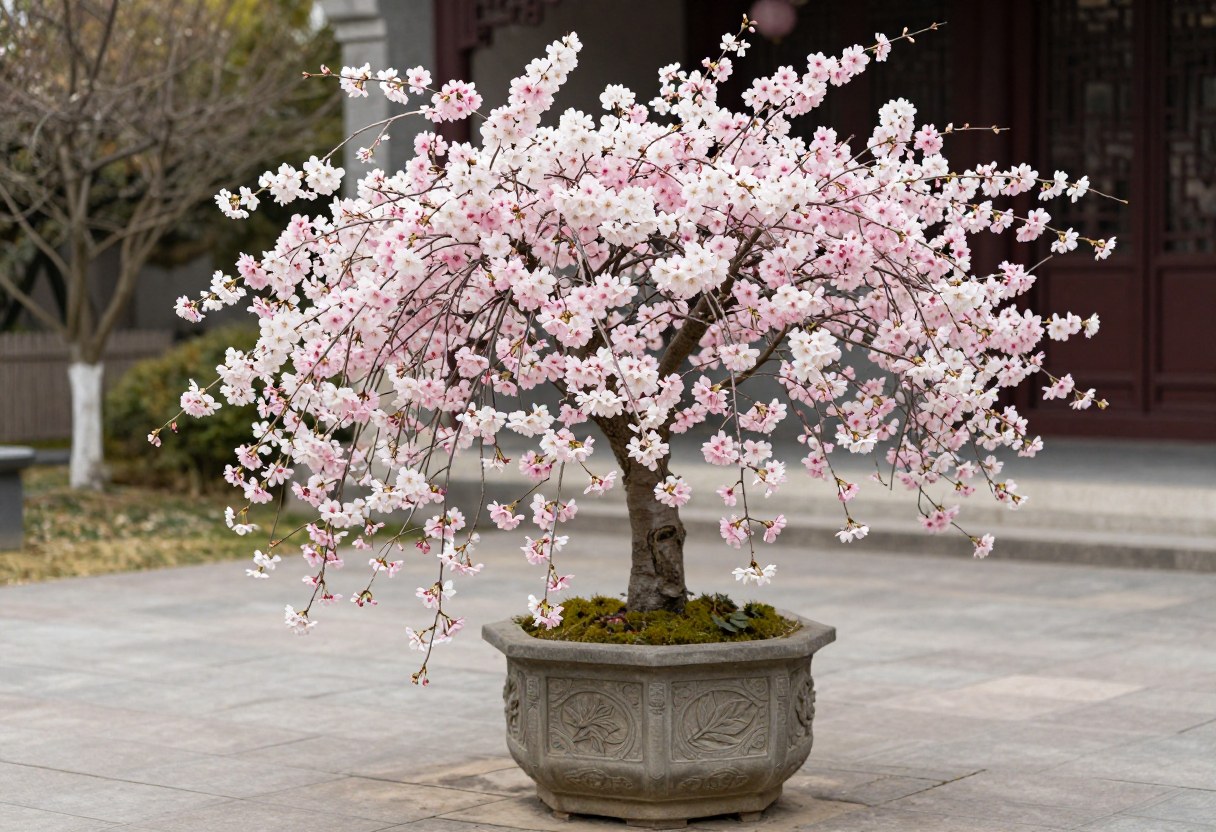
Full-scale spring drama in a fraction of the footprint — exactly the "not a compromise" point this category makes.
Section 1: Choosing the Right Dwarf Tree — The Framework
Small spaces are less forgiving of bad choices. In a large landscape, a poorly chosen tree is an annoyance. In a small space, it can be a disaster — blocking light, dominating everything, requiring removal before it's achieved what you planted it for. Choose carefully the first time.
Define the Role Before You Shop
Role
What It Means
Top Candidates
Focal Point / Specimen
One dramatic tree that anchors the space and draws the eye. Should be exceptional in at least one season, ideally several.
Weeping dwarf cherry, dwarf Japanese maple, Star magnolia, columnar dwarf conifer
Foundation Planting
Structured planting close to the house — softens architecture, frames windows, defines entry. Usually evergreen or slow-growing.
Always look at three numbers before buying any dwarf tree: mature height, mature spread, and growth rate. A tree described as '12 feet tall at maturity' sounds compact — but if it also has a 10-foot spread and grows 2 feet per year, it will fill a small yard within five years.
Category
Mature Height
Mature Spread
Growth Rate
Best Use
Miniature / Micro-dwarf
Under 4'
Under 2" per year
Rock gardens, tabletop containers, troughs, fairy gardens, bonsai candidates
True Dwarf
4'–8'
2"–4" per year
Containers, small foundation beds, patio planting, small yard specimens
Semi-Dwarf / Compact
8'–15'
6'–12'
4"–8" per year
Most small yards; good balance of impact and manageability
'Dwarf' by comparison only
15'–25'+
Variable
1'–2' per year
May still be too large for very small spaces despite the 'dwarf' label — verify mature size
📏
The Space Math: Before buying any tree, measure your available space and subtract the mature spread from each edge. A 6-foot-spread tree needs to be planted at least 3 feet from any wall, fence, path, or adjacent plant to maintain its natural form. Add the mature height and check for utility lines, eave clearance, and whether the tree will shade out what you want to keep sunny underneath. Do this math before you fall in love at the nursery.
Container vs. In-Ground: Matching Tree to Setting
Setting
Key Benefits
Best For
Key Considerations
Permanent in-ground planting
Full root development, maximum drought resilience once established, trees live longest
Foundation plantings, garden specimens, yard trees
Can't be moved; choose carefully for the site
Container on patio/deck
Portability, size control, ability to overwinter tender species indoors
Here's a fact that catches many container gardeners off guard: a tree growing in a pot is more vulnerable to winter cold than the same tree growing in the ground. In the ground, soil acts as insulation — roots stay above freezing even when air temperatures plunge. In a container, roots are surrounded on all sides by the ambient air temperature and can freeze solid in a single hard winter.
The practical rule: choose container trees that are hardy 1–2 zones colder than your actual zone. If you're in zone 7, plant trees rated to zone 5 or 6 in outdoor containers. If you're in zone 6, go to zone 4 or 5. Alternatively, move containers to an unheated garage, basement, or shed when temperatures drop below 20°F — this protects roots without the warmth that would trigger premature spring growth.
❄️
Overwintering Container Trees: Hardy deciduous trees (Japanese maples, dwarf crabapples, dwarf serviceberry) can usually overwinter in a sheltered outdoor location — against a south-facing wall, in a corner protected from wind, or wrapped with insulating burlap over the container. Tender trees (citrus, fig in cold zones, crape myrtle in zone 6) need to come inside — a cool, bright space like an unheated sunroom, or a cool dark space like a garage (for dormant deciduous trees). Water sparingly through dormancy. Resume normal watering in spring as temperatures rise.
A container tree like this is more cold-vulnerable than the same species in the ground — plan its winter hardiness one to two zones colder than your actual zone.
Section 2: Dwarf Flowering Trees — The Spring Stars
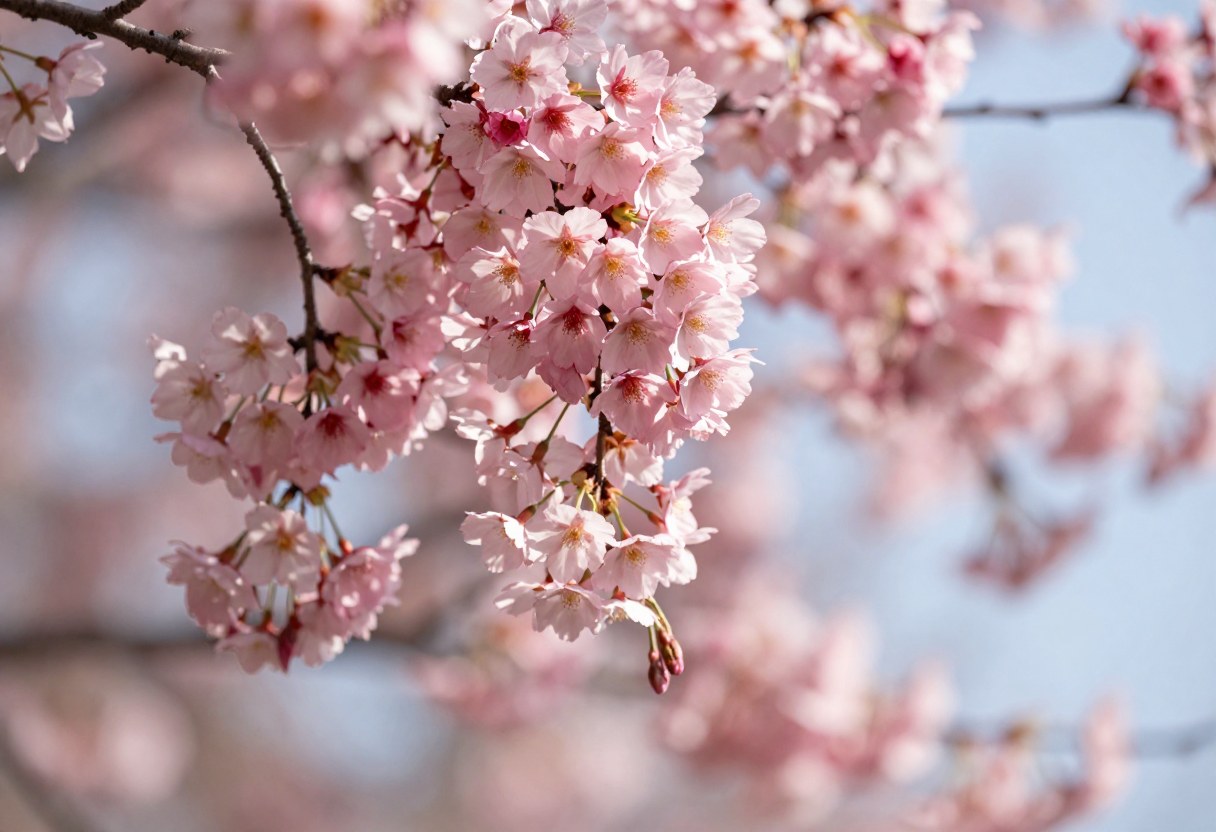
Flowering dwarf trees are the category that gets the most attention for good reason — there is nothing in the small-space garden quite like a weeping cherry in full bloom, a compact magnolia covered in saucer flowers, or a dwarf redbud erupting in magenta before a single leaf has opened. These are the trees people stop their cars to look at.
🌸 Weeping Dwarf Cherry — Spring's Showstopper in a Small Package
Standard weeping cherries can reach 20–30 feet with a similar spread — too large for most small spaces. But several dwarf and compact weeping cherry cultivars bring that same cascading pink-and-white drama to trees under 10 feet. These are top-grafted trees: the weeping scion is grafted onto an upright rootstock at a fixed height (usually 4–6 feet), which determines the eventual umbrella shape. The branches cascade from that graft point downward, creating the signature fountain silhouette.
•Key Watch-Out: Remove any suckers growing from below the graft union immediately. They grow vigorously from the rootstock and will overwhelm the ornamental top if ignored.
Cultivar
Height (ft)
Spread (ft)
Flowers
Zones
Special Notes
'Snow Fountain' (Prunus x 'Snofozam')
5–8
6–8
White, mid-spring, fragrant, masses of single flowers on cascading branches
5–8
Outstanding — golden-yellow in fall; attractive branching all winter
Hiromi / 'Hiromi Weeping'
3–6
2–4
Deep pink, early spring, masses of single blooms on arching branches
4–8
Smallest weeping cherry available; excellent for tiny spaces and containers
'Pendula Rubra' (Prunus subhirtella)
6–12
Carmine-pink, very early spring (February–March)
5–8
Very early bloom; can catch frosts but brave display in mild years
'Kojo-No-Mai'
6–8
5–7
Pale pink to white, spring; twisted zigzag branch structure
4–8
Exceptional year-round interest from unusual zigzag branching; pot-friendly
'Okame' (compact form)
12–15
8–10
Vibrant rosy-pink, very early spring (earliest of cherries)
6–8
Outstanding orange-red fall color; more shrubby than weeping but compact
•Care: Full sun for best flowering; well-drained soil; prune only after flowering (late spring); watch for borers at trunk base (keep area clear of mulch contact); relatively short-lived (20–30 years) but beautiful every year.
The cascading branches come from a top-graft — the weeping scion grafted onto an upright rootstock at a fixed height determines this exact umbrella shape.
💜 Weeping and Compact Redbud — Native Drama at Ground Level
Eastern redbud (Cercis canadensis) is already one of the best small trees in North American horticulture — flowering on bare wood in brilliant pink-purple before a single leaf opens, adaptable to sun or part shade, native across most of the eastern US. The new generation of compact and weeping cultivars puts this beauty in reach of even the smallest spaces, including containers.
Cultivar
Height (ft)
Spread (ft)
Flowers
Zones
Special Notes
'Ruby Falls'
6–8
5–6
Rose-pink, spring on bare branches
5–9
Weeping habit + deep burgundy-purple heart-shaped leaves; vivid gold fall color. One of the most spectacular small trees available.
'Pink Heartbreaker'
5–7
4–6
Pink, spring
5–9
Weeping form; green heart-shaped leaves turn bright yellow in fall
'Covey' / Lavender Twist
5–6
6–8
Lavender-pink, spring
5–9
Spreading weeping form more than upright; excellent container tree; green leaves
'Ace of Hearts'
8–12
10–15
Pink-purple, spring
5–9
Compact rounded form (not weeping); heart-shaped leaves; excellent small yard specimen
'The Rising Sun'
10–12
Lavender-pink, spring
5–9
Outstanding foliage: emerges gold-apricot in spring, matures to green; fall gold
•Care: Full sun to part shade (tolerates more shade than most flowering trees); adaptable to a range of soils; drought-tolerant once established; prune right after flowering; remove suckers from rootstock on grafted weeping forms.
🌼 Compact and Dwarf Magnolia — Big Drama, Manageable Size
The standard saucer magnolia can reach 25 feet — impressive but potentially overwhelming in a small space. The Little Girl series hybrids and Star magnolia offer the same extraordinary spring bloom in trees that stay 8–15 feet, with the added bonus that they bloom later than standard saucer magnolia, missing many late frosts that ruin the early-blooming parent's flowers.
•Star Magnolia (Magnolia stellata): Arguably the best small-space magnolia. Naturally compact to 10–15 feet, star-shaped fragrant white flowers in early spring, slow growth rate. Cultivar 'Royal Star' is the most popular (later-blooming, frost-resistant, prolific). Zones 4–8.
•Little Girl Hybrids: A series of compact magnolias (Ann, Betty, Jane, Judy, Randy, Ricki, Susan, Pinkie) developed at the National Arboretum specifically for small spaces and later bloom (reducing frost damage). Most mature at 8–12 feet, bloom in late April to May, and offer deeper pink to red-purple flowers. 'Ann' and 'Jane' are the most widely available. All zones 4–8.
•Magnolia 'Butterflies': Exceptional yellow-flowering magnolia staying 15–20 feet; earlier than most hybrid magnolias; excellent for those who want something other than pink or white. Zones 5–8.
Cultivar
Height (ft)
Spread (ft)
Flowers
Zones
Special Notes
Star Magnolia 'Royal Star'
10–15
8–12
White, star-shaped, fragrant, mid-spring
4–8
Later-blooming than species; good frost resistance; excellent small yard specimen
Magnolia 'Ann' (Little Girl)
8–10
Red-purple buds opening to pink-purple, late April–May
4–8
One of the most compact; blooms after frost risk; stunning
Magnolia 'Jane' (Little Girl)
10–15
8–12
Rich pink-purple, fragrant, late spring
4–8
Later-blooming than most; can rebloom in summer in warm climates
Magnolia 'Betty' (Little Girl)
10–12
Large pink-purple, fragrant, mid to late spring
4–8
Vigorous; large flowers; excellent for zones 4–5 where others struggle
Magnolia 'Butterflies'
15–20
10–12
Bright yellow, early spring
5–8
Rare yellow magnolia; striking accent; good for adding unusual color
•Care: Full sun to part shade; well-drained, slightly acidic soil; avoid exposed sites where early flowers face frost risk; minimal pruning (only remove dead wood and crossing branches after flowering); slow-release fertilizer in spring.
🍎 Dwarf and Compact Crabapple — The All-Year Small-Space Champion
A disease-resistant dwarf crabapple may be the single best multi-season tree for small yards. Spring flowers (white, pink, or deep red-purple) that rival any ornamental; summer foliage; persistent small fruit through fall and into winter that birds love and that creates color when everything else is bare; and in the best cultivars, attractive branching structure. They fit in beds, foundations, and large containers. Always choose disease-resistant cultivars — the older varieties were magnets for scab, fire blight, and mildew.
Cultivar
Height (ft)
Spread (ft)
Flowers
Fruit
Disease Resistance
Notes
'Camelot'
5–6
6–8
Rose-pink, spring
Red-orange, small, persistent into winter
Excellent
Dwarf rounded mound; golden fall foliage; exceptional disease resistance; ideal container size
'Lanzam' / Lancelot
8–10
White, spring, heavy bloomer
Golden-yellow, persistent
Excellent
Dense rounded form; clean foliage all season; one of the most compact true crabapples
'Louisa'
8–10
8–12
Pink, spring (graceful weeping form)
Yellow, persistent
Good
Weeping habit; elegant in all seasons; one of best weeping crabapples for small spaces
'Sargentii' (Sargent Crabapple)
6–8
9–12
White, late spring, fragrant
Red, persistent — outstanding bird food
Good
Widest spread-to-height ratio; naturally spreading mound; excellent wildlife value
'Adirondack'
10–12
6
White-pink, heavy bloomer
Orange-red, persistent
Excellent
Narrow columnar-to-oval; ideal for tight spaces between windows; low-litter
'Prairifire'
15–20
Deep red-pink, spring
Small red, very persistent
Outstanding
Larger than others here but included as benchmark; burgundy-red summer foliage
•Care: Full sun mandatory; prune in late winter/early spring or right after flowering; remove crossing/crowded branches to improve airflow (key to disease resistance); watch for fire blight if you see shepherd's crook dieback (cut 12" below, sterilize tools).
🌺 Additional Compact Flowering Trees Worth Knowing
•Dwarf Serviceberry (Amelanchier): 'Rainbow Pillar' (upright columnar, 12x4 feet, excellent zones 4–8) and 'Autumn Brilliance' (can be limbed up to small tree, 15–25 feet) both offer early white flowers, edible summer berries, and exceptional orange-red fall color. Excellent wildlife value. Full sun to part shade.
•Witch Hazel (Hamamelis): Blooms in January–February when nothing else is flowering — spidery yellow, orange, or red flowers on bare branches carry a sweet spicy fragrance that's extraordinary on a cold morning. Compact selection 'Arnold Promise' (20 feet), 'Jelena' (copper-orange, 15 feet), and 'Diane' (red) offer compact options. Zones 4–8.
•Compact Fringe Tree (Chionanthus virginicus): Small specimens 10–12 feet, fragrant white cloud-like flowers in May. Grows as a large shrub or small multi-stem tree. Zones 3–9. Exceptional wildlife value. Largely unknown and massively underplanted.
•Compact Crape Myrtle (Lagerstroemia): Mid-size cultivars 6–12 feet ('Acoma' white, 'Hopi' pink, 'Centennial Spirit' deep red) fit small yards and large containers. Blooms 60–90 days in summer; exfoliating bark for winter interest. Zones 7–10. Full sun mandatory.
•Patio Peach / Nectarine ('Bonfire', 'Eldorado'): Ornamental and edible — striking reddish-bronze foliage with pink blossoms in spring, followed by real fruit. Stays 4–6 feet. Perfect dual-purpose container tree. Zones 5–9. Full sun; well-drained soil; thin fruit aggressively.
Section 3: Dwarf Evergreens — Year-Round Structure and Beauty
If flowering dwarf trees are the spring celebrities, dwarf evergreens are the reliable year-round backbone. They provide structure when deciduous trees are bare, texture when perennials have disappeared underground, and green life when winter has stripped everything else away. They also happen to look beautiful, coming in a remarkable range of colors (gold, blue-green, silver-gray, deep green), textures (soft and feathery, tight and dense, threadlike and cascading), and forms (conical, globose, spreading, columnar, weeping).
Unlike most flowering ornamentals that have one spectacular season, the best dwarf evergreens are beautiful every single day of the year. And with proper selection, they virtually never need pruning to maintain their natural form — just the occasional removal of dead wood or wayward branch.
Dwarf Hinoki Cypress (Chamaecyparis obtusa) — The Aristocrat of Dwarf Evergreens
If there's one dwarf evergreen that earns the label 'aristocrat,' it's the Hinoki false cypress. The foliage is arranged in beautiful flat fan-like sprays, dark glossy green, with a distinctly refined, architectural quality that looks almost sculpted. It grows extremely slowly — 2–4 inches per year for most dwarf cultivars — maintaining its elegant form for decades without becoming aggressive or requiring significant pruning. Sacred to the Shinto religion in its native Japan, it has the serene, meditative quality of a living bonsai.
Cultivar
Height (ft)
Spread (ft)
Growth Rate
Zones
Notes
'Nana Gracilis'
4–6
3–4
Slow
4–8
The classic dwarf Hinoki. Irregular pyramidal form with beautiful shell-like foliage sprays. Most popular cultivar for rock gardens and containers.
'Fernspray Gold'
6–8
4–5
Slow
5–8
Fern-like, lacy golden foliage. More open and graceful than most. Excellent winter color. Unique texture unlike any other conifer.
'Verdoni'
5–6
3–4
Very slow
4–8
Contorted, irregular form with bright green new growth. Has a wonderfully quirky, bonsai-like character. Excellent container specimen.
'Nana Lutea'
18"–3'
Extremely slow
4–8
Truly miniature. Gold-tipped deep green foliage. Takes decades to reach stated size. Perfect for troughs, rock gardens, small containers.
'Golden Mop' (C. pisifera)
2–3
3–4
Slow
4–8
Not strictly Hinoki but related. Cascading golden-yellow threadlike foliage. Creates a golden mounding effect that brightens any space.
'Soft Serve' (C. pisifera)
4–6
2–3
Slow
5–8
Narrow pyramidal with soft, fern-like dark green foliage. Similar to dwarf Alberta spruce in form but airier. Excellent in containers.
•Care: Full sun to part shade (afternoon shade appreciated in hot climates); consistently moist, well-drained, slightly acidic soil; do NOT let dry out — Hinoki cypress without adequate moisture never looks fully healthy; minimal pruning needed; no serious pest or disease issues; excellent container performer.
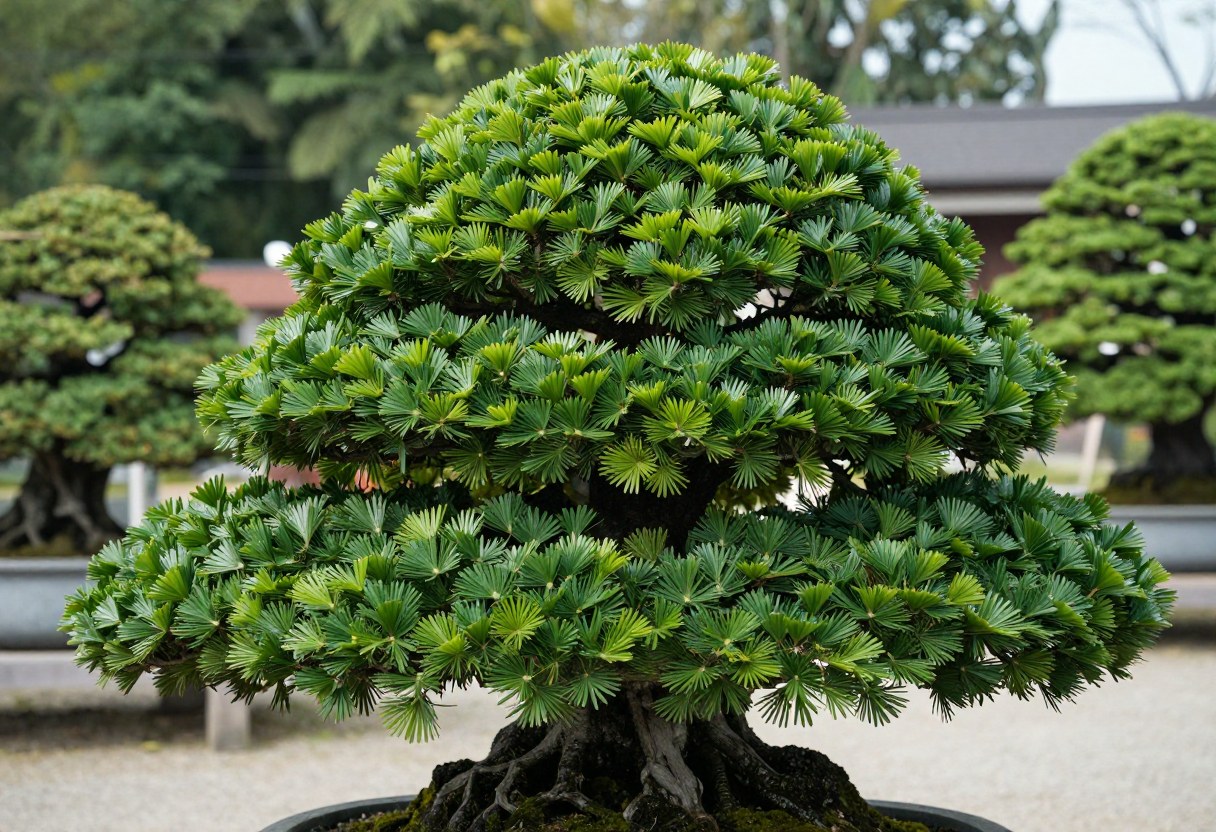
That refined, almost-sculpted texture comes from the foliage growing in flat fan-like sprays — the trait that earns Hinoki cypress its "aristocrat" reputation.
Dwarf Alberta Spruce (Picea glauca 'Conica') — The Perfect Cone
The dwarf Alberta spruce is one of the most widely recognized dwarf conifers in American landscaping — and for good reason. Its dense, perfectly conical form requires zero pruning to maintain, stays green year-round, produces charming lime-green new growth in spring, and grows only 2–4 inches per year, taking 10+ years to reach 4–6 feet. It's often sold as a miniature Christmas tree and can transition to permanent landscape use. Cold-hardy to zone 2, making it one of the hardiest dwarf conifers available.
•Key watch-out: Spider mites can be a significant problem, especially in hot, dry conditions. Monitor for fine webbing and stippled needles, particularly on the inner foliage. Knock mites off with a strong water spray; treat with insecticidal soap or neem oil if needed. Ensure adequate moisture — spider mites prefer stressed, dry plants.
•'Tiny Tower': A more compact cultivar of dwarf Alberta spruce, topping out at 4–5 feet and maintaining an exceptionally tight, perfect cone. Slightly more mite-resistant than the standard 'Conica.'
•Zones: 2–8; best in zones 3–6. Struggles in hot, humid climates (zones 8+) where it's prone to mites and heat stress.
Dwarf Mugo Pine (Pinus mugo) — The Rugged Mound
The mugo pine is one of the toughest and most versatile of all dwarf conifers — tolerating cold, wind, poor soil, drought, and urban pollution better than almost anything else in its size range. It forms a dense, rounded to spreading mound of dark green needles that looks handsome in all four seasons. Unlike the delicate Hinoki cypress, mugo pine is built for difficult conditions. It's excellent for rock gardens, slope planting, foundation edges, and low-maintenance designs.
•True dwarf cultivars: 'Mops' (3–4 feet, very dense globe), 'Slowmound' (3–4 feet, tighter than species), 'Gnome' (3–5 feet, compact mound). Buy named cultivars rather than 'P. mugo' by species name — the species itself can grow unpredictably large; named dwarf cultivars are reliably compact.
•Zones: 2–7. Does not perform well in zones 8+ (heat intolerance).
•Pruning tip: If you want to control size and maintain density, 'candle' the tree each spring: remove half to two-thirds of each new growth candle (the upright new shoots) before they fully extend. This forces dense, compact regrowth without cutting into old wood.
Dwarf Blue Spruce (Picea pungens cultivars) — Cool Color Year-Round
The steel-blue to silver-blue foliage of compact blue spruce cultivars provides year-round cool color that contrasts beautifully with green or gold evergreens, dark bark, or deep-colored foliage plants. These are among the most striking dwarf conifers for winter interest, when the blue needles really shine against bare ground and gray skies.
Cultivar
Height (ft)
Spread (ft)
Form
Zones
Notes
'Montgomery'
3–5
Globe to broadly pyramidal
2–8
Very slow-growing; one of the best compact blue spruces; intense silver-blue color
'Glauca Globosa'
3–5
Globe
2–8
Classic globe blue spruce; dense; excellent for containers and foundation planting
'Fat Albert'
10–15
8–12
Broad pyramid
2–8
Larger than others here but an excellent compact form of blue spruce for small yards; keeps a tidy shape
'Sester Dwarf'
8–12
6–8
Pyramidal
2–7
Very dense; intense blue color; slower than 'Fat Albert'
'Iseli Fastigiata'
10–15
5–6
Narrow upright column
2–8
Columnar form for narrow spaces; exceptional blue color; exclamation mark in the garden
•Care: Full sun; well-drained soil; drought-tolerant once established; minimal pruning; watch for cooley spruce gall aphid (creates pineapple-shaped galls at branch tips — prune off and destroy in spring).
Additional Standout Dwarf Evergreens
•Bird's Nest Spruce (Picea abies 'Nidiformis'): Forms a flat-topped spreading mound with a distinctive central depression (the 'bird's nest'). 2–4 feet tall, 3–5 feet wide. Very slow growth. Dark green. Excellent rock garden or foundation specimen. Zones 2–7.
•Dwarf Korean Fir (Abies koreana 'Silberlocke'): One of the most unusual dwarf conifers. Needles curve upward to reveal their silvery-white undersides, creating a frosted, glittering effect. Produces ornamental purple-blue upright cones even when small. 6–10 feet over many years. Zones 4–7. Part shade in hot climates.
•Compact Japanese Black Pine (Pinus thunbergii 'Thunderhead'): Dramatic, irregular form with long dark green needles and a wonderfully wild character. White candles in spring. 4–6 feet tall. Excellent container specimen; great for Japanese-style gardens. Full sun, well-drained. Zones 5–8.
•Sky Pencil Holly (Ilex crenata 'Sky Pencil'): Extremely narrow columnar form — literally 6–8 feet tall but only 12–18 inches wide. Evergreen. Perfect for tight spaces between windows, flanking doorways, or adding vertical accent in minimal footprint. Full sun to part shade. Zones 5–9. Very cold-hardy.
•Emerald Green Arborvitae (Thuja occidentalis 'Smaragd'): The most popular narrow evergreen in American landscaping. 10–15 feet tall but only 3–4 feet wide; holds its bright green color through winter without bronzing. Excellent privacy screen in a small footprint. Full sun. Zones 2–8. Space 3–4 feet apart for screening.
Section 4: Dwarf Fruit Trees — The Edible Small-Space Garden
Few things in the garden feel more satisfying than harvesting real fruit from a tree you grew on your own patio or in a small yard. Dwarf fruit trees make this accessible to almost anyone — they produce full-sized, full-flavored fruit on trees compact enough to grow in large containers. A well-sited 10-gallon patio apple or a Meyer lemon in a statement pot can produce meaningful quantities of fruit year after year with the right care.
🍎
Important Reality Check: Dwarf fruit trees require more active care than dwarf ornamentals. They need annual pruning, attentive watering (especially in containers), appropriate fertilizing through the growing season, and monitoring for pests and diseases. They also have specific chill hour requirements (for temperate fruits) and pollination needs. The reward — fresh fruit steps from your kitchen — is worth the extra investment, but go in with realistic expectations about the care involved.
Dwarf Apple — The Most Versatile Small-Space Fruit Tree
Modern dwarfing rootstocks (particularly Malling 9 and Malling 27) have transformed apple growing for small spaces. These rootstocks limit tree size to 6–10 feet while encouraging early bearing (often year 2–3 vs. 7–10 for standard trees) and making harvest possible without a ladder. The same favorite apple varieties — Honeycrisp, Fuji, Gala, Granny Smith — are available on dwarfing roots.
•Pollination: Most apple varieties need a second compatible variety blooming at the same time. Plant two dwarf trees, or one multi-grafted 'cocktail tree' with 3–5 varieties on one trunk.
•Chill hours: Match variety to your local chill hour total (hours at/below 45°F in winter). Low-chill varieties (200–300 hours) for zones 8–9; standard varieties (800–1,000 hours) for zones 4–7.
•Columnar apples: 'Colonnade' series and similar upright columnar varieties grow to 8–10 feet tall but only 2 feet wide — perfect for narrow spaces, container gardens, and lining pathways. Pollinate with another columnar or standard apple.
•Container size: 25-gallon minimum for dwarf apple in container; 30–35 gallons for best results. Repot every 3–5 years.
Dwarf Pear — Elegant and Productive
Dwarf pears on Quince or Old Home x Farmingdale (OHF) rootstocks stay 8–12 feet — manageable and beautiful, with white spring flowers, attractive summer foliage, and substantial fruit production. European pears must be picked before they're fully ripe and ripened at room temperature; Asian pears ripen on the tree and have an appealing crisp, juicy texture.
•Pollination: Most pears need a second pear variety (European with European; Asian with Asian).
•Fire blight: More susceptible than apples. Choose fire blight-resistant varieties: 'Harrow Sweet,' 'Kieffer,' 'Seckel.' Avoid 'Bartlett' if fire blight is common in your area.
•Zones: 4–9 (most varieties); some cold-hardy varieties to zone 3.
Dwarf Peach and Nectarine — Fastest Fruit on the Smallest Tree
Among all dwarf fruit trees, peaches and nectarines reward patience the fastest — many start fruiting in year 2 or even year 1 on dwarfing rootstock, and they're among the most productive trees for their size. They're also self-fertile, meaning one tree produces fruit without a partner. The trade-off: peaches have shorter lifespans (15–20 years even in the ground) and require consistent annual pruning and active pest management.
Cultivar
Height (ft)
Spread (ft)
Pollination
Zones
Notes
'Bonfire'
4–6
Self-fertile
5–9
Spectacular ornamental value — reddish-bronze foliage, pink flowers, real peaches. The ultimate patio tree.
'Garden Lady'
4–5
Self-fertile
5–9
True genetic dwarf (not just dwarfing rootstock). Perfect for containers. Full-sized peaches.
'Nectarcella' (nectarine)
5–6
Self-fertile
6–9
Genetic dwarf nectarine; smooth-skinned fruit; good flavor; ornamental pink flowers.
'Reliance'
8–10
Self-fertile
4–9
Most cold-hardy peach; late-blooming (avoids frosts); excellent for zones 4–6; semi-dwarf on standard root
'Contender'
8–10
Self-fertile
4–8
Cold-hardy, late-blooming (avoids late frosts), excellent flavor freestone. Great zone 4–6 choice.
•Key care: Open center pruning (vase form) annually; aggressive fruit thinning (6–8 inches apart); peach leaf curl prevention via copper spray in fall and late winter; watch for peach tree borers at trunk base.
Dwarf Cherry — Compact Abundance
Dwarf sweet cherries (8–10 feet on Gisela 5 or similar rootstocks) bring the magic of fresh sweet cherries to small yards. Self-fertile varieties like 'Stella' and 'Lapins' mean you only need one tree. Tart/sour cherries like 'Montmorency' are naturally smaller (12–15 feet standard) and reliably self-fertile — they're excellent for small yards.
•'North Star' tart cherry: Semi-dwarf to dwarf at 8–10 feet; self-fertile; cold-hardy to zone 3; excellent disease resistance; prolific producer of tart red cherries perfect for baking. The best choice for cold climate small-space edible gardening.
•'Stella' sweet cherry: Self-fertile; 12–15 feet on semi-dwarf rootstock; zones 5–8. Best sweet cherry for solo planting.
•Bird pressure: Sweet cherries attract heavy bird feeding. Net the tree before fruit colors if you want any for yourself.
Container Citrus — Zone-Stretching Edible Glamour
Container citrus is one of the most rewarding and impressive things you can grow on a patio or in a sunroom. Meyer lemon, satsuma mandarin, kumquat, and dwarf blood orange bring fragrant white flowers, ornamental glossy foliage, and real fruit to situations where they could never survive outdoors year-round. In zones 8–10 they can live outdoors permanently; in colder zones, the container moves inside for winter.
Variety
Height (ft)
Spread (ft)
Pollination
Zones / Container Range
Notes
Meyer Lemon
6–10
6–8
Self-fertile
8–11 (pot to zone 5)
Most popular container citrus. Sweeter than grocery store lemons; nearly year-round fruit; fragrant flowers. Bring inside below 28°F.
Satsuma Mandarin
6–8
Self-fertile
8–10 (pot to zone 6)
Hardiest citrus; peelable segments; excellent flavor; attractive red-orange fruit. More cold-tolerant than other citrus.
Calamondin Orange
6–10
5–7
Self-fertile
8–11 (pot to zone 6)
Ornamental as much as edible; tiny bright orange fruit; fragrant flowers; nearly ever-bearing. Very easy to grow.
'Tavares' Limequat
4–6
Self-fertile
8–11 (pot to zone 6)
Lime-kumquat hybrid; small lime-flavored fruit; very cold-tolerant for citrus; excellent container size.
Blood Orange (dwarf)
6–8
5–6
Self-fertile
9–11 (pot to zone 7)
Dramatic dark red interior; excellent flavor; ornamental value. Needs winter warmth to develop full coloration.
•Container citrus key requirements: 25–30 gallon container minimum; fast-draining citrus/cactus potting mix or standard potting mix with added perlite; full sun (6+ hours daily); consistent watering (dry between waterings but never bone-dry); fertilize monthly with citrus-specific fertilizer during growing season; humidity — mist regularly or use a pebble tray with water; bring inside before temps drop below 28°F.
Dwarf Fig — The Easiest Edible Small-Space Tree
Among all dwarf fruit trees, the fig may be the most forgiving and rewarding for small spaces. It's drought-tolerant, largely pest-free, extremely productive, self-fertile (no partner needed), and produces fruit within 1–2 years of planting. In zones 7 and above, figs can be grown in the ground; in zones 5–6, they can be grown in containers moved inside for winter, or planted in protected microclimates where they die back to roots and resprout.
•'Chicago Hardy': Most cold-hardy container/borderline fig. Dies back to roots in zone 5–6 winters, regrows vigorously in spring. In zones 7–10, stays above ground. Excellent flavor. To 10–15 feet in the ground; maintained smaller in containers.
•'Improved Celestite': Small compact fig (6–8 feet), sweet amber fruit, good for containers.
•Container culture: 20–25 gallon container; root-pruning every 2–3 years keeps vigor; move inside before hard freeze.
Section 5: Container Mastery — Growing Trees in Pots
Container growing is both an art and a science. Done well, it allows you to grow beautiful and even productive trees in spaces with no ground at all — balconies, patios, rooftops, entryways. Done poorly, it results in dead trees, waterlogged root systems, and expensive failures. These principles separate the two outcomes.
Choosing the Right Container
•Size: Start with a container 6–8 inches wider than the root ball. Going dramatically larger is counterproductive — excess soil stays wet and leads to root rot. As the tree grows, step up container size every 2–3 years rather than leaping to a very large container immediately.
•Final container size: Most dwarf ornamental trees will eventually settle into 15–25 gallon containers. Dwarf fruit trees need 25–35 gallons for best production. Larger is generally better for trees that will remain outdoors permanently — the extra soil volume provides more insulation against heat and cold.
•Drainage: Non-negotiable. Every container must have drainage holes — at least 1 inch in diameter, multiple holes, and unobstructed. Elevate containers 1–2 inches off the ground (pot feet or bricks) to ensure drainage holes never become blocked.
•Material considerations: Terracotta is beautiful but heavy and can crack in freeze-thaw cycles (use frost-resistant terracotta or move inside for winter). Plastic is lightweight and holds moisture well — good for water-intensive trees but may look cheap. Resin/fiberglass mimics stone, terracotta, or wood at reduced weight — excellent balance for outdoor permanence. Fabric grow bags improve aeration and air-prune roots naturally — excellent for fruiting trees; less permanent/decorative. Wood whiskey barrels are classic and provide good insulation; eventually rot.
•Do NOT put gravel or rocks at the bottom: This is a persistent myth. A layer of gravel at the bottom of a pot actually raises the perched water table inside the pot, keeping more of the soil saturated. It does not improve drainage. Fill the entire container with potting mix.
The Right Potting Mix
Never use garden soil in containers. Garden soil compacts in pots, drains poorly, and brings in weeds, pests, and diseases. Use a high-quality potting mix. For trees, slightly modify it:
•Base: Premium potting mix (look for mixes with bark, perlite, and compost — not just peat).
•Amendment: Add 20–25% perlite to improve drainage and aeration. For fruit trees, mix in some slow-release granular fertilizer at planting time.
•For acid-loving trees: Japanese maple, dwarf conifers, blueberries benefit from a mix formulated for acid-loving plants or an addition of pine bark fines.
•For citrus: Use a citrus/cactus mix or add extra perlite and some coarse sand to standard potting mix. Citrus roots need excellent drainage and aeration.
•Annual refresh: Each spring, scrape away the top 2–3 inches of potting mix and replace with fresh, compost-enriched potting mix. This replenishes depleted nutrients and improves soil structure without the disruption of full repotting.
Watering — The Most Common Failure Point
Container trees dry out far faster than trees in the ground — especially in summer heat, with exposure to wind, or in smaller containers. This is both the biggest challenge and the most common cause of container tree failure. But overwatering kills just as reliably as underwatering.
•The test: Push a finger or wooden skewer 2–3 inches into the potting mix. If it comes out dry, water thoroughly. If it comes out moist, wait. Never water on a schedule — water based on actual soil moisture.
•How to water: Water until water flows freely from the drainage holes. This ensures the entire root ball receives moisture and flushes accumulated salts from fertilizer. Then wait for the top 2–3 inches to dry before watering again.
•Heat and size: In summer heat, small containers may need daily watering. Large 30-gallon containers may go 3–5 days between waterings. Know your specific tree and container.
•Drip irrigation: For patios with multiple containers, a simple drip system on a timer transforms maintenance — and prevents the common problem of skipping watering during a busy week that stresses or kills a tree.
•Winter: Reduce watering significantly for dormant deciduous trees moved inside. Roots still need some moisture — check monthly and water if the top 4 inches of soil are completely dry. Citrus and evergreens inside still need regular (but reduced) watering.
💧
The Weight Test: As you get to know your containers, lift one corner (if the pot is manageable). A heavy pot = moist soil, wait to water. A surprisingly light pot = dry soil, water now. With practice this becomes second nature and is faster than the finger test.
Fertilizing Container Trees
Trees in containers can't extend their roots to seek nutrients the way ground-planted trees can. The limited soil volume means nutrients are depleted faster — especially by fruiting trees — and leach out with every watering. Regular fertilizing is essential.
•Slow-release granular fertilizer: Apply balanced slow-release fertilizer (like Osmocote or similar) in early spring. This provides a steady nutrient supply through the growing season and reduces the risk of over-fertilizing.
•Liquid fertilizer: Supplement every 2–4 weeks during the growing season, especially for fruiting trees. A balanced liquid fertilizer (like fish emulsion or liquid kelp) provides immediately available nutrients and allows you to adjust based on tree response.
•Fruit-specific timing: Switch to low-nitrogen, high-phosphorus/potassium fertilizer after flowering begins on fruit trees — high nitrogen promotes vegetative growth at the expense of fruit development.
•Never fertilize: In fall (pushes vulnerable new growth before winter); during drought stress (roots can't take up nutrients when water-stressed); right after repotting (roots need to establish first).
•Citrus: Fertilize monthly year-round with citrus-specific fertilizer, including through winter when indoors. Citrus are heavy feeders even when not actively fruiting.
Repotting — When and How
Signs a tree needs repotting: roots growing from drainage holes; roots circling the inside of the pot or emerging from the soil surface; tree drying out dramatically faster than before (rootbound pots drain almost immediately because there's more root than soil); visible stunting or decline despite appropriate watering and fertilizing.
•Repotting frequency: Most container trees need repotting every 2–4 years when young; less frequently as they approach their target size. Rather than moving up pot sizes indefinitely, root-prune established trees to keep them in the same container.
•How to root-prune: Remove the tree from its container. Use a sharp saw or pruning knife to cut 2–3 inches from the outer circumference of the root ball all around. Remove the bottom 2 inches. Remove any circling or girdling roots. Replant in fresh potting mix in the same container. Water thoroughly.
•When to repot: Early spring before growth begins — the tree will push new roots into fresh soil as the growing season starts.
Section 6: Designing with Dwarf Trees — Making Small Spaces Magnificent
The best small-space gardens aren't just collections of plants that happen to fit — they're thoughtfully composed scenes where each element earns its place and everything works together. Dwarf trees are the structural anchors of these compositions. Here's how to use them like a designer.
The Rule of Threes — Grouping for Impact
A single dwarf tree is a nice plant. Three dwarf trees thoughtfully arranged are a garden. Designers consistently find that odd numbers (3, 5, 7) of plants create more visually satisfying compositions than even numbers. Group three dwarf conifers of varying height and form together — one conical, one globose, one spreading — and you have a year-round composition with texture, contrast, and layered height that looks intentional and sophisticated.
🌿
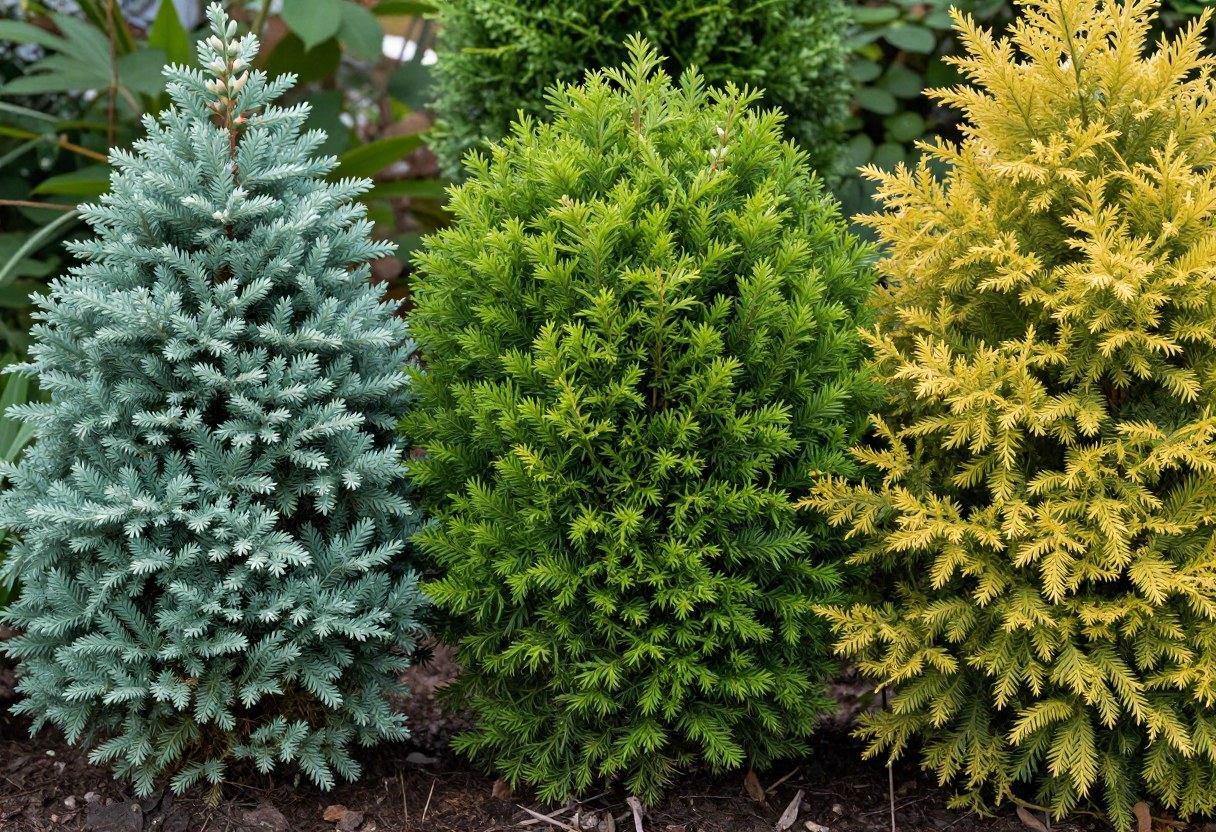
The Conifer Trio Formula: Choose one conical (vertical accent), one globe-shaped (mass and ground-level interest), and one with cascading or threadlike foliage (texture contrast). Vary the colors — deep green, blue-green, and gold work beautifully together. Space them so they'll just touch at maturity. This composition works year-round, needs almost no maintenance, and looks like professional landscape design.
The formula in practice — three distinct forms and three distinct colors, and the composition still reads as a single cohesive planting.
Layering in Small Spaces
Even a tiny yard can have visual depth if you create layers. A dwarf tree at 8–12 feet provides the middle layer; compact shrubs at 3–5 feet fill below it; perennials and groundcovers complete the picture at ground level. This layering creates a sense of lush fullness that a flat bed of annuals never achieves.
•Under a weeping cherry or redbud: Spring bulbs (daffodils, tulips) bloom with the tree; then dwarf astilbe or coral bells carry summer; Japanese forest grass provides texture fall into winter.
•Under a compact crabapple: Dwarf ornamental grasses, coneflowers, and black-eyed Susan in the outer ring; low-growing sedums or creeping thyme close to the trunk.
•Around dwarf conifers: Heathers and heaths complement the evergreen theme with color; dwarf ornamental grasses add movement; spring bulbs add seasonal punctuation.
Container Composition — Staging the Patio
A patio with well-chosen container trees can feel like an outdoor room — leafy, structured, alive, and personal. Key principles for container composition:
•Vary heights: Place taller container trees at the back corners or edges of the space; mid-height containers in the middle zone; low containers at the front. This creates a backdrop effect and makes the space feel larger.
•Repeat elements: Use the same container style throughout for visual coherence. Vary the plants, not the pots. Or vice versa — vary the containers but repeat the plant palette.
•Frame the view: Two matching container trees flanking a doorway, view, or seating area create immediate architectural impact. Symmetry doesn't have to feel formal — two matching Japanese maples in identical gray pots flanking a natural wood bench is contemporary and organic.
•Thrill, Fill, Spill: The container planting principle works for trees too. A dwarf Japanese maple (the Thrill) in a large pot can be underplanted with coral bells or hellebores (Fill) and cascading sweet potato vine or creeping Jenny (Spill) to create a complete, lush composition in a single container.
•Seasonal rotation: Swap in flowering annuals around the base of evergreen container trees to provide seasonal color that the tree itself may not supply.
Columnar Trees — The Small-Space Vertical Solution
For the narrowest spaces — between windows, flanking a doorway, lining a narrow path, or creating a vertical accent in a courtyard — columnar trees are the answer. These are trees that grow predominantly upward with very little spread, creating dramatic vertical elements in extremely minimal footprint.
Tree
Height (ft)
Spread (ft)
Light
Zones
Notes
Sky Pencil Holly (Ilex crenata)
6–8
1–1.5
Full sun–part shade
5–9
Narrowest evergreen available; perfect for tight spaces; evergreen; no fruit
'Adirondack' Crabapple
12–14
6
Full sun
4–8
Spring flowers + persistent fruit; best columnar flowering tree for cold climates
Columnar Hornbeam (Carpinus betulus 'Fastigiata')
30–40
15–20
Full sun–part shade
4–8
Becomes more oval with age; excellent urban tree; disease-resistant; can be maintained smaller with pruning
Spectacular gold fall color; very narrow; cold-hardy; some suckering tendency
Columnar Apple ('Colonnade' series)
8–10
2–3
Full sun
3–9
Actual edible apples; extremely narrow; excellent for lining paths or growing in containers
Italian Cypress (Cupressus sempervirens)
40–70
3–6
Full sun
7–11
Classic formal column; dramatic evergreen accent; only for mild climates
'Emerald Green' Arborvitae
10–15
3–4
Full sun
2–8
Popular, reliable, narrow evergreen screen; holds green color in winter
Dealing with the Toughest Small-Space Conditions
•Dry shade: Under eaves, between buildings, or on the north side of a structure. Best dwarf trees: witch hazel, compact serviceberry, dwarf fothergilla. Most flowering trees need sun — if you have truly dry shade, focus on ferns, hostas, and shade-tolerant shrubs rather than trying to force a sun-loving tree.
•Hot, reflected heat: South-facing walls, heat-absorbing pavement, urban heat islands. Best dwarf trees: compact crape myrtle (thrives in heat), dwarf mugo pine, drought-tolerant junipers, patio fig. Avoid Japanese maple and Hinoki cypress in extreme reflected heat.
•Wet or poorly drained soil: Many dwarf trees hate wet feet. Best options for persistently moist small spaces: sweetbay magnolia (naturally adapted to wet conditions), compact witch hazel, dwarf bald cypress, and some native shrubs. For containers in wet climates, ensure excellent drainage.
•Rooftop or balcony with wind: Wind is the enemy of container trees on rooftops and exposed balconies — it desiccates foliage rapidly and can topple containers. Best choices: dwarf mugo pine (wind-tolerant), compact arborvitae (flexible), olive tree (drought and wind-tolerant in zones 8+). Weight containers adequately; stake trees in exposed windy locations.
•Urban pollution and compacted soil: For street-level or sidewalk planting in tight spaces with poor urban soil: 'Adirondack' crabapple, compact ginkgo cultivars, columnar hornbeam, 'Sky Pencil' holly. All tolerate pollution, road salt, and compacted conditions better than more delicate species.
Section 7: Year-Round Care for Dwarf Trees
Most dwarf trees — especially dwarf ornamentals and dwarf conifers — need far less ongoing care than their full-sized counterparts. The investment of choosing the right tree for the right place pays dividends in reduced maintenance for decades. That said, some care principles apply across all categories.
Seasonal Care Calendar
Season
Key Tasks
Late Winter (Feb–Mar)
Plant bare-root dwarf fruit trees. Prune dwarf fruit trees before buds swell (except stone fruits — wait until bloom). Apply dormant oil to fruit trees for overwintering insects. Check container trees for frost damage. Prepare containers for spring planting.
Early Spring (Mar–Apr)
Plant container-grown ornamentals (ideal timing). Fertilize container trees and in-ground dwarf fruit trees. Begin watering container trees more regularly as temperatures rise. Watch for late frost on early-blooming magnolias and cherries (have frost cloth ready). Prune summer-blooming trees (crape myrtle) before growth begins.
Spring — After Flowering (May–Jun)
Prune spring-flowering trees right after bloom. Thin fruit aggressively on dwarf fruit trees within 4–6 weeks of flowering. Apply preventive fungicide if wet conditions threaten scab on crabapple. Begin consistent watering schedule as summer approaches.
Summer (Jun–Sep)
Deep water container trees every 1–3 days depending on heat and container size. Fertilize container trees every 2–4 weeks. Monitor for pests (Japanese beetles, spider mites on dwarf Alberta spruce, peach tree borers on stone fruits). Enjoy summer-blooming trees (crape myrtle, golden rain tree). Net cherry trees when fruit colors.
Fall (Sep–Nov)
Excellent time to plant container ornamentals. Reduce fertilizing. Taper watering as temperatures cool. Move tender container trees inside before first frost (citrus, figs in cold zones, crape myrtle in zone 6). Apply dormant copper spray to peaches/nectarines after leaf drop. Mulch root zone of in-ground dwarf trees before hard freeze.
Winter (Dec–Feb)
Protect container trees outside from freeze-thaw cycles (insulate containers with burlap, bubble wrap). Water dormant trees in storage monthly. Protect trunks of young dwarf trees from rodent damage (hardware cloth guards). Plan new plantings and order trees for spring.
Pruning Dwarf Trees — Less Is More
The single most common mistake with dwarf trees is over-pruning. Most dwarf ornamentals — especially dwarf conifers — are bred to hold their natural form without intervention. Aggressive pruning often destroys the very form that makes them beautiful. The general rule: prune only to remove the 3 Ds (Dead, Diseased, Damaged wood), remove crossing or rubbing branches, and make any shape-corrections while the tree is young. Do not try to keep a tree smaller than its natural mature size through annual pruning — if the tree is too large for the space, replace it with a genuinely smaller cultivar.
Tree Type
When
How
Dwarf conifers (evergreen)
Late winter / early spring, or late spring after new growth extends
Minimal — only dead wood and shape corrections. Never cut into old bare wood (won't regenerate). Light tip pinching of new growth is acceptable for some species (mugo pine candles).
Weeping ornamentals (cherry, redbud, magnolia)
Right after flowering (spring bloomers)
Remove branches growing upward against the weeping habit. Remove rootstock suckers immediately. Minimal shaping — let the natural weeping form develop.
Compact flowering trees (crabapple, serviceberry, redbud)
Right after flowering (spring bloomers) or late winter
Remove crossing/crowded branches for airflow and structure. Thin for form. Avoid heavy pruning.
Dwarf fruit trees (apple, pear)
Late winter/early spring before bud break
Annual pruning essential — maintain open center or modified central leader; remove water sprouts; encourage fruiting wood.
Dwarf peach/nectarine
Early spring (at or just before bloom)
Aggressive annual pruning — remove 30–40% of previous year's growth. Fruit only on 1-year-old wood.
Container trees (all types)
As appropriate to species; also root-prune when repotting
Follow species guidelines above; additionally root-prune every 2–4 years to maintain container vigor.
Common Problems and Solutions
Problem
Symptoms
Solution
Spider mites on dwarf Alberta spruce
Fine webbing; stippled, gray-green needles; especially inner foliage
Keep plants well-watered; knock mites off with strong water spray; neem oil or insecticidal soap; ensure good air circulation
Root rot in containers
Yellowing leaves; wilting despite moist soil; mushy roots at repotting
Improve drainage; reduce watering frequency; repot into fresh well-drained mix; remove rotted roots; treat with fungicide if needed
Rootstock suckers on grafted weeping trees
Vigorous vertical shoots from below the graft union with different leaf shape/color
Remove immediately — trace to origin and tear or cut flush. If left, they'll take over the tree.
Peach leaf curl on patio peach
Thickened, curled, reddish new leaves in spring
Preventive copper spray in fall after leaf drop and again in late winter before buds open. Timing is everything — no cure once symptoms appear.
Citrus yellowing (chlorosis)
Yellowing leaves, often with green veins (iron or magnesium deficiency)
Acidify soil; apply chelated iron; use citrus-specific fertilizer with micronutrients; ensure pH 5.5–6.5
Gradual decline; roots circling trunk at repotting; reduced vigor despite good care
Inspect and remove circling roots at repotting; address at planting by scoring root ball; preventive root pruning
Quick Reference: Dwarf Trees at a Glance
Tree
Height (ft)
Spread (ft)
Zones
Light
Season Appeal
Care Level
Weeping Cherry 'Snow Fountain'
5–8
Full sun
Spring flowers, fall color
Low
Ruby Falls Redbud
6–8
5–6
5–9
Sun–part shade
Spring flowers, purple foliage, fall color
Low
Star Magnolia 'Royal Star'
10–15
8–12
4–8
Full sun–part shade
Spring flowers, good form
Low
Magnolia 'Ann'
8–10
4–8
Full sun–part shade
Spring flowers, compact form
Low
Crabapple 'Camelot'
5–6
6–8
4–8
Full sun
Spring flowers, persistent fruit, fall color
Low (resistant variety)
Crabapple 'Adirondack'
10–12
6
4–8
Full sun
Spring flowers, fruit, narrow form
Low (resistant variety)
Compact Crape Myrtle
6–15
6–12
6–10
Full sun
Summer flowers, fall color, winter bark
Low (don't top!)
Hinoki Cypress 'Nana Gracilis'
4–6
3–4
4–8
Sun–part shade
Year-round evergreen texture
Very low
Golden Mop False Cypress
2–3
3–4
4–8
Full sun–light shade
Gold year-round color
Very low
Dwarf Alberta Spruce
4–8
3–5
2–8
Full sun
Perfect cone form, year-round
Low (watch mites)
Dwarf Globe Blue Spruce
3–5
2–8
Full sun
Blue color, year-round form
Low
Dwarf Mugo Pine
3–5
4–6
2–7
Full sun
Year-round rugged texture
Very low
Sky Pencil Holly
6–8
1–1.5
5–9
Sun–part shade
Evergreen, narrow vertical accent
Very low
Dwarf Apple (columnar)
8–10
2–3
3–9
Full sun
Spring flowers + real fruit
Moderate
Patio Peach 'Bonfire'
4–6
5–9
Full sun
Ornamental foliage, pink flowers, real peaches
Moderate
Dwarf Cherry 'North Star'
8–10
3–8
Full sun
Spring flowers + tart cherries
Moderate
Meyer Lemon (container)
6–10
6–8
8–11/pot
Full sun
Fragrant flowers, year-round fruit
Moderate (more in containers)
Dwarf Fig 'Little Miss Figgy'
4–6
7–11/pot
Full sun
Ornamental foliage + real figs
Low–Moderate
Final Thoughts — Small Space, Big Ambition
The small-space garden has a secret advantage that large-yard gardeners often don't realize: when space is limited, every choice matters, and that constraint pushes you toward better decisions. You can't afford a tree that looks mediocre in three seasons, or one that crowds out everything around it, or one that requires expensive professional pruning to manage. You choose carefully, plant thoughtfully, and tend attentively — and the result is often more beautiful than a sprawling yard where things are just stuck in wherever there's room.
The trees in this guide represent the best of what the horticultural world has created for small-space gardeners: genetic dwarfs selected for compact habit without sacrificing beauty, ornamental forms that deliver flowers, color, and structure in a fraction of the footprint, and fruit trees with modern dwarfing rootstocks that make the edible garden accessible to anyone with a sunny patio and a 30-gallon pot. There has never been a better time to grow trees in small spaces.
Start with one tree well-chosen for your specific conditions and role. Learn it, tend it, watch it establish. Then add another. Within a few seasons you'll have a garden that feels complete, full of life, and distinctly your own — whatever the size of the yard you're working with.
🌿✨
The Small-Space Gardener's Creed: The right plant in the right place, well-planted and thoughtfully tended, will always outperform the wrong plant crammed into a too-small space and struggling for its life. Choose small. Choose well. Let it thrive.
Sources & Further Reading
American Conifer Society (conifersociety.org) • Monrovia Nursery Dwarf Conifer Guide (monrovia.com) • University Extension Fruit Tree Programs (state Cooperative Extension offices) • Dave's Garden Plant Database (davesgarden.com) • Arbor Day Foundation Tree Guide (arborday.org) • USDA Plant Hardiness Zone Map (planthardiness.ars.usda.gov) • Royal Horticultural Society Container Growing Guide (rhs.org.uk)
🌿 Get Seasonal Gardening Tips
New guides, planting reminders, and growing tips — straight to your inbox.
No spam. Unsubscribe anytime.
About the Author
David Rodgers is the Founder & Head Gardener of Planting Atlas. With over 40 years of hands-on gardening experience in Oklahoma's Zone 7 climate, he researches, writes, and personally tests every guide on the site.
David draws from real backyard trials, soil testing, and trusted sources like Oklahoma State University Extension and USDA data to deliver practical, zone-specific advice that actually works.