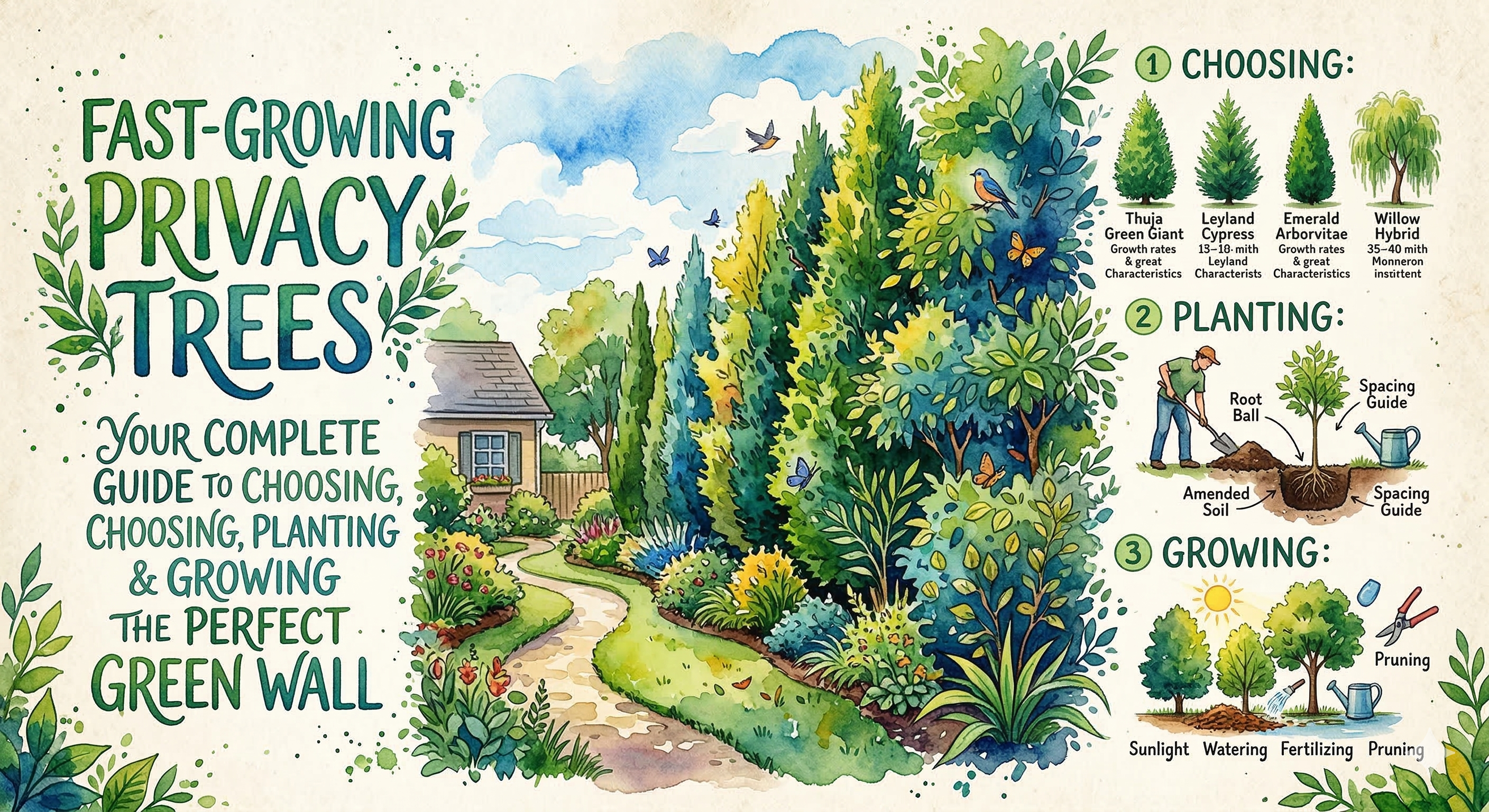
Your Complete Guide to Choosing, Planting & Growing the Perfect Green Wall
Let's be real — nobody woke up this morning thinking, 'You know what my yard needs? A six-foot pressure-treated privacy fence that costs a fortune and looks like a construction site.' What you actually want is a lush, green, natural wall of trees that grows taller every year, blocks the neighbors' dog from staring at you, cuts wind, muffles road noise, and makes your yard look like something out of a luxury retreat catalog.
Let's be real — nobody woke up this morning thinking, 'You know what my yard needs? A six-foot pressure-treated privacy fence that costs a fortune and looks like a construction site.' What you actually want is a lush, green, natural wall of trees that grows taller every year, blocks the neighbors' dog from staring at you, cuts wind, muffles road noise, and makes your yard look like something out of a luxury retreat catalog.
That's the magic of fast-growing privacy trees. They're living, breathing infrastructure that works 24/7, gets better with age, adds property value, supports wildlife, and — best of all — you only have to plant them once.
This guide will walk you through everything you need to know: the best species by climate, how to choose the right tree for your goals, how to plant like a pro, and how to keep your green wall thriving for decades.
What Makes a Great Privacy Tree?
Not every tree makes the cut for a living fence. Here's what separates the green-wall all-stars from the rest of the pack:
•Dense, year-round foliage — Evergreens win here. You don't want to lose your privacy wall every November.
•Fast vertical growth — You want height, and you want it now. Look for trees growing at least 2 feet per year, ideally 3–5+.
•Columnar or narrow growth habit — Trees that grow tall and stay relatively slim are ideal for screens so they don't eat your entire yard.
•Low maintenance once established — After the first year or two, a great privacy tree should practically take care of itself.
•Disease and pest resistance — A compromised tree is a privacy gap. Choose tough varieties.
•Appropriate mature size — Know how big it gets. You don't want a 70-foot tree under a power line.
🌲
Pro Tip: The #1 rule of privacy tree success: match the right tree to your zone, soil, and sun — not just your Instagram mood board. A gorgeous Italian Cypress planted in Minnesota is a beautiful disaster waiting to happen.
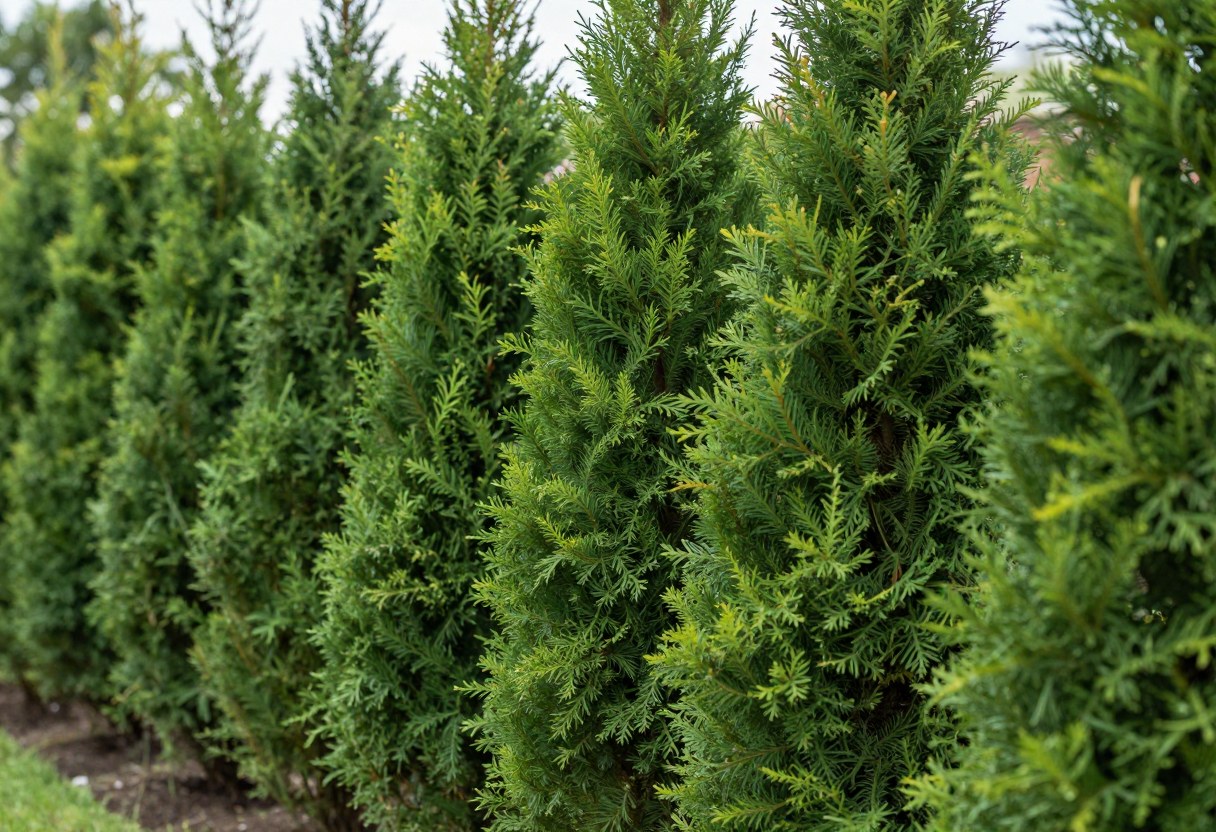
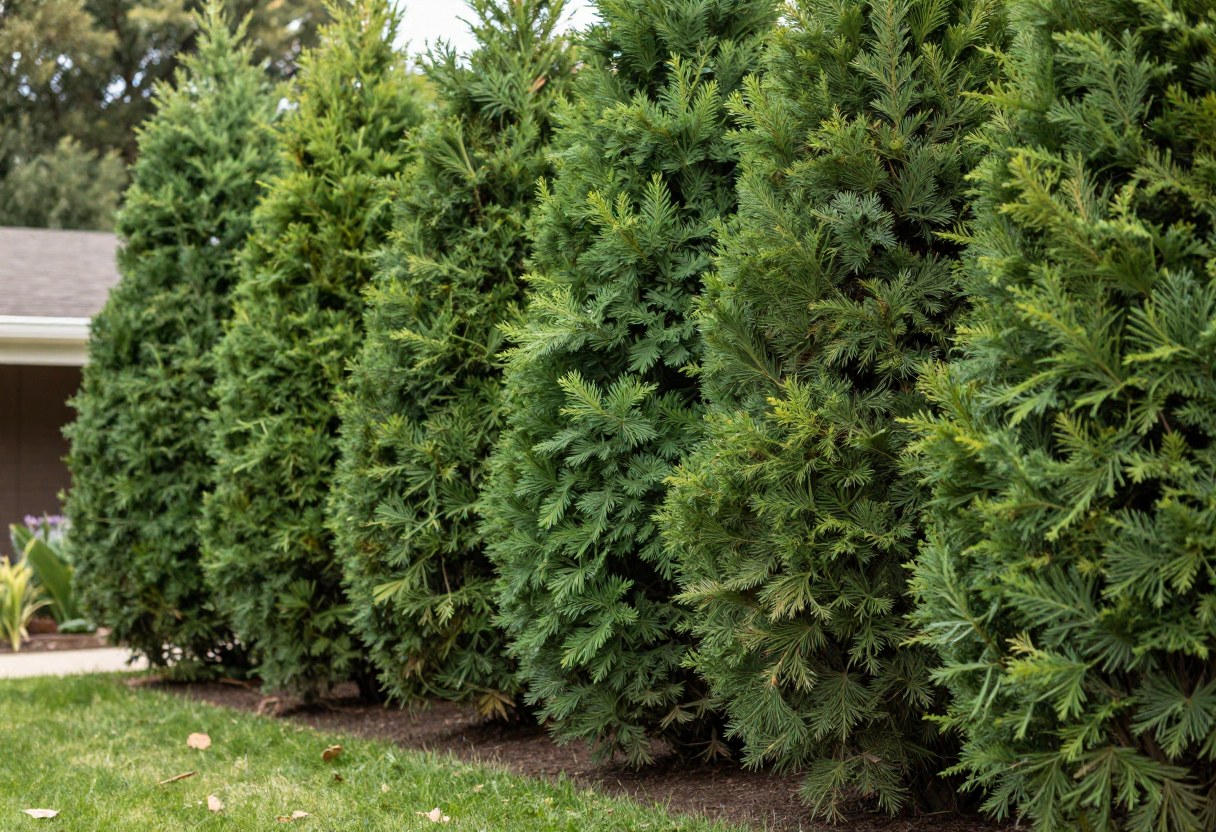
This is the living-fence payoff — dense, year-round coverage that keeps getting more beautiful, not less, over time.
Understanding Your Hardiness Zone (The Most Important First Step)
Before you fall in love with any specific tree, you need to know your USDA Plant Hardiness Zone. This single number determines which trees can survive your winters. Get this wrong, and you've got an expensive mulch pile come March.
Visit planthardiness.ars.usda.gov and enter your zip code. It takes 30 seconds and will save you years of heartbreak.
Quick Zone Overview for Privacy Trees
Zone Range
Climate Description
Top Privacy Tree Picks
Zones 2–4
Bitterly cold winters, short growing season
Norway Spruce, Eastern Red Cedar, Emerald Green Arborvitae
Zones 5–6
Cold winters, humid summers (Midwest/Northeast)
Thuja Green Giant, American Pillar Thuja, Hybrid Poplar
Zones 7–8
Mild winters, hot summers (Mid-Atlantic/Pacific NW)
Tropical/subtropical (Florida, Hawaii, S. California)
Clumping Bamboo, Podocarpus, Wax Myrtle
⚠️
Watch Out: Always plant within your USDA zone range. A tree rated for Zone 7 won't survive a Zone 5 winter — no matter how much you love it or how well you mulch it.
The Best Fast-Growing Evergreen Privacy Trees
Evergreens are the MVP of the privacy tree world. They hold their foliage year-round, so your privacy doesn't take a winter vacation. Here are the best performers:
🏆 The Champion: Thuja Green Giant
If the privacy tree world had a hall of fame, the Thuja Green Giant would be the first-ballot inductee. This superstar hybrid arborvitae is hands-down the most popular privacy tree in North America — and for good reason.
•Growth rate: 3–5 feet per year in ideal conditions
•Mature height: 40–60 feet tall, 12–20 feet wide
•USDA Zones: 5–9
•Disease resistant: Highly resistant to bagworms, tip blight, and most arborvitae pests
•Deer resistant: Yes — one of the few arborvitaes deer won't munch
•Drought tolerant: Once established, handles dry periods well
Space them 5–8 feet apart for a tight hedge, or 8–12 feet for a natural screen. For the fastest results, stagger two rows with 6–8 feet between rows and 10 feet between trees.
🌲
Pro Tip: Plant Thuja Green Giants in full sun for maximum growth. In partial shade, they grow slower and can thin out at the bottom over time.
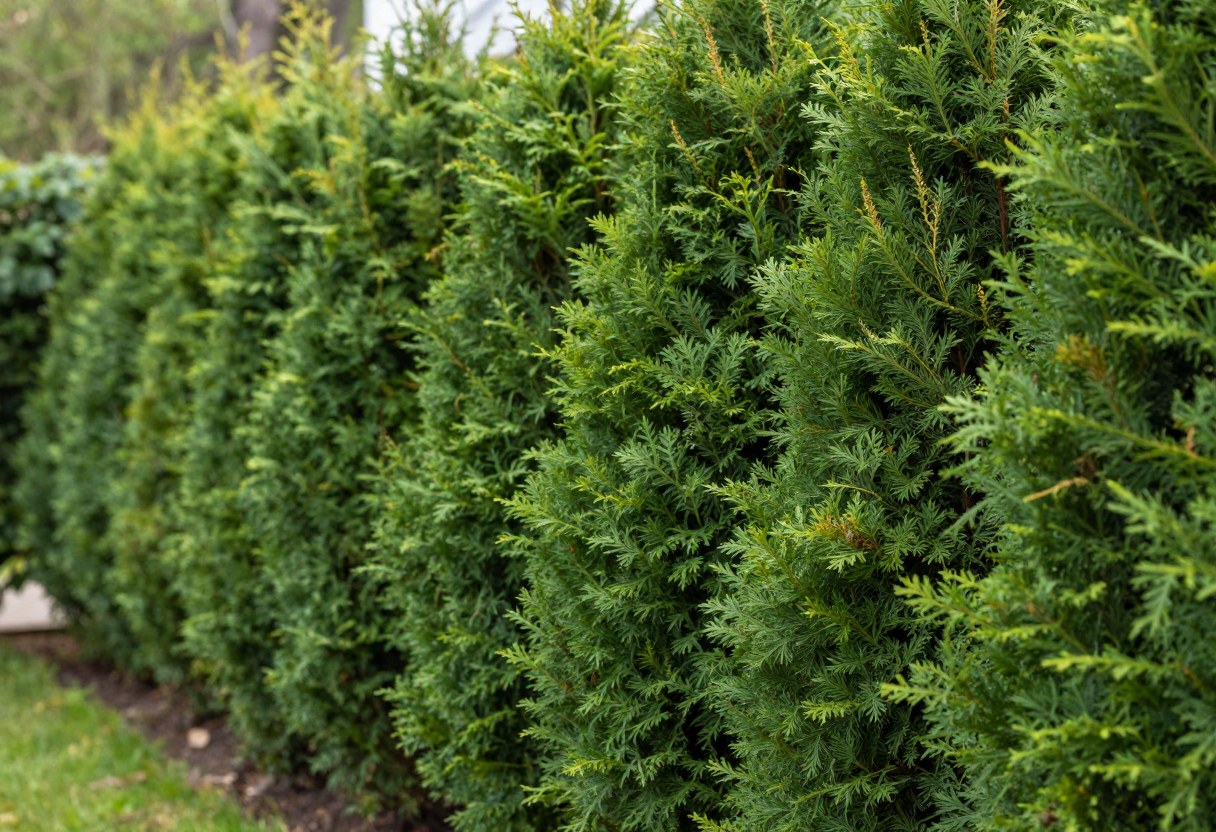
The most popular privacy tree in North America — disease-resistant, deer-resistant, and adaptable to nearly any soil.
🔥 The Speed Demon: Leyland Cypress
Want a green wall fast? The Leyland Cypress is America's most-planted privacy tree for a reason: it can punch out up to 5 feet of growth in a single year and hits mature heights of 60–70 feet with a beautiful, soft, columnar silhouette.
•Growth rate: 3–5 feet per year (can hit 5+ in optimal conditions)
•Mature height: 60–70 feet, 15–20 feet wide
•USDA Zones: 6–10
•Foliage: Soft, feathery, dark green — looks great and feels great
•Adaptable to most soil types — clay, sandy, loamy
The Leyland Cypress's one weakness is that it can be susceptible to canker disease (Seiridium canker) in humid climates or when stressed by drought. Keep them properly spaced for air circulation and water during dry spells.
⚠️
Watch Out: Don't plant Leyland Cypress too close together. At 8 feet apart, you'll get good coverage. Closer than that and you're creating conditions for disease and crowding that weaken the trees long-term.
❄️ Cold Climate All-Star: Emerald Green Arborvitae
For smaller yards and colder climates (Zones 3–8), the Emerald Green Arborvitae is the gold standard of tidy, compact privacy screens. While not the fastest grower (just 6–9 inches per year), it's incredibly cold-hardy, keeps its gorgeous emerald color through brutal winters, and stays compact at 8–12 feet — perfect for tight spaces.
•Growth rate: 6–9 inches per year
•Mature height: 8–12 feet, only 3–4 feet wide
•USDA Zones: 3–8
•Deer resistant: Somewhat — not as resistant as Thuja Green Giant
•Perfect for: Smaller yards, suburban settings, planting near structures
🌴 Mediterranean Vibes: Italian Cypress
If you're going for a Tuscany-in-your-backyard aesthetic, nothing delivers like the dramatic, pencil-thin Italian Cypress. These elegant spires shoot skyward (2–3 feet per year) and stay incredibly narrow — usually just 3–6 feet wide — making them the perfect exclamation point for formal landscapes.
•Growth rate: 2–3 feet per year
•Mature height: 40–70 feet, only 3–6 feet wide
•USDA Zones: 7–11
•Heat and drought tolerant: Thrives in hot, dry conditions
•Best for: Mediterranean, Spanish, or formal architectural styles
The catch? Italian Cypress is frost-sensitive and really shines in Zones 7–11. If you're north of that, skip it and go with a Thuja instead.
🦌 The Tough Cookie: Eastern Red Cedar (Juniperus virginiana)
Don't let the word 'cedar' fool you — this is actually a juniper, and it's one of the most adaptable, low-maintenance, wildlife-friendly privacy trees you can plant. It thrives in conditions that would kill fancier trees: poor soil, drought, clay, sand, extreme cold, and heat.
•Growth rate: 1–2 feet per year (slower but worth it for problem sites)
•Mature height: 40–50 feet, 10–20 feet wide
•USDA Zones: 2–9 — practically the whole country
•Wildlife magnet: Provides nesting habitat and food for birds
Space 6–10 feet apart for a dense privacy hedge. This tree is the definition of plant-it-and-forget-it once established.
🌟 Southern Standout: Nellie Stevens Holly
For gardeners in the South, Nellie Stevens Holly is one of the finest privacy trees available. It combines rapid growth with gorgeous, glossy dark green foliage, fiery red winter berries, and impressive deer resistance.
•Growth rate: 2–3 feet per year
•Mature height: 15–25 feet, 8–12 feet wide
•USDA Zones: 6–9
•Deer resistant: Highly resistant
•Bonus: Spectacular red berries November through February
🌊 Coastal Champion: Wax Myrtle (Myrica cerifera)
If your yard has wet, poor, or challenging soil — or you're gardening near the coast — Wax Myrtle is your answer. This southeastern native grows fast (up to 3–5 feet per year in good conditions), handles flooding and salty air like a champ, and stays evergreen in Zones 7–11.
•Growth rate: 3–5 feet per year
•Mature height: 15–20 feet high and wide
•USDA Zones: 7–11
•Tolerates: Wet soils, salt spray, poor drainage, drought once established
Fast dense walls, tall screens, southeastern yards
Emerald Green Arborvitae
6–9 in/year
8–12 ft
3–8
Small yards, tidy hedges, cold climates
American Pillar Thuja
2–3 ft/year
20–30 ft
4–8
Narrow spaces, urban yards, formal look
Italian Cypress
2–3 ft/year
40–70 ft
7–11
Mediterranean aesthetic, hot/dry climates
Eastern Red Cedar
1–2 ft/year
40–50 ft
2–9
Wildlife habitat, windbreaks, tough soils
Nellie Stevens Holly
2–3 ft/year
15–25 ft
6–9
Southern yards, deer resistance, berries
Norway Spruce
2–3 ft/year
40–60 ft
2–7
Cold climates, windbreaks, wildlife
Wax Myrtle
3–5 ft/year
15–20 ft
7–11
Wet/poor soils, coastal areas, Southeastern US
Cryptomeria (Japanese Cedar)
2–3 ft/year
50–60 ft
5–9
Elegant look, humid climates, year-round screen
Fast-Growing Deciduous Privacy Trees
Deciduous trees lose their leaves in winter, which means they're not ideal as standalone privacy screens. But they have real roles to play: as temporary screens while evergreens mature, as windbreaks in combination plantings, or as stunning seasonal additions to a mixed privacy hedge.
⚡ The Fastest Thing Growing: Hybrid Poplar
When you need height yesterday, the Hybrid Poplar delivers. This beast can grow 5–8 feet per year — making it the closest thing to instant privacy in the tree world. Plant a row of these and in two years you'll have a substantial screen.
•Growth rate: 5–8 feet per year (among the fastest trees on earth)
•Mature height: 40–50 feet, 20–35 feet wide
•USDA Zones: 3–9
•Lifespan: 15–20 years — these are sprinters, not marathoners
•Best use: Temporary screen while slow-growing evergreens mature
🌲
Pro Tip: Plant Hybrid Poplars alongside slower-growing evergreens like Thuja Green Giants. The poplars give you instant privacy while the evergreens take over the long game. As the evergreens mature, you can remove the poplars.
💧 Wet Yard Workhorse: Willow Hybrid
Got a wet spot? Standing water? A low area that everything else dies in? The Willow Hybrid will absolutely devour those conditions. With growth rates of 6–10 feet per year, these are possibly the fastest trees available — period.
•Growth rate: 6–10 feet per year
•Mature height: 35–45 feet
•USDA Zones: 4–9
•Best for: Wet areas, creek banks, low-lying yards
⚠️
Watch Out: Willow roots are aggressive water-seekers. Keep willows away from septic systems, water lines, and foundations. Plant them at least 50–100 feet from any underground utilities.
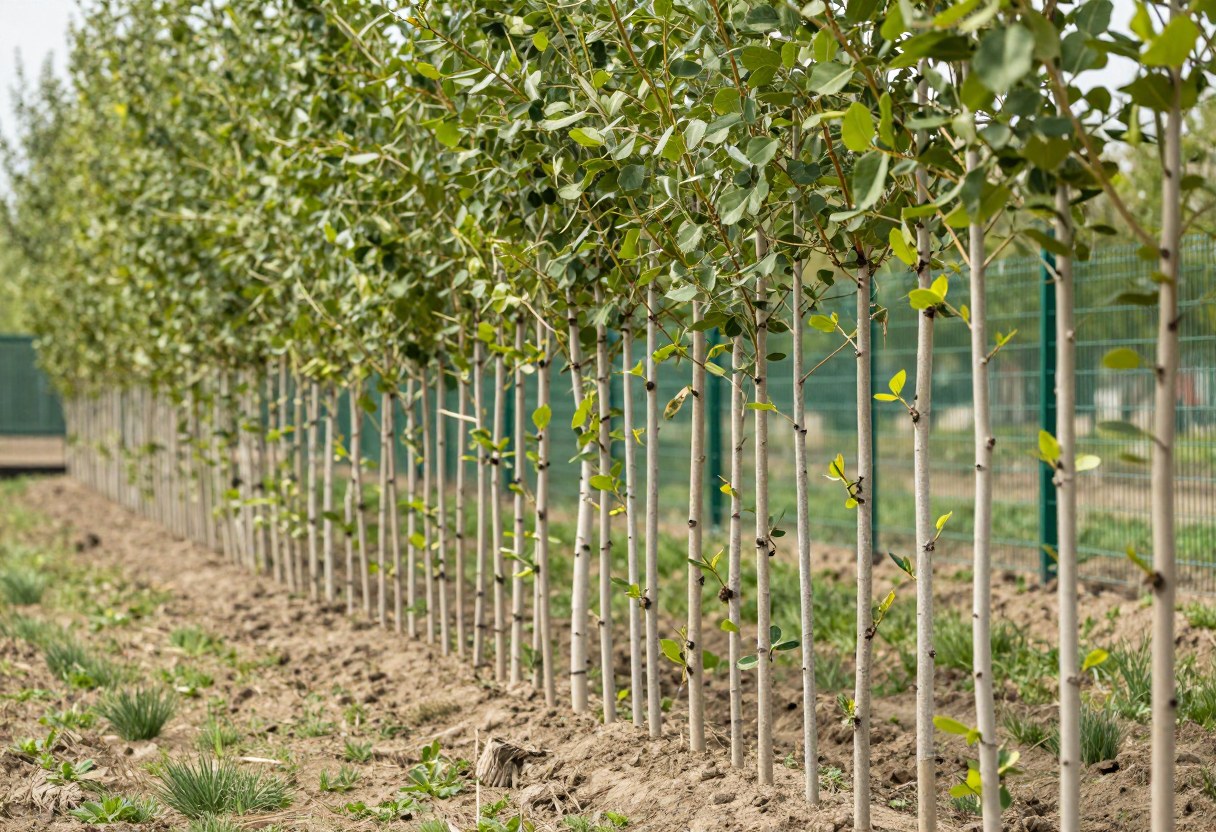
Poplars are sprinters, not marathoners — perfect as a fast temporary screen while slower evergreens establish behind them.
🍁 The Best of Both Worlds: Autumn Blaze Maple
When you want privacy AND a jaw-dropping fall show, the Autumn Blaze Maple delivers both. This hybrid red maple grows 3–5 feet per year, provides dense summer privacy, and then erupts in brilliant scarlet-orange every fall before dropping its leaves.
•Growth rate: 3–5 feet per year
•Mature height: 40–55 feet, 25–35 feet wide
•USDA Zones: 3–8
•Best for: Large properties, mixed screens, accent planting
📊 Deciduous Privacy Tree Quick-Reference Table
Tree
Growth Rate
Mature Height
USDA Zones
Best For
Hybrid Poplar
5–8 ft/year
40–50 ft
3–9
Fastest screen, temporary windbreaks
Willow Hybrid
6–10 ft/year
35–45 ft
4–9
Wet areas, super-fast fill-in
Autumn Blaze Maple
3–5 ft/year
40–55 ft
3–8
Fall color + privacy combo
American Sycamore
3–6 ft/year
70–100 ft
4–9
Large properties, riparian areas
Lombardy Poplar
6–8 ft/year
40–60 ft
3–9
Temporary screens, windbreaks, driveways
River Birch
3–5 ft/year
40–70 ft
4–9
Wet areas, multi-trunk ornamental screen
Bonus: Bamboo — The Wildcard Privacy Screen
Technically a grass, but behaving like a tree, bamboo deserves its own section because nothing grows faster. Certain clumping bamboo varieties can shoot up several feet per week during their growth season, creating a truly remarkable privacy screen.
•Growth rate: Up to 3–5 feet per year for clumping varieties; more for running types
•Mature height: 20–40 feet depending on species
•USDA Zones: Varies — 5–10 for most varieties
✅ Clumping Bamboo (SAFE)
❌ Running Bamboo (DANGEROUS)
Stays in a contained clump. Expands slowly outward. Manageable and neighbor-friendly.
Sends underground rhizomes everywhere. Will invade your neighbor's yard. Can destroy gardens and crack pavement.
⚠️
Watch Out: If you plant running bamboo without root barriers (48-inch minimum depth, HDPE material), you will spend the rest of your life fighting it. Stick to clumping varieties unless you're a glutton for punishment.
Choosing the Right Tree for Your Yard, Climate & Aesthetic
Great news: there's no universal 'best' privacy tree. The actual best tree is the one that matches your specific yard conditions, climate, and goals. Here's how to think through your decision:
Step 1: Sun Assessment
Most fast-growing privacy trees prefer full sun (6+ hours per day). Before buying a single tree, figure out how much sun your planting zone actually receives.
•Full sun (6+ hours): Thuja Green Giant, Leyland Cypress, Italian Cypress, Emerald Green Arborvitae, Hybrid Poplar
•Partial shade (3–6 hours): Eastern Red Cedar, Nellie Stevens Holly, Norway Spruce, American Holly
•Deep shade: Very few fast-growing privacy options thrive — consider shade-tolerant shrubs instead
Step 2: Soil Assessment
Your soil type affects drainage, nutrition, and which trees will actually thrive. The good news: most fast-growing privacy trees are adaptable, but knowing your soil helps you make the best choice.
•Clay soil: Leyland Cypress, Eastern Red Cedar, Wax Myrtle — avoid Italian Cypress
•Sandy, dry soil: Italian Cypress, Eastern Red Cedar, Arizona Cypress
•Wet, poorly drained areas: Wax Myrtle, Willow Hybrid, River Birch, Bald Cypress
•Average loamy soil: Almost any tree on this list thrives
🌲
Pro Tip: Do a quick soil test before planting. Most state extension offices do them cheap (or free), and they tell you exactly what nutrients your soil is missing. Most ornamental trees prefer a pH of 5.8–6.5.
Step 3: Space Assessment
How much horizontal space do you have? This matters more than most people realize. A Leyland Cypress grows 15–20 feet wide. If you plant them 6 feet from your fence line, you're going to have a problem in 10 years.
•Very tight spaces (under 6 ft wide): American Pillar Thuja, Italian Cypress, Columnar English Oak
•Medium spaces (6–15 ft wide): Emerald Green Arborvitae, Nellie Stevens Holly, Wax Myrtle
•Generous spaces (15+ ft wide): Thuja Green Giant, Leyland Cypress, Cryptomeria
•Large rural properties: Hybrid Poplar, Norway Spruce, Eastern White Pine
Step 4: Height Goals
How tall does your screen need to be? This determines which tree category to shop in.
•Modern/minimalist: Thuja Green Giant (clean rows), Italian Cypress
•Cottage/mixed border: Combine hollies + deciduous trees + flowering shrubs in layers
Mixed Screens: The Smart Planner's Secret Weapon
Here's a truth that experienced landscapers know well: the best privacy screen isn't a monoculture of one species — it's a thoughtfully mixed planting of several species. Here's why:
•If one species gets hit by a pest or disease, your entire screen isn't wiped out
•Mixed screens offer more visual interest through different textures, colors, and seasonal changes
•Different species fill different 'layers' of the screen, creating a denser overall barrier
•Biodiversity benefits local wildlife with varied food sources and nesting habitats
A great mixed screen recipe: combine a fast-growing temporary tree (like Hybrid Poplar) with a medium-speed workhorse (like Thuja Green Giant) and a slow-but-steady gem (like Emerald Green Arborvitae). The poplars give you instant coverage, the thuja takes over at medium term, and the arborvitae fills gaps at the bottom.
Planning Your Privacy Screen Layout
A little planning before you dig the first hole saves you years of regret. Take the time to map out your planting on paper (or in a free garden planning app) before buying a single tree.
Spacing: The Most Underestimated Decision
Spacing is everything. Too close and you'll have a crowded, diseased mess. Too far and you'll have privacy gaps for years.
Tree Type
Single-Row Spacing
Double-Row Spacing
Thuja Green Giant
6–8 ft apart
8 ft apart, rows 6 ft back
Leyland Cypress
8–10 ft apart
10 ft apart, rows 8 ft back
Emerald Green Arborvitae
3–4 ft apart
4 ft apart, rows 3 ft back
Italian Cypress
3–5 ft apart
5 ft apart, rows 4 ft back
Eastern Red Cedar
6–10 ft apart
8 ft apart, rows 6 ft back
Hybrid Poplar
8 ft apart
8 ft apart, rows 6 ft back
The general spacing rule: plant trees slightly closer than half their mature width. For example, if a tree matures at 15 feet wide, plant them about 6–7 feet apart. For tighter hedges, go closer; for more natural screens, space further.
Single Row vs. Double Row: Which Is Better?
A single row of trees is the classic approach and works well for most yards. A double row creates a much denser, faster screen and is particularly effective on large properties or where you need a serious windbreak or noise barrier.
•Single row: Plant directly in a straight line. Works great for narrow spaces and fences.
•Double row (staggered): Plant two rows offset from each other (like a brick pattern). Creates a denser wall faster, better air circulation, more wind protection, and looks more natural.
Proximity to Structures: The Safety Checklist
Before you dig, run through this checklist:
•Minimum 12 feet from your home foundation
•Minimum 6 feet from patios, fences, and driveways
•Call 811 (USA) before digging — underground utility marking is free and legally required
•Check overhead power lines — use smaller trees (under 30 ft) in those areas
•Know your property line and local ordinances on tree height near property boundaries
•Consider root systems — larger trees should be 20+ feet from septic systems
How to Plant Privacy Trees Like a Pro
Planting a tree isn't rocket science, but there are a few critical steps where beginners consistently make mistakes. Get these right and your trees will thrive. Get them wrong and... well, you'll be back at the nursery next spring looking sheepish.
When to Plant
Timing your planting right gives your trees the best head start:
•Fall (best for most regions): Cooler air reduces stress on foliage while warm soil temperatures encourage root growth before winter. Trees planted in fall are often better established by the following summer.
•Early spring (great option): Plant after last frost while temps are still moderate. Trees establish before the heat hits.
•Summer (proceed with caution): Possible but requires diligent watering. Heat stress is the enemy.
•Winter (in mild climates only): Zone 8+ gardeners can plant winter through early spring successfully.
Step-by-Step Planting Guide
•Mark your layout. Use stakes and string to map out exactly where each tree goes. Walk the line. Look at it from every angle. Take your time — this is the hardest part to redo.
•Call 811. Always. Before you dig anything. Free service, prevents disasters.
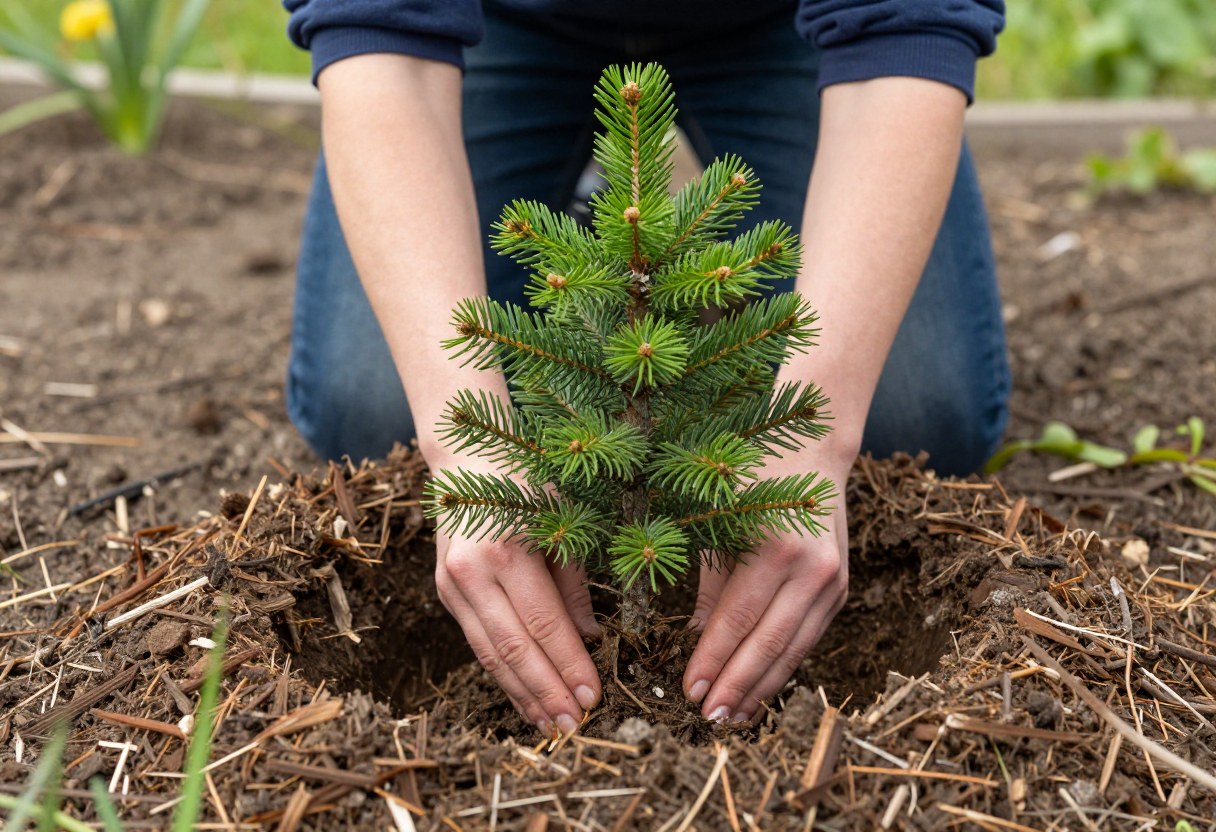
•Dig the hole RIGHT. This is the most common mistake point. Dig 2–3 times wider than the root ball, but NO deeper than the root ball height. The flare of the trunk should sit at or slightly above ground level. When in doubt, plant a touch high — trees can settle, but they can't un-drown.
•Remove the container. Always remove all packaging, including 'plantable' containers. Inspect roots for circling — untangle or score any roots wrapping the root ball. This is critical for the tree's long-term health.
•Set the tree. Lower it gently. Check depth. The trunk flare should be visible at ground level. Backfill with the native soil you removed — studies show native backfill encourages roots to spread outward better than amended soil.
•Tamp and water. Gently firm soil around the root ball to eliminate air pockets. Water deeply right after planting — don't just wet the surface.
•Mulch. Apply 2–3 inches of organic mulch in a ring around the tree, keeping it 3–6 inches away from the trunk. Mulch retains moisture, regulates soil temperature, and suppresses weeds. Do NOT create a 'mulch volcano' — piling mulch against the trunk causes rot.
⚠️
Watch Out: The single most common tree-planting mistake: planting too deep. If the trunk flare is buried, the tree will slowly decline and die — sometimes over years. Always plant at or slightly above grade.
Dig wide, not deep — the trunk flare should sit at or slightly above grade, never buried.
Caring for Your Privacy Trees: The First 3 Years & Beyond
The first two years after planting are the make-or-break period for privacy trees. Get the care right during establishment, and your trees will reward you with explosive growth and decades of beauty.
Watering: The #1 Factor in Establishment Success
More newly planted trees die from improper watering than from any other cause. The tricky part? Both overwatering and underwatering are deadly — and the symptoms look almost identical (wilting, browning).
Year 1 Watering Schedule
•First 2–4 weeks: Water every 2–3 days. Deep, slow watering (not a quick surface sprinkle). You want water reaching 12+ inches deep.
•Weeks 5–12: Water once or twice per week, more during heat waves
•Rest of Year 1: Once per week unless it's rained an inch or more
Year 2+ Watering
•Most established trees: Deep water during dry periods (2+ weeks without significant rain)
•Drought-tolerant species (Italian Cypress, Eastern Red Cedar): Rarely need supplemental watering after Year 2
🌲
Pro Tip: The finger test beats every fancy gadget: push your finger 3–4 inches into the soil near the tree. If it's moist, wait. If it's dry, water. Check this before every watering session.
Mulching: Your Best Friend
Keep that 2–3 inch ring of mulch in place year-round. Replenish it each spring. Good mulch is one of the highest-ROI moves in tree care:
•Retains soil moisture — reduces watering frequency by up to 50%
•Regulates soil temperature — keeps roots cooler in summer, warmer in winter
•Suppresses weeds that compete for nutrients and water
•Improves soil structure as it breaks down
Fertilizing: Feed Smart, Not Heavy
Hold off on fertilizing for the first full year after planting. New trees need to focus on root establishment, and too much nitrogen pushes top growth before the roots can support it.
•Year 1: No fertilizer. Water and mulch only.
•Year 2+: Apply a slow-release, balanced fertilizer (10-10-10 or similar) in early spring. Scatter under the tree's canopy — never against the trunk.
•Nitrogen boost: For fast-growers like Thuja Green Giant, a fertilizer higher in nitrogen (first number) supports rapid growth after establishment
•Organic options: Compost top-dressing in spring is an excellent slow-release alternative
⚠️
Watch Out: Never fertilize in fall. This stimulates new growth right before winter and can result in frost-damaged, tender new shoots. Early spring only.
Pruning: Less Is Often More
Here's the good news about most privacy trees: they don't need heavy pruning. Their natural shape is the whole point. That said, some light pruning goes a long way:
•Best time to prune: Late winter or early spring, when trees are dormant
•Remove dead, damaged, or diseased branches any time of year
•Light thinning of overcrowded areas improves air circulation and reduces disease risk
•For formal hedges (like sheared Emerald Green Arborvitae): Shear in late spring after the first flush of growth
•Never remove more than 25% of a tree's canopy in a single season
For most privacy trees, your goal is to encourage dense, full growth — not to sculpt them. Resist the urge to top trees (cutting off the main leader). Topping ruins the natural form, opens the tree to disease, and often results in a weakened, ugly mess.
Troubleshooting Common Privacy Tree Problems
Even well-planted trees hit speed bumps. Here's how to diagnose and fix the most common issues:
Problem
Likely Cause
Solution
Browning at tips
Drought stress, salt spray, or windburn
Deep water; add mulch; consider a windbreak buffer
Browning from inside out
Normal — interior needle shed is natural in fall for many evergreens
No action needed unless exterior foliage is affected
Yellowing overall
Overwatering, poor drainage, or nutrient deficiency
Improve drainage; reduce watering; soil test and fertilize accordingly
Slow growth
Wrong sun exposure, poor soil, or drought stress
Assess sun; soil test; deep water weekly during dry periods
Dead patches in hedge
Canker disease, pest damage, or physical damage
Remove affected branches; consult local extension service; replace dead trees
Leaning trees
Wind stress or improper planting
Stake for one season only; improve soil compaction; ensure proper planting depth
Deer damage
Deer browsing, especially in winter
Use deer repellent spray; physical fencing; switch to deer-resistant species
Bagworms (on arborvitae, cypress)
Bagworm moth larvae
Hand-pick bags in fall/winter; apply Bt or spinosad in early summer
Bonus Benefits of a Living Fence
You planted privacy trees for peace and quiet, but you're getting so much more:
•Noise reduction: Dense evergreen screens can reduce road noise by 5–10 decibels — a noticeable improvement
•Wind protection: A mature row of trees can reduce wind speed by 50–75% in its shelter zone, which can cut heating bills in cold climates
•Wildlife habitat: Birds, beneficial insects, and small mammals use privacy screens for nesting, shelter, and food
•Property value: Mature trees add measurable value to homes — studies estimate 10–15% increases in property value from quality landscaping
•Air quality: Trees absorb CO₂, filter particulates, and produce oxygen — your living fence is literally cleaning your air
•Shade and cooling: A well-placed privacy screen can reduce summer cooling costs by shading your home from afternoon sun
This is the payoff a decade or two down the road — a living fence that only gets more valuable with age.
Your Fast-Growing Privacy Tree Quick-Start Checklist
Ready to build your living fence? Run through this checklist before you head to the nursery:
☐
Know my USDA Hardiness Zone
☐
Assessed sun exposure in my planting zone (full sun vs. partial shade)
☐
Identified soil type (clay, sandy, loam) and drainage characteristics
☐
Measured available width and height clearance
☐
Checked overhead power lines and underground utilities (called 811)
☐
Confirmed minimum distances from home, fences, and structures
Final Thoughts: The Best Time to Plant Was Yesterday
There's an old saying that's perfect for privacy tree planting: 'The best time to plant a tree was 20 years ago. The second-best time is now.' Every season you wait is another season without your green wall.
But here's the exciting part: fast-growing privacy trees are one of the most gratifying things you can plant in a landscape. Watch a Thuja Green Giant shoot up 4 feet in a single summer. Watch a bare fence line transform into a lush, living wall within just a few years. That's real, visible, measurable progress — and it just keeps getting better.
So grab your tape measure, check your hardiness zone, pick your trees, and get planting. Your future self — sitting in your private backyard oasis — will thank you.
Happy planting! 🌲🌲🌲
🌿 Get Seasonal Gardening Tips
New guides, planting reminders, and growing tips — straight to your inbox.
No spam. Unsubscribe anytime.
About the Author
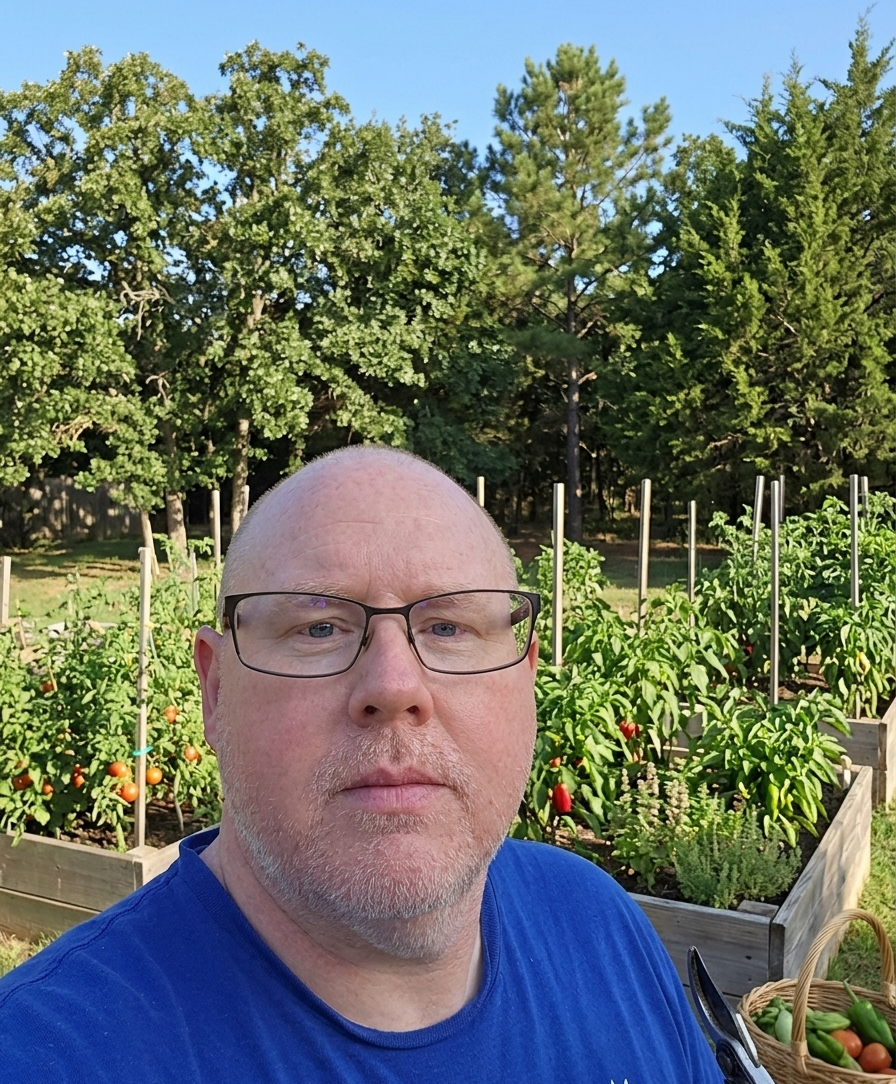
David Rodgers is the Founder & Head Gardener of Planting Atlas. With over 40 years of hands-on gardening experience in Oklahoma's Zone 7 climate, he researches, writes, and personally tests every guide on the site.
David draws from real backyard trials, soil testing, and trusted sources like Oklahoma State University Extension and USDA data to deliver practical, zone-specific advice that actually works.